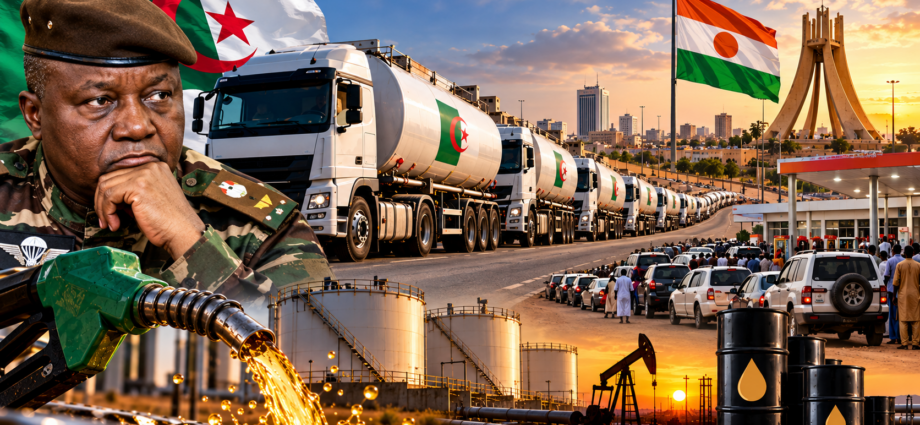
Fuel arrives in Niamey as authorities reassess distribution priorities
A shipment of 3.75 million liters of Algerian fuel has arrived in Niamey, following an unexpected reallocation of 150 tankers originally intended for Agadez. The move underscores ongoing efforts to stabilize fuel supplies in Niger’s capital, where demand remains critical for transportation, commerce, and essential services.
Cost disparity raises financial questions
The fuel, priced at 800 FCFA per liter, is being supplied under an agreement that includes repayment in crude oil. This deal contrasts sharply with Nigeria’s previous supply route, which delivered fuel to Niamey at 702 FCFA per liter including transport fees. The 98 FCFA difference per liter amounts to a potential additional cost of 367.5 million FCFA for the full shipment.
While the price gap is significant, officials have not detailed whether other factors such as delivery reliability or urgency justify the higher expense. The absence of a clear breakdown leaves questions about the true cost-effectiveness of the Algerian supply route.
Strategic reserves take center stage
Beyond immediate costs, the shipment raises broader concerns about Niger’s ability to prevent future fuel shortages. A city like Niamey relies heavily on consistent fuel supplies for mobility, economic activity, and basic services. Without strategic reserves, even minor disruptions can trigger price spikes, logistical bottlenecks, and operational paralysis.
Logistics experts emphasize that emergency deliveries alone are insufficient without a structured stockpile policy. Effective reserves require adequate storage infrastructure, controlled distribution, and transparent tracking to ensure sustainability. The current shipment’s long-term impact depends on whether authorities allocate part of it to bolster emergency reserves or use it solely to meet immediate demand.
Transparency needed to clarify distribution rationale
Officials have not confirmed whether the fuel was redirected due to urgent needs in Niamey or as part of a broader supply strategy. Similarly, the breakdown of the 3.75 million liters how much will be consumed immediately versus stored remains undisclosed. Clarity on these points would help distinguish between reactive measures and proactive planning.
If the shipment aims to rebuild reserves, Niger must also address gaps in storage capacity and management. Without these safeguards, even substantial fuel volumes may fail to prevent future crises.
Key takeaways
Unplanned reallocation: Initial plans to send fuel to Agadez were altered, redirecting 150 tankers to Niamey.
Higher costs: The Algerian supply route costs 98 FCFA more per liter than Nigeria’s previous offering.
Resilience challenge: Niamey’s fuel dependence highlights the need for strategic reserves, not just emergency deliveries.
Unanswered questions: Authorities have not explained the distribution breakdown or long-term supply strategy.
Balancing urgency with foresight
While the Algerian fuel shipment temporarily eases pressure on Niamey’s supply, experts warn against prioritizing immediate relief over lasting solutions. A sustainable fuel strategy requires diversified supply routes, transparent pricing, and proactive reserve management not just crisis-driven imports.
For a capital city, the cost of inaction is far greater than the premium paid for urgent deliveries. Without reliable reserves, Niamey risks repeating the cycle of shortages that have plagued its operations in the past.
By Alasane OUEDRAOGO — Journalist
Comments are closed, but trackbacks and pingbacks are open.