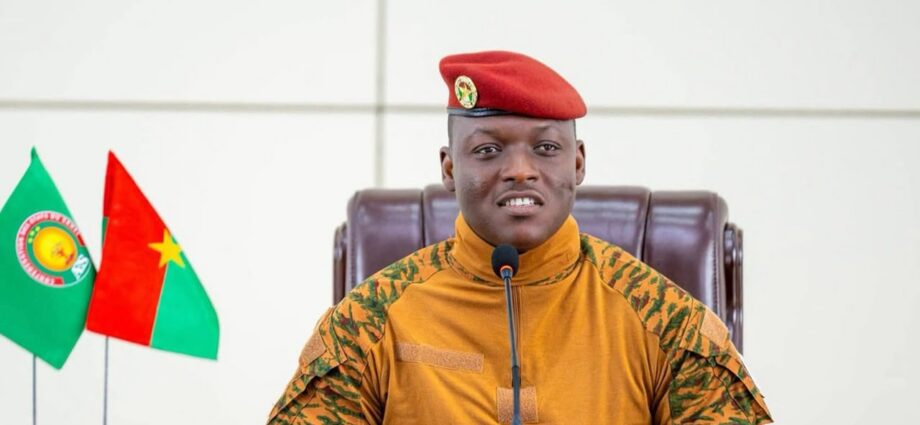
When two political figures from vastly different worlds begin echoing similar themes, it is worth examining the underlying dynamics. The recent convergence between Burkina Faso’s military leader, Ibrahim Traoré, and France’s far-right figure, Marine Le Pen, has raised eyebrows across the political spectrum. At first glance, they appear to be opposites: one a young African officer who seized power in a coup, the other a seasoned European politician known for her nationalist stance. Yet, a closer look reveals a striking overlap in their rhetoric and the contexts that produced it.
The roots of a surprising convergence
To understand why Traoré and Le Pen sound alike, one must look at the forces shaping their respective political landscapes. Traoré came to power in Burkina Faso amid widespread discontent with the previous government’s handling of security and its perceived subservience to former colonial power France. His speeches frequently invoke sovereignty, national dignity, and a break from external influence. Meanwhile, Le Pen has built her career on similar themes: sovereignty, national identity, and skepticism toward supranational institutions like the European Union and NATO.
Both leaders operate in environments where large segments of the population feel left behind by globalization and betrayed by traditional elites. In Burkina Faso, that sentiment is directed at France and its allies in the Sahel. In France, Le Pen’s supporters blame Brussels, immigration, and global elites for their economic and cultural anxieties. The parallel is not coincidental; it stems from a shared political grammar that pits the “people” against a distant, unaccountable “system.”
Shared narratives, different battlefields
Traoré’s public addresses often emphasize self-reliance and the rejection of foreign dictates. He has pushed for greater cooperation with Russia and other non-Western powers, framing this as a necessary step to secure true independence. Le Pen, for her part, has long advocated for France to reclaim its national sovereignty from the European Union, though she has softened some of her positions in recent years to appeal to a broader electorate.
Interestingly, both figures have been accused of authoritarian tendencies and of exploiting identity politics for political gain. Traoré’s critics point to his crackdown on dissent and the postponement of elections. Le Pen’s opponents highlight her party’s history of xenophobia and her efforts to normalize far-right ideas. These criticisms, however, only seem to strengthen their appeal among supporters who view such attacks as proof of the establishment’s fear.
The Sahel context and beyond
The Sahel has become a laboratory for these dynamics. Burkina Faso, along with Mali and Niger, has seen a wave of military takeovers that promise to restore sovereignty and expel foreign forces. The Alliance of Sahel States, a pact among these three countries, embodies this shift. Traoré has emerged as a symbolic figure for many young Africans who see him as a leader willing to stand up to France and the West.
Le Pen, while not directly involved in African affairs, has expressed sympathy for leaders who challenge the post-colonial order. Her foreign policy platform includes reducing France’s military presence in Africa and renegotiating relationships with former colonies. This stance resonates with a French public weary of costly interventions and with African populations eager to assert their independence.
The convergence, therefore, is less about direct coordination and more about parallel responses to similar pressures. Both Traoré and Le Pen are products of a moment when established orders are being questioned, and new political identities are being forged. Whether this alignment will lead to concrete cooperation or remain rhetorical is an open question, but its very existence signals a deeper shift in global politics.
What it means for the future
For observers of African and European politics, the Traoré-Le Pen parallel offers a lens to understand how sovereignist movements are reshaping alliances. In Burkina Faso, Traoré’s popularity rests on his promise to restore national pride and security. In France, Le Pen’s enduring appeal reflects widespread dissatisfaction with the status quo. Their shared emphasis on sovereignty and identity suggests that these themes will continue to dominate political discourse in both regions.
Ultimately, the story of Ibrahim Traoré and Marine Le Pen is not just about two individuals. It is about the broader forces of nationalism, anti-globalization, and the search for authenticity in a complex world. As these forces gain momentum, the lines between left and right, African and European, may become increasingly blurred.
Comments are closed, but trackbacks and pingbacks are open.