- Benin
- Morocco
- Cooperation agreements
Benin and Morocco expand strategic partnership with 14 new cooperation agreements
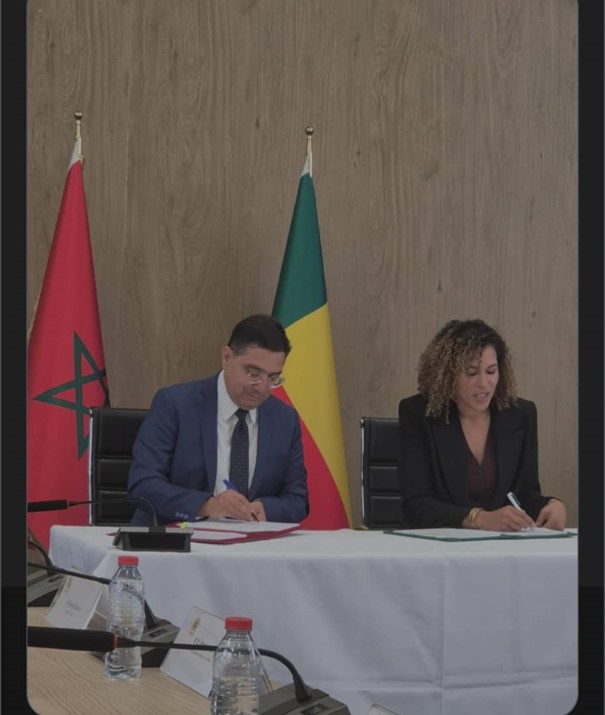
The seventh session of the Benin-Morocco Joint Cooperation Commission convened in Cotonou on Tuesday, July 21, 2026, at the Ministry of Economy and Finance. The meeting culminated in the signing of 14 comprehensive cooperation agreements spanning key sectors, underscoring the robust and evolving partnership between the two nations.
Strengthening ties through shared vision and mutual respect
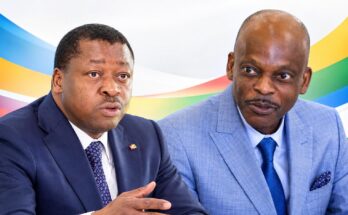
Co-chaired by Corinne Amori Brunet, Benin’s Minister of Foreign Affairs responsible for the Integration of Afro-descendants, and Nasser Bourita, Morocco’s Minister of Foreign Affairs, African Cooperation, and Moroccans Residing Abroad, the session highlighted progress achieved and outlined strategies to further enhance bilateral cooperation. Mr. Bourita commended Benin’s democratic maturity and economic performance, positioning the country as an emerging leader in the region. He emphasized the importance of aligning the partnership with both nations’ governmental priorities to maximize impact, particularly through deeper private sector involvement to boost economic exchanges, attract investments, and support sustainable development. The goal, he stated, is to establish the Benin-Morocco cooperation as a model of inter-African partnership rooted in solidarity, shared growth, and sustainable development.
Addressing security concerns, Mr. Bourita reaffirmed Morocco’s unwavering solidarity with Benin in combating terrorism while advocating for the promotion of a tolerant interpretation of Islam. On his part, Hugues Oscar Lokossou, Benin’s Minister of Economy and Finance responsible for external resource mobilization and debt management, stressed the need to elevate the cooperation to strategic levels across priority areas, citing current economic shifts. He noted that trade exchanges, though promising, still fall short of expectations, and called for cross-sector collaboration leveraging the expertise of both nations. His vision includes fostering a shared prosperity space by pooling resources and efforts.
Ms. Amori Brunet echoed these sentiments, emphasizing the need to deepen collaboration across critical sectors such as the economy, trade, industry, investment, tourism, agriculture, justice, security, vocational training, higher education, scientific research, health, digital innovation, and culture.
Fourteen breakthrough agreements signed
The culmination of the session was the signing of 14 groundbreaking cooperation agreements, each tailored to address specific priorities. Notable among them are:
- Mutual administrative assistance in customs matters;
- Framework agreement on higher education, scientific research, and innovation;
- Judicial mutual assistance convention in criminal matters;
- Extradition convention;
- Convention on the transfer of sentenced persons;
- Action plan in the justice sector;
- Security cooperation agreement;
- Protocol on financial modalities for civil protection cooperation;
- Protocol on cooperation in food safety;
- Framework convention on vocational training;
- Academic scholarship framework agreement, including internships and expertise sharing;
- Memorandum of understanding in sports and athletic training;
- Partnership convention for joint tourism promotion and development;
- Memorandum of understanding on environmental sustainability and sustainable development.
These agreements reflect the commitment of both nations to building a resilient, diversified, and forward-looking partnership that aligns with their shared developmental goals.