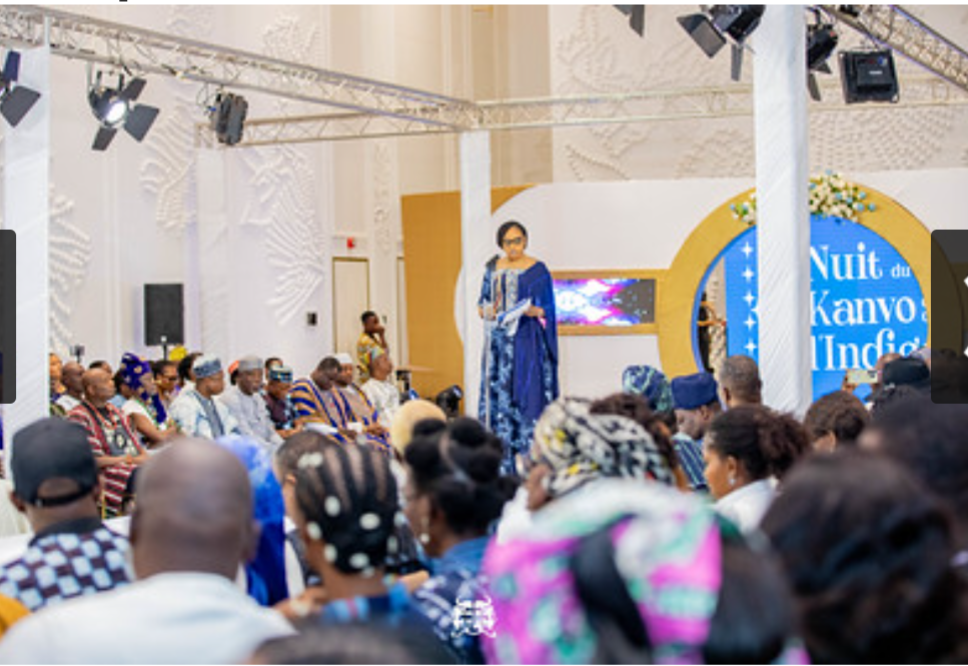
Cotonou’s Sofitel Marina Hotel buzzed with energy on the evening of July 18, 2026, as the inaugural Night of Kanvo and Indigo took center stage. More than a fashion show, this landmark event orchestrated by the Artisan Development Fund (FDA) under the Ministry of SMEs and Employment Promotion showcased a bold economic vision: positioning Benin’s signature textiles as high-end, globally competitive products. With the theme « Heritage Meets Tomorrow: Luxury, Modernity, African Identity », the gathering marked a turning point for local artisans and the nation’s international reputation.
National leadership rallies behind cultural industry push
The evening drew not only West Africa’s fashion elite but also the highest levels of Benin’s government. Joining Nestor Clétus GUEZO, CEO of the FDA, were Awaou BACO, Minister of SMEs and Employment Promotion, Yassine LATOUNDJI, Minister of Culture, Arts and Heritage, along with the Mayor of Cotonou, the Prefect of Littoral, and multiple ministerial advisors and financial partners. Their unified presence signaled a decisive commitment: transforming Benin’s cultural heritage into a sustainable engine of growth.
By formalizing the textile artisan sector, the country aims to shift from subsistence-based craftsmanship to a thriving creative industry—one capable of generating skilled jobs and added value. The strategy centers on strengthening the entire Kanvo and Indigo value chain, ensuring that traditional weaving and dyeing techniques evolve into profitable, scalable enterprises.
From tradition to market: unlocking new economic opportunities
No longer confined to ceremonial use, the Kanvo—Benin’s woven heritage fabric—and the deep-blue hues of Indigo are now positioned as pillars of a robust circular economy. In his keynote speech, the FDA’s director emphasized that this initiative aligns with a broader roadmap to boost the competitiveness of Beninese creators. The goal is clear: forge unbreakable links between grassroots weaving workshops and both domestic and international luxury markets.
For the thousands of artisans—whose skills have been passed down through generations—this institutional support opens doors to unprecedented income streams. By directly connecting weavers and dyers with haute couture designers, the event secures steady, high-value orders. Branding these textiles as Made in Benin also serves as a shield against counterfeit imports, stabilizing local prices and safeguarding producer livelihoods.
Textile craftsmanship, long celebrated for its inclusivity, now emerges as a major employment catalyst. Minister Awaou BACO used the platform to urge young Beninese to embrace these evolving trades. With enhanced access to public and private financing, ancestral know-how is fast becoming a stable, lucrative entrepreneurial path.
Runway success: proving global appeal of Beninese textiles
The evening’s highlight came when fifteen leading designers reimagined Kanvo and Indigo into seventy-five original creations, worn by thirty professional models. The show was a resounding commercial endorsement, demonstrating that Beninese textiles possess the versatility, elegance, and sustainability to compete in the exclusive world of contemporary luxury.
For investors, buyers, and patrons gathered in the Sofitel’s grand hall, the message was unmistakable: Beninese fabric is export-ready, scalable in production, and highly desirable for an international clientele seeking authentic, eco-conscious fashion. The runway became a real-time incubator for trends, proving that historical richness can seamlessly merge with modern design flair.
Building a lasting textile platform for Benin
The night concluded with awards celebrating the resilience and innovation of key players across the value chain. Yet beyond the trophies and national pride, a structural future was set in motion. The success of the Night of Kanvo and Indigo has laid the groundwork for a permanent business platform—one designed to outlast the event itself.
To sustain momentum, Beninese authorities have called on technical and financial partners to deepen their investments. The immediate priority is industrializing production while preserving artisanal integrity. This means upgrading yarn quality, adopting locally sourced eco-friendly dyes, and standardizing output to meet surging regional and global demand.
Cultural heritage as a driver of economic sovereignty
The inaugural edition did more than celebrate beauty—it mapped the blueprint for a sovereign textile industry. By elevating Kanvo and Indigo into the luxury and modern fashion segments, the FDA has shown that Benin’s heritage is not a relic of the past, but a bright economic future. The gamble has paid off: culture is now a cornerstone of national prosperity, generating local jobs and foreign exchange while positioning Benin as a cultural and economic leader on the continent.