Gabon and France: a landmark state visit reshaping bilateral ties
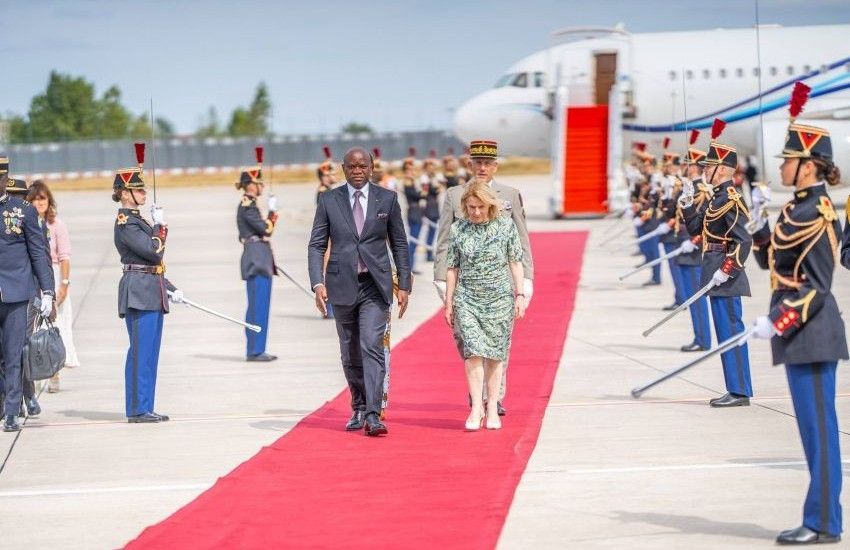
Libreville, July 20, 2026 — The three-day state visit of Gabonese President Brice Clotaire Oligui Nguema to France marks more than a diplomatic courtesy call. It represents a strategic recalibration of relations between Libreville and Paris, with economic cooperation, industrial sovereignty, security, and diaspora engagement taking center stage.
For the first time since assuming office, President Oligui Nguema is granted a state visit—the highest level of diplomatic protocol. This deliberate choice signals both nations’ commitment to a fresh chapter in their relationship, particularly as geopolitical dynamics across Africa shift and France reassesses its continental presence.
The visit was announced in June by the Gabonese leader, who emphasized its far-reaching implications. A high-powered delegation of politicians, business leaders, and media representatives accompanies him, underscoring the economic, institutional, and strategic ambitions of this mission.
Three days to forge a renewed alliance
The itinerary unfolds with ceremonial grandeur: a tour of the Palace of Versailles, military honors at Les Invalides, and a private meeting between President Oligui Nguema and French President Emmanuel Macron at the Élysée Palace. These moments set the stage for substantive negotiations.
Key discussions will build on agreements initiated during Macron’s visit to Libreville in November 2025. New bilateral accords are expected to be finalized, covering critical areas such as Gabon’s economic transformation, infrastructure modernization, industrial development, and defense cooperation. A particularly significant request involves transferring the De Gaulle military camp’s land title to Gabon, which would enable the construction of a national training center for Gabon’s defense and security forces.
The second day includes a poignant memorial visit, with a wreath-laying at the Arc de Triomphe followed by a tour of Mont-Valérien—a historic site where African resistance fighters were executed during World War II. This gesture highlights the deep historical ties binding the two nations.
Diplomacy driven by people and prosperity
Beyond presidential talks, institutional meetings are scheduled with French Senate President Gérard Larcher and Paris Mayor Emmanuel Grégoire. A cultural stop at the restored Notre-Dame Cathedral adds a symbolic layer to the visit.
Yet the highlight may well be the president’s engagement with Gabon’s diaspora in France. Authorities aim to foster an open dialogue, including with critical voices, reflecting a more inclusive approach to diplomacy. Given recent policy debates within the diaspora, this exchange tests the government’s ability to engage constructively with its citizens abroad.
This shift toward participatory diplomacy positions expatriates as key stakeholders in the bilateral relationship.
From ceremony to concrete results
The true measure of this visit lies not in its pageantry but in its tangible outcomes. The agreements signed must translate into measurable benefits for both populations. For Gabon, the visit offers a pathway to accelerate industrialization, infrastructure growth, human capital development, and economic diversification under its Fifth Republic framework. For France, it signals a willingness to evolve toward a partnership rooted in mutual investment and shared interests across the continent.
As the sun sets on three days in Paris, the legacy of this visit will hinge on whether the two leaders have laid the groundwork for a sustainable, forward-looking partnership—one defined by trust, results, and a shared vision for the future.