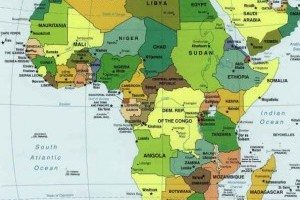
The Bénin has stunned observers by surpassing Nigeria in per capita GDP for the first time in decades—a feat achieved without relying on oil or natural gas revenues. This remarkable turnaround reflects a decade of robust economic policies centered on diversification, industrialization, and corruption control, positioning the small West African nation as a model for sustainable growth in Africa.
Economic growth five times faster than Nigeria
Between 2016 and 2025, Bénin recorded an average annual growth rate of 6.1%, nearly five times Nigeria’s sluggish 1.3% during the same period. The International Monetary Fund (IMF) reports that Bénin achieved a per capita GDP of $1,635 in 2025, compared to Nigeria’s $1,200—a gap that has widened in recent years despite Africa’s largest oil producer’s vast hydrocarbon wealth. Notably, Bénin’s growth accelerated to 7.3% in 2025, while Nigeria managed just 4.2%.
Inflation control: a key differentiator
While Nigeria grappled with runaway inflation—peaking at 23% in 2025—Bénin maintained remarkable price stability with inflation averaging just 1.3% over the past decade. This success contradicts long-held assumptions that low inflation stifles economic expansion in Africa. Nigeria’s economic woes have triggered severe currency devaluation, with the naira losing over 2,100 times its 1973 value against the dollar by early 2026.
Industrialization and diversification drive progress
At the heart of Bénin’s economic transformation is the Glo-Djigbé Industrial Zone (GDIZ), a public-private partnership spanning 1,640 hectares near Cotonou. Operational since 2022, the GDIZ already employs 15,000 people and has become Africa’s top industrial zone (ranked 7th globally by fDi Intelligence). The zone focuses on adding value to local agricultural products like cotton, cashews, and soybeans—Bénin is Africa’s leading cotton producer with 600,000 tons annually. The textile sector alone aims to become the world’s largest eco-friendly integrated facility by 2030.
Tourism and infrastructure: twin engines of growth
Beyond industrialization, Bénin is prioritizing tourism, targeting a 13% contribution to GDP by 2030 (up from 6% in 2025). Initiatives include the annual Vodoun Festival and a 2027 Club Med resort with 336 rooms, including 30 luxury suites. The country has also significantly improved electricity access, narrowing the gap with Nigeria—from 29.6% in 2016 to 57% in 2023, compared to Nigeria’s 61.2% growth in the same period.
Governance and anti-corruption success
Bénin’s economic achievements are underpinned by strong governance. The World Bank ranked it fifth in Africa for business climate in 2025, while Transparency International placed it 70th globally (and eighth in Africa) in its 2025 Corruption Perceptions Index. These rankings surpass many Latin American and Eastern European countries, including Argentina, Brazil, Mexico, Hungary, and Bulgaria.
Regional implications and future outlook
This milestone follows similar achievements by Côte d’Ivoire (2023), Senegal, and Cameroon (2024), all outpacing Nigeria in per capita GDP despite minimal or no oil production. Bénin’s success story demonstrates that strategic diversification and industrialization can yield greater prosperity than resource extraction alone. With projected growth of 6-7% through 2030 (versus Nigeria’s 4%), Bénin is poised to solidify its position as West Africa’s economic leader.
Comments are closed, but trackbacks and pingbacks are open.