With its 2027 budget framework, Benin has embarked on a transformative journey in public policy modernization. For the first time under the current seven-year term, the government has embedded climate resilience, gender equality, and regional disparities as core pillars in financial planning. This strategic shift reflects a long-term vision that transcends conventional fiscal management, positioning public investment as a catalyst for sustainable development and societal resilience.
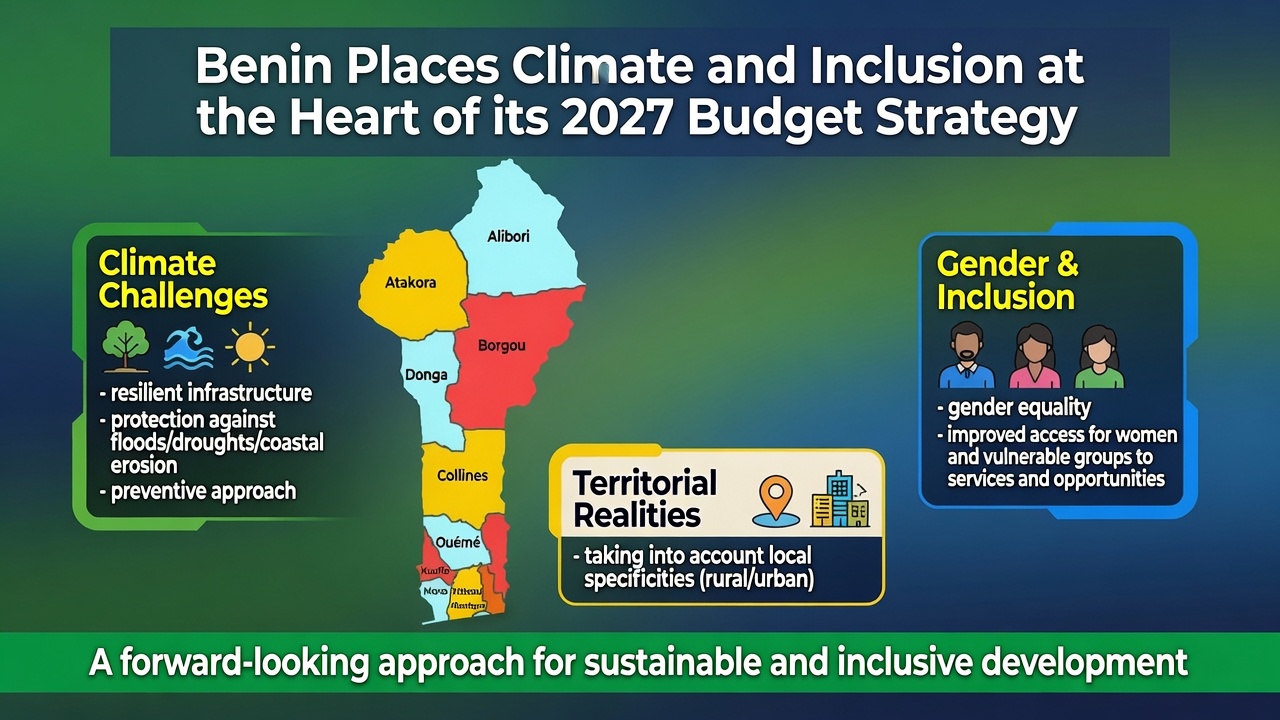
The decision to prioritise climate-related risks within budgetary decisions marks a significant evolution in governance. By preemptively allocating resources to resilient infrastructure, vulnerable communities receive enhanced protection against recurring challenges such as flooding, droughts, and coastal erosion. This proactive approach not only mitigates future economic and social costs but also reinforces the principles of good governance by reducing dependency on crisis response mechanisms.
Gender mainstreaming represents another critical advancement in this budgetary framework. Acknowledging that public policies often yield uneven outcomes across demographics, the government is committed to fostering an inclusive development model. This commitment ensures equitable access to essential services, economic opportunities, and social protection mechanisms for women, youth, and marginalised groups, thereby addressing systemic inequalities embedded in traditional budgetary allocations.
Territorial equity has also emerged as a defining feature of this approach. Recognising that urban and rural regions face distinct socio-economic challenges, the budget framework incorporates localised planning to enhance the effectiveness of public interventions. By tailoring policies to regional realities, the state aligns national priorities with ground-level needs, fostering a more responsive and citizen-centric governance model.
The 2027 budget framework underscores a broader shift towards strategic fiscal planning that anticipates economic, social, and environmental transformations. Beyond its technical aspects, the budget functions as a dynamic instrument for guiding Benin’s sustainable transformation while systematically reducing vulnerabilities across its population.
This forward-thinking strategy also strengthens Benin’s standing among international development partners. As global priorities increasingly favour climate-adaptive policies, social inclusion, and sustainable growth, the country positions itself as a credible and attractive destination for funding dedicated to resilience-building, ecological transition, and inclusive development initiatives.
The 2027 budget framework thus embodies a political commitment to proactive crisis prevention rather than reactive management. By integrating climate, social, and territorial dimensions into the earliest stages of policy design, the government adopts a contemporary model of public finance management—one rooted in foresight, efficiency, and equity. This approach signals Benin’s ambition to cultivate a more resilient, inclusive, and future-oriented growth trajectory, ensuring that progress benefits all segments of society.