Gabon: Oligui Nguema’s state visit to France marks new diplomatic chapter
Paris, July 21, 2026 – Diplomatic protocol speaks volumes. When a nation grants its highest honors to a visiting foreign leader, the gesture transcends mere symbolism. It signals a deliberate shift in bilateral relations and a commitment to shared ambitions.
The French Republic’s reception of Gabonese President Brice Clotaire Oligui Nguema as a state guest was more than a diplomatic courtesy. It marked the official launch of a reinvigorated partnership between Paris and Libreville, one rooted in mutual respect and forward-looking cooperation.
This was no ordinary visit. It was the first state-level engagement for President Oligui Nguema since assuming office and the most prestigious official reception accorded to a Gabonese leader since Omar Bongo Ondimba’s historic visit in October 1984. The timing and scale of the event underscored both nations’ intent to redefine their alliance beyond historical ties toward a partnership built on economic opportunity, security collaboration, and sustainable development.
A masterclass in diplomatic protocol
The day began with full military honors at Les Invalides, where President Oligui Nguema inspected an honor guard before a parade of unprecedented grandeur. His procession through Paris featured an escort of 25 motorcycle outriders and 128 cavalrymen from the Republican Guard—an elite formation rarely deployed for foreign dignitaries, reserved exclusively for heads of state on state visits.
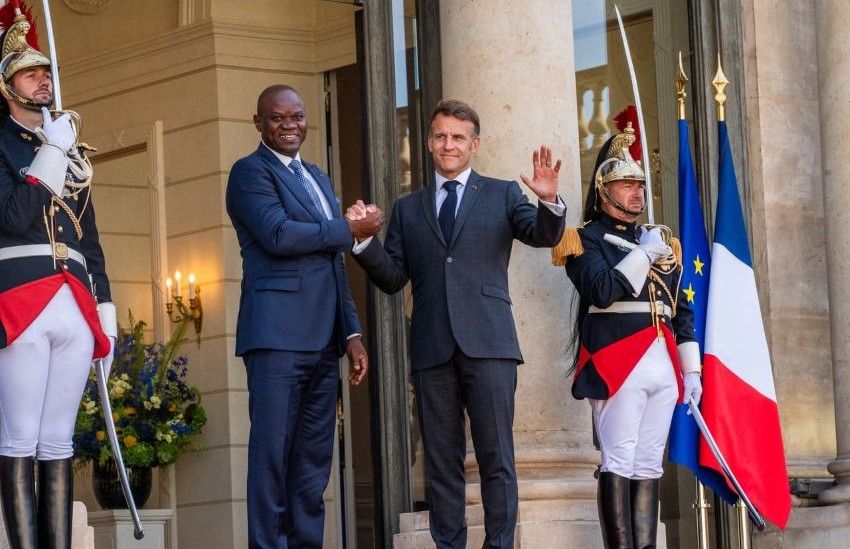
Upon arrival at the Élysée Palace, President Emmanuel Macron greeted his Gabonese counterpart with a handshake that carried historical weight. The two leaders then engaged in substantive discussions focused on strengthening strategic ties between their countries.
In diplomacy, symbolism often precedes substance. By extending this level of hospitality, France signaled Gabon’s growing importance in its African policy. The message was clear: Libreville is now a key partner in Paris’s vision for a more balanced and reciprocal relationship with Africa.
Redefining Franco-Gabonese relations
The visit comes as both nations seek to move beyond traditional aid models toward a partnership grounded in investment, industrialization, and mutual benefit. The talks at the Élysée covered critical areas including energy transition, infrastructure development, and security cooperation—all aimed at fostering economic sovereignty for Gabon while creating opportunities for French investors.
For Gabon, this diplomatic milestone aligns with a broader national strategy to reduce dependency on raw material exports, boost local processing of natural resources, and improve living standards through targeted infrastructure projects. For France, it reflects a broader ambition to build a new generation of African partnerships based on shared growth, technology transfer, and sustainable returns.
A message to the world
The significance of this visit extends far beyond the two capitals. In an era of intensifying geopolitical competition across Africa, every diplomatic gesture is scrutinized for its implications. France’s decision to honor President Oligui Nguema with such distinction sends a powerful signal: Gabon is emerging as a stable and forward-thinking partner in Central Africa, committed to sustainable development and regional stability.
The grandeur of the Republican Guard’s horses, the precision of the military parade, and the historic setting of the Élysée Palace were not mere spectacles. They were deliberate statements about the future direction of Franco-Gabonese relations—one where dialogue, economic collaboration, and concrete outcomes take precedence over past legacies.
In embracing the highest standards of French republican protocol, Paris and Libreville have not only honored a visiting leader. They have inaugurated a new chapter—one defined by strategic alignment, mutual interests, and a shared vision for progress.