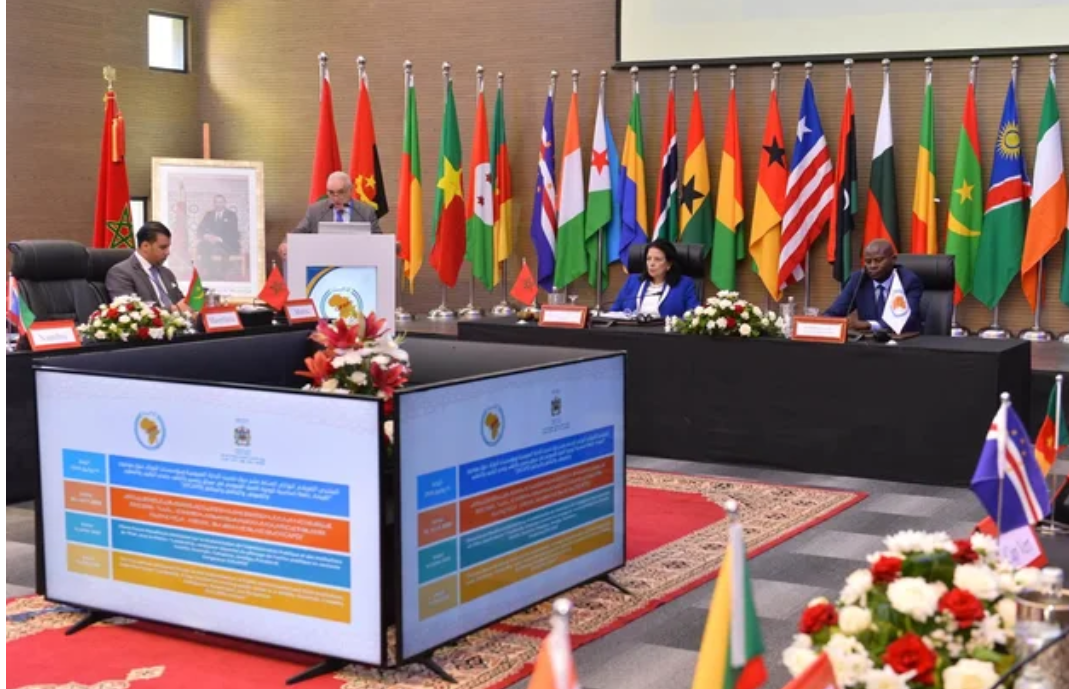
Rabat became the epicenter of African public sector innovation as the 17th CAFRAD ministerial forum convened to redefine administrative leadership across the continent. Among the high-profile delegates, the Beninese delegation stood out, presenting a bold vision for modern governance under the leadership of Rodrigue Chaou, Minister in charge of Budget and Public Service.
Redefining African public administration through digital transformation
The historic city of Rabat, a longstanding hub for South-South cooperation, hosted this pivotal gathering of ministers, international experts, and senior civil servants. Since its establishment in 1964, the African Centre for Training and Research in Administration for Development (CAFRAD) has remained the continent’s premier institution for reshaping state structures and public governance models.
This year’s theme—leadership as a catalyst for public action in VUCA(PD) environments—addressed the urgent need for administrations to thrive amid volatility, uncertainty, complexity, ambiguity, and rapid digital disruption. For Benin, this forum was far from a ceremonial gathering; it was a strategic platform to showcase the country’s commitment to transforming its public administration into a driver of economic competitiveness.
Leadership in turbulent times: Agility and digital sovereignty
The forum’s agenda featured two groundbreaking presentations that set the tone for future public sector leadership. Dr. Dieudonné Assouvi, Director-General of CAFRAD, outlined the profile of tomorrow’s public manager, emphasizing agile leadership capable of anticipating economic shocks and responding in real time to sustain state continuity. Meanwhile, Professor Sehl Mellouli of Laval University in Canada explored the intersection of political leadership and digital sovereignty, arguing that in an era of artificial intelligence and cloud computing, technological independence is no longer optional but essential for national security and economic resilience.
Benin’s digital revolution: A blueprint for African public services
During the ministerial exchange session, the Beninese delegation highlighted its remarkable progress in digitizing public services. Rodrigue Chaou underscored that a modern administration is more than a political statement—it is the foundation for private sector growth and wealth creation. By streamlining administrative processes, Benin has drastically reduced transaction costs for businesses, fostering a more attractive investment climate.
Key achievements shared included the full digitalization of tax collection and customs procedures, which has not only secured public revenue but also eliminated bureaucratic bottlenecks that previously hindered economic operators. Additionally, the introduction of an online single-window system for business registration has slashed the time required to establish a legal entity to just a few hours, empowering youth entrepreneurship and attracting foreign direct investment. The transparency of digital platforms has further minimized physical interactions between citizens and officials, curbing corruption risks and strengthening institutional trust.
Inclusion and resilience: Digital governance for all citizens
While macroeconomic gains are significant, Benin’s digital transformation prioritizes equitable access for all citizens. The government has paired digitization with decentralization policies to ensure essential services reach even the most remote communities. Whether obtaining civil status documents, judicial records, or national IDs, reduced administrative delays help reintegrate individuals into the formal economy and promote equal opportunities nationwide.
During discussions in Rabat, the importance of digital inclusion emerged as a critical theme, ensuring that technological advancements do not leave vulnerable populations behind. Benin’s approach demonstrates that modernization must be inclusive, bridging urban and rural divides to create a cohesive national development strategy.
From vision to action: Preparing the next phase of CAFRAD’s agenda
As the forum concluded, attention turned to the upcoming 61st session of the CAFRAD Administrative Council. Delegations, including Benin’s, are now tasked with translating the strategic discussions into actionable roadmaps. Key priorities include reviewing CAFRAD’s operational performance, designing advanced training programs for Africa’s senior civil servants, and deepening South-South cooperation in administrative engineering.
By actively participating in these deliberations, Benin is not merely adopting governance models—it is co-creating the public administration of the 21st century. This proactive stance sends a powerful message to development partners and international markets: in Cotonou, the state is modernizing to grow stronger and more resilient.