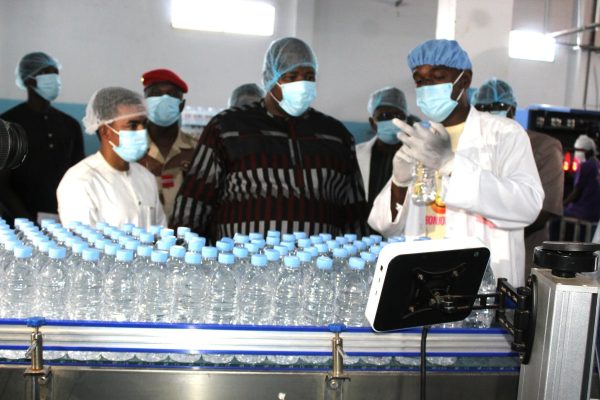
Niamey, July 15, 2026 — Economic sovereignty is no longer just a matter of political declarations. In Niger, it is now measured by the pulse of production lines. Minister of Trade and Industry Abdoulaye Seydou has intensified his factory tours to turn the country’s local production ambitions into tangible achievements.
On Tuesday, July 14, the government official visited Sahel Agro Ingénierie, followed by the mineral water production plants Benie and Belvie. This initiative goes beyond mere protocol—it reflects a strategic effort to assess the health of the national industry and pinpoint the obstacles still hindering its progress.
From groundnuts to bottled water: exploring Niger’s industrial fabric
At Sahel Agro Ingénierie, a leader in processing locally grown oilseeds like groundnuts, sesame, and tiger nuts, the discussions centered on production capacity and growth potential. The facility currently produces around 1,000 liters of oil daily, a volume authorities aim to expand to gradually reduce the country’s reliance on imported cooking oils.
The minister’s itinerary then led to the mineral water factories of Benie and Belvie. There, he examined every stage of production—from water purification to bottle packaging—with a sharp focus on compliance with hygiene standards, industrial quality requirements, and quality control mechanisms in place.
Power, logistics, and investments: tackling industrial hurdles
These visits sparked direct exchanges with company leaders, highlighting recurring challenges such as energy shortages, logistical bottlenecks, and the need for investment to scale up production capacities.
In response, Abdoulaye Seydou reaffirmed the government’s priorities: ensuring products meet international quality benchmarks, maintaining price transparency in the domestic market, and actively fostering an industrial sector capable of strengthening Niger’s economic autonomy.
Local production as the backbone of Niger’s economic sovereignty
This latest field mission follows a recent tour of other industrial sites across the country, underscoring the authorities’ commitment to maintaining close oversight of local manufacturers.
Local transformation is now seen as a key driver for value creation, reducing import costs, and reinforcing national economic sovereignty. By adopting this hands-on approach, the government is positioning Niger’s industry as a sustainable growth engine and a cornerstone of the country’s independence.