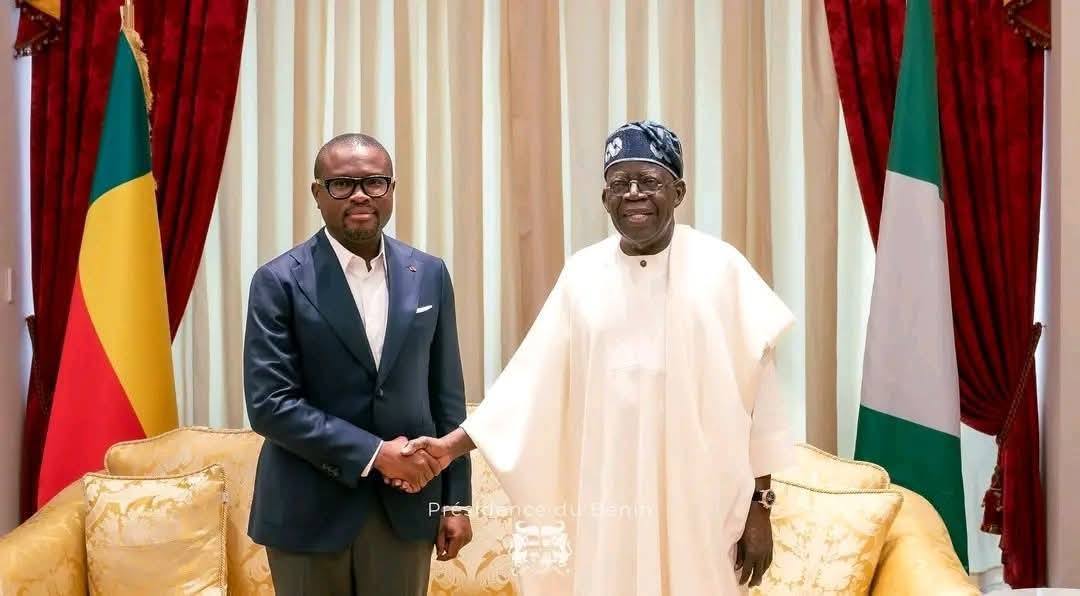
Just days after taking the oath of office on May 24, President Romuald Wadagni of Benin swiftly embarked on his international agenda. On Monday, June 1, the Beninese head of state journeyed to Abuja, the capital of the Federal Republic of Nigeria. This inaugural official trip abroad serves as a significant declaration of his administration’s political and diplomatic priorities.
By selecting the regional powerhouse of Nigeria for his first venture beyond national borders, President Wadagni has executed a powerful diplomatic maneuver, revealing the geopolitical focus of his five-year term.
A calculated move for economic pragmatism
In the intricate world of diplomatic protocol, a newly elected head of state’s initial international visit is never arbitrary; it sets the course, defines alliances, and communicates a clear vision. President Romuald Wadagni’s decision to head to Abuja underscores a commitment to pragmatism.
Nigeria is more than just a neighboring country; it stands as Benin’s foremost commercial partner by a significant margin and acts as the economic engine for the entire sub-region.
“By laying the foundational stone of his neighborhood diplomacy in Abuja, President Wadagni signals an unambiguous priority: to strengthen connections, secure trade flows, and forge a mutually beneficial partnership.”
Three pillars of the Cotonou-Abuja alliance
This high-level meeting between the two executive branches aims to establish the groundwork for renewed cooperation, structured around three primary objectives:
- Bolstering bilateral ties: To streamline political interactions and overcome past disagreements, thereby ushering in a new era of mutual trust.
- Ensuring secure exchanges: To standardize cross-border and customs policies, guaranteeing formal, efficient, and advantageous trade for both nations.
- Fostering co-development: To solidify an economic synergy where Benin serves as a strategic services hub and a vital gateway, rather than merely observing Nigeria’s economic might.
Beninese diplomacy rooted in its vital sphere
This initiative represents a methodological shift for Beninese diplomacy, which is now operating with renewed determination. The Wadagni administration is sending a clear message to its international partners: regional integration and stability with neighboring countries form the cornerstone of its foreign policy.
By prioritizing engagement with nations that share Benin’s borders and destiny, the new president is first ensuring the stability of his foundational relationships. This strategic choice is widely regarded as astute by observers, who interpret it as a promise of a practical, realistic diplomacy firmly oriented towards the nation’s economic interests.
The focus now shifts to how the discussions held in Abuja will translate, in the coming months, into tangible bilateral agreements benefiting economic operators on both sides of the frontier.