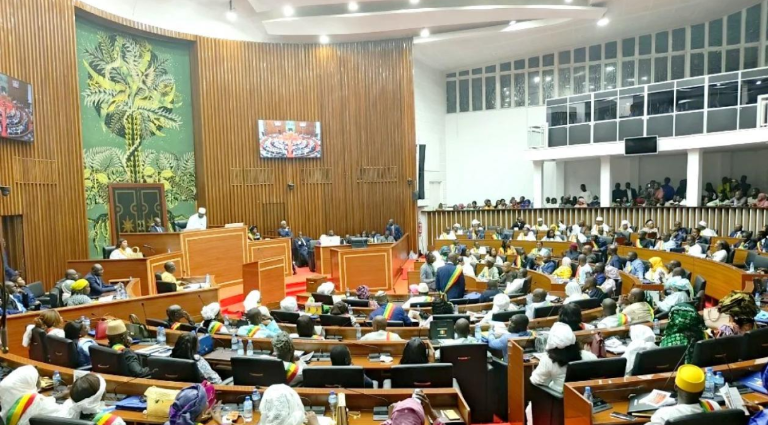
The Beninese Senate opened its first ordinary session on October 28, 2026, in Cotonou, with political stability at the forefront of its agenda. President Patrice Talon outlined the new chamber’s core mission: preventing institutional gridlocks that could derail public action, a threat starkly illustrated by recent political tensions in neighboring Senegal.
Can institutional arbitration keep Benin’s governance on track?
As Senegal grapples with a legislative standstill over the 2026 revised budget, Benin’s upper house is positioning itself as a safeguard against similar disruptions. The Senate’s president made it clear: this institution is designed not to fuel political rivalries but to resolve them before they escalate into crises. ‘Our Senate exists solely to calm political tensions,’ Talon stated during the session, emphasizing a proactive approach to institutional mediation.
With 25 members seated for its first full term, the Senate embodies a constitutional reform enacted in 2025. Its mandate goes beyond routine oversight—it serves as a constitutional firewall against prolonged institutional conflicts that could paralyze governance. By vetting key legislation before enactment, the chamber aims to ensure that disagreements never spiral into systemic breakdowns.
How the Senate’s powers could prevent legislative stagnation
The Beninese Senate’s role is structured around four pillars, each designed to reinforce stability:
- Upholding democracy and social cohesion: The chamber is tasked with protecting fundamental freedoms and preventing political violence before it undermines public trust.
- Constitutional and electoral oversight: It must approve or reject bills that amend the constitution, regulate elections, or discipline political parties—preventing last-minute legislative surprises.
- Second-opinion mechanism: When the National Assembly and the presidency clash over a bill’s content, the Senate can demand a second review, though this does not extend to budgetary laws—a critical distinction from Senegal’s gridlock.
- Mediation in institutional disputes: By providing an independent arbiter, the Senate offers a neutral forum to resolve conflicts before they stall policy implementation.
The goal is not to eliminate disagreement—an inevitable feature of democratic systems—but to channel disputes into constructive dialogue rather than into paralyzing institutional feuds.
Senegal’s budget battle: a cautionary tale
Across the border, Senegal’s experience with its 2026 revised finance bill highlights the dangers of unchecked legislative gridlock. On October 23, the National Assembly’s Finance Committee rejected the government’s proposal outright, including two government-backed amendments. The standoff threatened to stall critical public spending, from infrastructure to social programs.
Days later, the government requested a temporary recess to renegotiate terms with lawmakers, a move that bought time but underscored the fragility of consensus. While the deadlock wasn’t permanent, it exposed how easily budgetary disputes can escalate into broader governance crises when institutions fail to mediate effectively.
Striking the balance between debate and dysfunction
Benin’s Senate cannot replicate Senegal’s exact scenario, thanks to its narrower scope over financial laws. Yet the comparison remains instructive: the challenge lies not in avoiding disagreements but in ensuring they don’t metastasize into systemic failures. The Senate’s effectiveness will hinge on three factors:
- Credibility of arbitration: Will its rulings be respected, or will they become another battleground for political score-settling?
- Constitutional rigor: Can the chamber enforce its role without overstepping into executive or legislative turf?
- Public trust: Will citizens see it as a stabilizing force or just another layer of bureaucracy?
For President Talon, the message is unambiguous: political stability isn’t a luxury—it’s a prerequisite for progress. Whether the Senate delivers on this promise will define Benin’s trajectory in the coming years. Beyond the speeches and procedural rules, its true test lies in action: can it turn potential crises into manageable compromises? The answer will shape not just the Senate’s legacy, but the country’s future.
Comments are closed, but trackbacks and pingbacks are open.