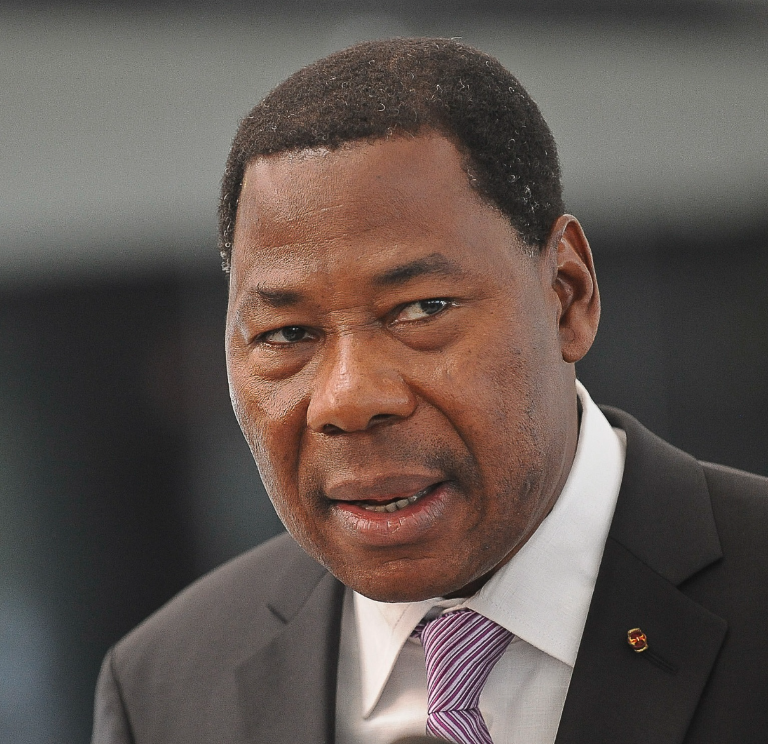
In a dramatic political twist, former Bénin president Thomas Boni Yayi has announced his decision to join the newly established Senate, set to be inaugurated in Porto-Novo on July 30, 2026. This move comes despite his vocal opposition to the Senate’s creation during the 2025 constitutional reforms. The former head of state, who governed from 2006 to 2016, now frames his participation as a patriotic duty rather than a political maneuver.
In an official statement shared on his Meta page, Boni Yayi clarified that his decision stems from constitutional obligation rather than personal ambition. « My intention is to exercise my right as a senator to contribute to our nation’s ideals, » he stated, emphasizing that his role is mandated by law. He views the Senate not as a battleground for past disputes, but as a constructive forum for national dialogue and reconciliation. His shift in stance highlights a pragmatic approach to institutional engagement, prioritizing national cohesion over partisan conflicts.
From opposition to institutional engagement
The Senate’s creation emerged from the 2025 constitutional revisions, spearheaded by President Patrice Talon. The reform introduced a bicameral parliament to modernize Bénin’s governance structure, addressing contemporary challenges in security, development, and institutional stability. The new upper house is designed to serve multiple purposes:
- Legislative balance: Providing a more deliberative chamber to scrutinize laws with long-term legal and social viability in mind.
- Territorial representation: Amplifying the voices of local governments and traditional leadership for balanced governance.
- Institutional memory: Incorporating former heads of state to leverage their experience for national benefit.
President Talon’s vision extends beyond mere institutional restructuring. The Senate is positioned as a stabilizing force, capable of mitigating sociopolitical tensions before they escalate. By including historical political figures, the chamber aims to foster cross-partisan consensus on critical issues, from counterterrorism efforts in the north to major infrastructure projects.
A regional model for democratic resilience
Bénin’s decision to adopt a Senate reflects a broader commitment to democratic maturity in West Africa. In a region grappling with security and economic challenges, the country is reinforcing its institutional framework to safeguard stability. The Senate’s design aligns with President Talon’s reform agenda, which has touched every sector: economic modernization, border security enhancement, international diplomacy, and the consolidation of the rule of law.
The upcoming inauguration on July 30, 2026, in Porto-Novo is already generating anticipation. Boni Yayi‘s participation is seen as a symbolic milestone, signaling the reconciliation between political factions and the elevation of national interests above partisan divides. His presence in the Senate chamber could set a precedent for future collaborations between former leaders and sitting administrations.
Legacy and future of Bénin’s governance
Analysts interpret Boni Yayi‘s acceptance of the Senate seat as a vote of confidence in Bénin’s institutional resilience. The move underscores the Senate’s role as more than a legislative body—it is a platform for dialogue, peace-building, and economic progress. As the nation prepares for the Senate’s official launch, the focus shifts to collective problem-solving and long-term stability.
The bicameral system, with its emphasis on deliberation and inclusivity, positions Bénin as a potential model for democratic governance in the region. By embracing reform and fostering unity, the country is charting a course toward a more prosperous and harmonious future.