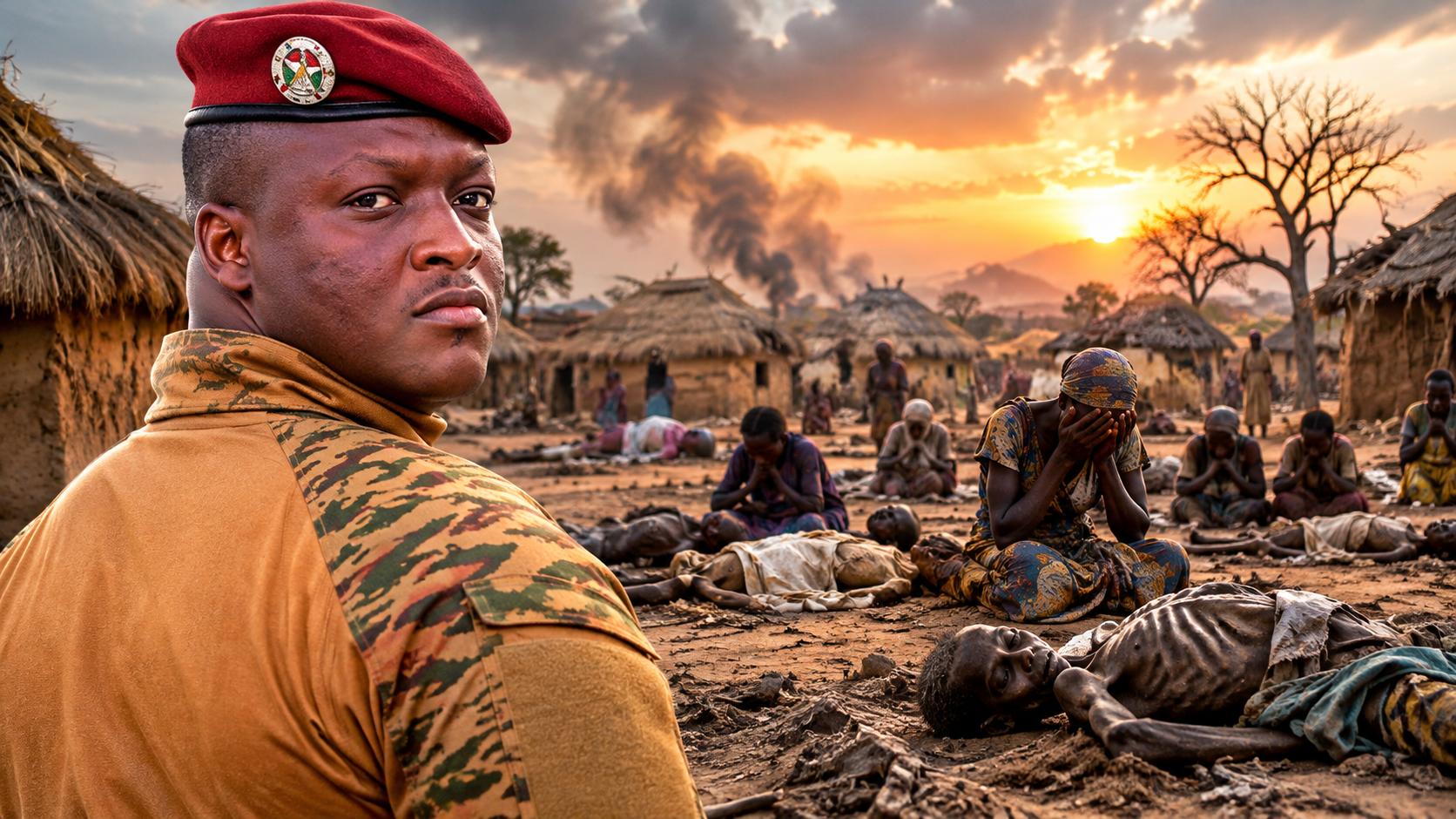
Barely 77 kilometres north-east of Ouagadougou, the village of Boussouma is enduring a humanitarian and security crisis without precedent. Once a crossroads of trade and a symbol of community cohesion, the locality is now witnessing a forced rural exodus, as residents flee the relentless advance and gradual entrenchment of armed terrorist groups.
The unravelling of traditional anchors: a green light for attackers
The security collapse stems directly from the recent reorganisation of the administrative and traditional framework imposed by the authorities. By dismantling local customary authorities and disrupting the historic administrative network — through the application of legislation on customary chiefdom status (law no. 002-2026/ALT) and adjustments within the royal court of Boussouma — the central government shattered the social shield and informal security anchor that still held the area together.
This institutional vacuum and the resulting loss of bearings appeared on the ground as a veritable starting signal for armed groups. Exploiting the weakening of traditional structures that ensured community relay and local intelligence, the attackers swiftly moved in to impose their control.
The noose tightens around the capital
The progressive installation of armed groups and the near-total displacement of Boussouma’s population mark a critical stage in the country’s security deterioration. Seeing a village less than 80 kilometres from the capital deserted under terrorist pressure demonstrates the scale of the state’s territorial retreat.
As displaced people stream into neighbouring localities or attempt to reach the outskirts of Ouagadougou in utter destitution, the abandonment of Boussouma sharply raises the question of whether ongoing institutional reforms are relevant — reforms perceived by local populations as decisions disconnected from the vital urgencies on the ground.
Reactions and fallout: a nation confronts the unthinkable
The fall of Boussouma has triggered a wave of reactions across Burkina Faso, from civil society organisations to ordinary citizens. Many are asking how a village so close to the seat of power could be emptied without a decisive response. The public debate now centres on the perceived disconnect between institutional reshuffles and the immediate security needs of communities.
Analysts and local leaders point to the broader implications: if Boussouma can be abandoned, what does that say about the state’s capacity to protect other towns and villages in the region? The exodus has also strained resources in host communities, where displaced families arrive with nothing, adding pressure on already fragile local services.
What comes next for Boussouma and beyond
With the village now largely deserted, questions loom over its future and that of the wider area. Some observers argue that any strategy to reclaim territory must begin by restoring the traditional and administrative structures that once provided a measure of stability. Others warn that without addressing the root causes of the institutional vacuum, similar collapses could follow.
The coming months will be critical. As the displaced wait for a semblance of normalcy, the authorities face mounting pressure to articulate a coherent response that goes beyond military measures. For now, Boussouma stands as a stark reminder of the stakes — and a test of whether the state can adapt before more communities are lost.
Comments are closed, but trackbacks and pingbacks are open.