Government Cracks Down on Exploitative Content
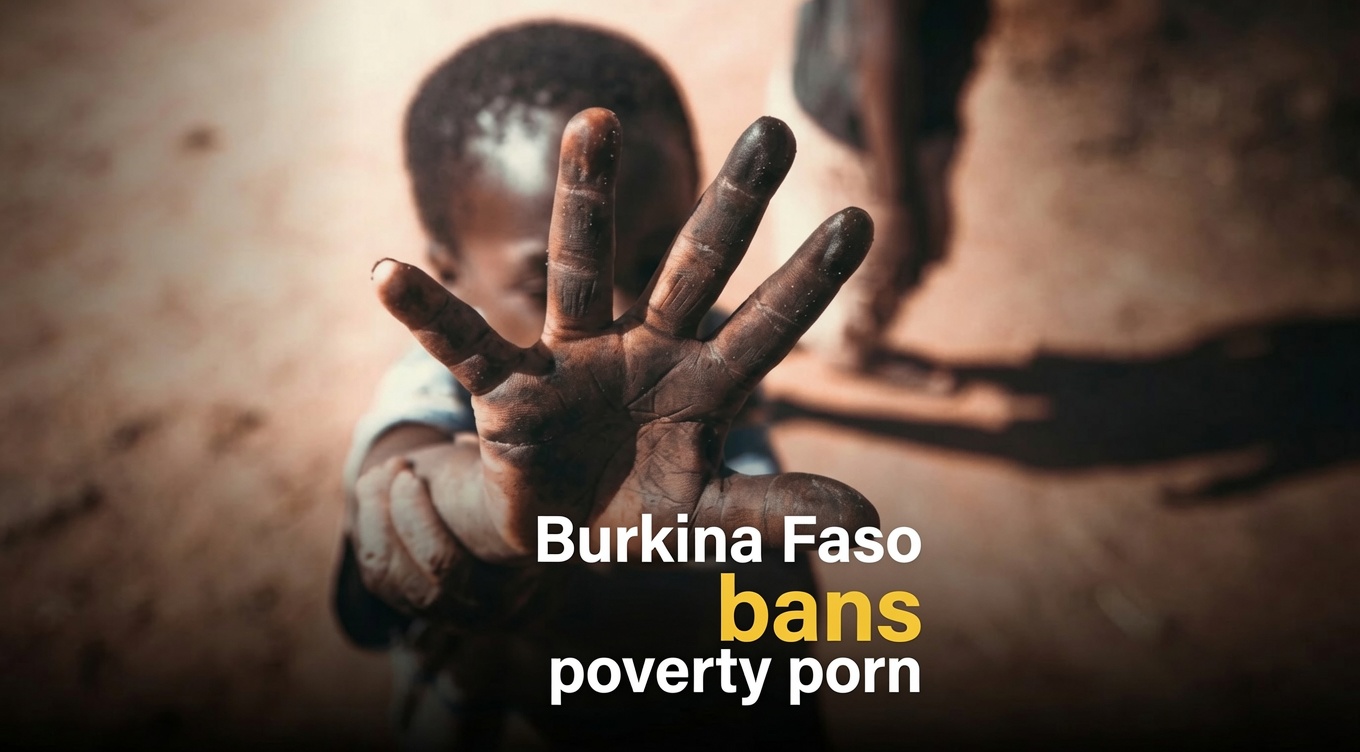
The Burkina Faso transitional authorities have enacted a stringent ban on poverty porn—the practice of filming human suffering for online engagement or fundraising. This legislative move marks a significant shift in how distress is represented in digital spaces, placing human dignity at the forefront of public discourse.
The Ethical Dilemma of Digital Misery
Social media platforms have turned human hardship into a commodity, where distressed children, internally displaced families, and communities facing severe deprivation are reduced to clickbait. While such content often aims to mobilize aid or raise awareness, it frequently crosses ethical boundaries by exploiting vulnerability for emotional impact. The government’s decision seeks to halt this voyeuristic approach, ensuring that individuals retain their dignity rather than being depicted as passive objects of pity.
Strategic Implications Beyond Ethics
This prohibition is not merely about moral concerns; it aligns with broader geopolitical and security objectives. Burkina Faso is navigating a complex crisis, and the widespread dissemination of images portraying the nation solely through a lens of suffering risks reinforcing negative stereotypes. By regulating such content, authorities aim to reclaim control over the country’s narrative, emphasizing resilience over despair while rejecting the reduction of a nation to a single, disempowering storyline.
Concerns Over Transparency and Censorship
Critics argue that the ban may serve as a tool to obscure the true scale of the crisis. Humanitarian organizations and civil society members warn that while the government frames this as a defense of dignity, it could also function as a mechanism to suppress information about the dire conditions facing millions—including internally displaced persons, communities under siege, and families struggling with food insecurity and inadequate healthcare. For opponents of the transitional leadership, the law risks becoming a smokescreen, concealing the harsh realities of a nation in turmoil.
Rethinking Humanitarian Communication
For organizations and content creators, this legislation demands a fundamental re-evaluation of how crises are documented and shared. The challenge lies in balancing the need to highlight urgent needs with the avoidance of sensationalism or legal repercussions. Solutions-focused communication and courageous field journalism offer viable alternatives. By centering stories of resilience, collective action, and local agency, communicators can uphold the gravity of the situation without dehumanizing those affected. This approach not only preserves the dignity of individuals but also projects Burkina Faso as a nation enduring hardship with dignity, rather than succumbing to silence.