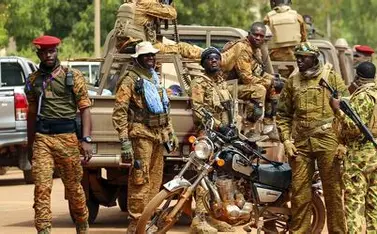
Recent weeks have brought fresh evidence of the heavy toll of Burkina Faso’s fight against terrorism, with at least fifty soldiers and Volunteers for the Defense of the Homeland (VDP) killed in coordinated assaults. While such losses understandably dominate headlines, they tell only part of a much more intricate story—one of strategic shifts, resilience, and the unforgiving nature of modern asymmetric warfare.
The illusion of numbers: understanding the enemy’s strategy
In asymmetric conflicts, casualties alone cannot measure the balance of power. Terrorist groups, stripped of the ability to hold ground against Burkina Faso’s intensified aerial and ground offensives, have adapted by shifting to a strategy of relentless harassment. No longer capable of sustaining large-scale operations, they now strike opportunistically—targeting isolated posts or supply convoys—not to seize territory, but to inflict psychological damage.
By focusing solely on death tolls, observers risk mistaking the convulsions of a weakened enemy for a sign of its true strength. Each attack is calculated not for military gain, but for its shock value. The intent is clear: to erode troop morale and fracture the unbreakable bond between civilians and the defense forces. In confronting this strategy, the Burkinabe army is paying a steep price for its offensive posture. To root out insurgents in rugged, hard-to-reach zones, troops must leave barracks, patrol relentlessly, and accept exposure. The current losses are the grim consequence of a necessary gamble to reclaim lost territory.
The VDP: a citizen army reshaping national defense
The Volunteers for the Defense of the Homeland (VDP) have become a prime target in these assaults. While some external commentators dismiss them as inadequately trained “cannon fodder,” their deployment marks a historic turning point in Burkina Faso’s security doctrine—and one that terrorist groups are desperate to undermine.
Far from signaling state weakness, the widespread mobilization of VDP reflects a deepening commitment to a people-centered defense strategy. This model rests on three pillars:
- Localized intelligence: VDP members possess intimate knowledge of terrain and community dynamics that regular units often lack.
- Sovereignty-first doctrine: The strategy rejects foreign intermediaries, asserting that Burkina Faso’s defense begins with its own citizens—a decisive break from eras of reliance on external forces.
- Structured empowerment: Early challenges included logistical gaps, but rigorous army oversight has transformed volunteers into critical local security anchors.
The frequency of attacks on VDP positions underscores the insurgents’ recognition of this threat: a population that refuses to submit and is organizing to protect its own land.
Outmaneuvering the enemy: the battle for logistical supremacy
As the conflict grinds on, Burkina Faso’s military response has evolved beyond immediate retaliation. The new focus is on choking off the terrorists’ supply lines. Recent losses underscore the urgency of hardening convoy routes and sharpening tactical intelligence.
The path to total strategic autonomy is steep and fraught with obstacles. Victory will demand time, endurance, and the acceptance of tactical setbacks—reality checks in a fight where the enemy is wagering its dwindling logistical resources. Beneath the sorrow of fifty fallen fighters lies a nation redefining the rules of its own survival. This transformation is written in blood, far removed from simplistic or detached analyses.