Military rule in Burkina Faso: a path devoid of democratic legitimacy
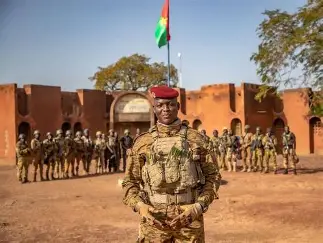
In Burkina Faso, each statement from Captain Ibrahim Traoré deepens scrutiny over the nature of his leadership and the country’s political trajectory since the September 2022 coup. His recent declarations leave little room for interpretation: they openly embrace an extra-constitutional ascent to power, framing this rupture as a new political standard.
The reality is undeniable. Ibrahim Traoré did not ascend through universal suffrage. His rise followed a military takeover that ousted Lieutenant-Colonel Paul-Henri Sandaogo Damiba, who himself had seized power in a previous coup against President Roch Marc Christian Kaboré. This succession of military overthrows represents a fundamental departure from the democratic mechanisms that traditionally underpin a head of state’s legitimacy.
Critics argue that the concern extends beyond the circumstances of his accession. The discourse normalizing this breach of constitutional order sends a troubling signal: force may be presented as an acceptable means to power, provided it garners fleeting public support. Such a premise carries grave consequences. If political legitimacy no longer derives from institutions, elections, or the rule of law—but from the ability of armed factions to impose their will—then every future grievance could similarly justify another military takeover. This cycle fosters chronic instability, where the ballot box is increasingly overshadowed by the barrel of a gun.
Patriotism and governance: a flawed equation
Proponents of the transitional regime often cite restored sovereignty, rejection of foreign influence, and a resurgence of national pride as key achievements. While these themes resonate emotionally, they cannot alone constitute a governance record. History demonstrates that patriotic slogans, no matter how compelling, cannot substitute for tangible outcomes in economic stability, security, or institutional functionality.
Increasingly, political communication dominates the governance narrative. Official speeches proliferate, patriotic symbols saturate public life, and pro-regime demonstrations are widely amplified across digital platforms. Yet beneath this veneer of support, persistent questions remain unanswered. Have the stated objectives—combating terrorism, reclaiming lost territory, and improving living standards—been met with meaningful progress?
Security and sovereignty: promises unfulfilled
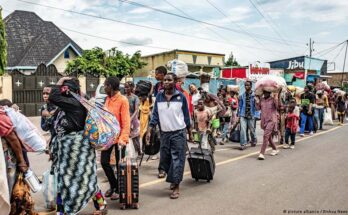
Security remains the most immediate test of leadership. Despite announced military reforms and redeployments, large parts of the country remain plagued by deadly attacks, mass displacement, and a humanitarian crisis affecting hundreds of thousands of Burkinabè. In several regions, civilians continue to live under the threat of armed groups, while access to healthcare, education, and public services remains severely disrupted.
On the economic front, the situation is equally dire. Insecurity has crippled agriculture, domestic trade, and investment. Citizens yearn for tangible improvements: stable employment, higher purchasing power, reliable access to essential services, and a secure environment to rebuild their futures. Yet these expectations have yet to translate into measurable progress since the 2022 transition began.
Centralization of power and shrinking dissent
Opposition voices face growing constraints. Independent journalists, civil society actors, and political critics operate in an environment where challenging the regime is increasingly framed as an act of disloyalty. This conflation of national loyalty with uncritical support for the government represents a dangerous evolution. True patriotism, in a democracy, does not demand blind allegiance to those in power.
The adage ‘absolute power corrupts absolutely’ finds resonance here—not as a personal indictment, but as a universal caution. History is replete with leaders who, intoxicated by their own popularity or perceived indispensability, rejected dissent, marginalized opponents, and conflated their personal fate with that of the nation. Such delusion often leads to governance blind spots and erosion of public trust.
When power is concentrated and presented as sacrosanct, the disconnect from ground realities deepens. Applause at rallies, orchestrated media campaigns, and curated displays of loyalty cannot replace honest assessment of results. The true measure of leadership lies not in rhetoric or coercion, but in the protection of citizens, preservation of freedoms, sustainable improvement of living conditions, and acceptance that power is a temporary responsibility, not an entitlement.
It is against these benchmarks that Ibrahim Traoré’s tenure will ultimately be judged. As long as the crises of security, economy, and social cohesion remain unaddressed, the debate over the legitimacy and durability of his rule will continue to shape Burkina Faso’s political landscape.