Ouagadougou’s controversial proposal to Moscow
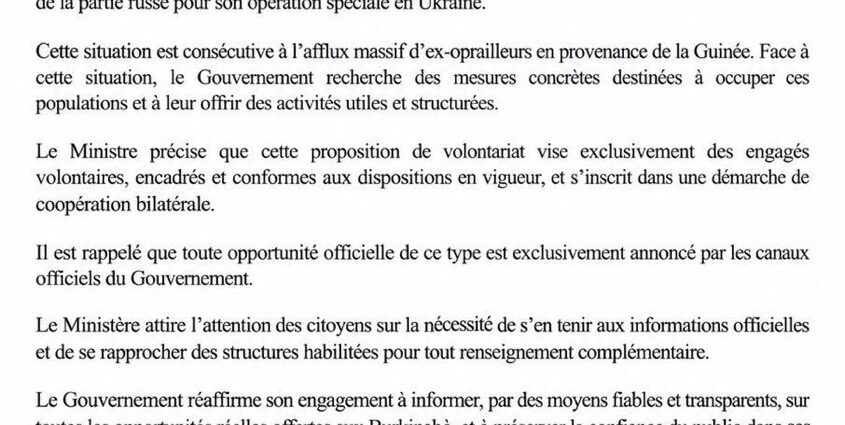
Burkina Faso is reportedly offering Moscow a controversial deal: sending the group of Burkinabè gold miners expelled from Guinea as potential recruits for Russia’s war in Ukraine. The proposal, which merges humanitarian and military cooperation in an unprecedented way, raises serious questions about the true nature of Burkina Faso-Russia relations and the fate of vulnerable citizens caught in the crossfire.
If confirmed, this initiative would mark a significant shift in the alliance between the two countries, transforming a humanitarian crisis into a potential recruitment pipeline for foreign combat. The operation’s underlying motives and the transparency of the process remain unclear as investigators piece together the details.
From mining camps to military fronts: the journey of expelled miners
The individuals involved were part of the informal gold mining economy in Guinea before their expulsion. Their deportation left them stranded, economically vulnerable, and desperate for solutions. Reports indicate that Ouagadougou is now consolidating these groups in its capital, a move that could signal a hidden agenda beyond mere humanitarian assistance.
Human rights advocates warn that economic precarity is being weaponized. In a region where survival often depends on immediate opportunities, the promise of income or protection could pressure these expelled miners into accepting roles they do not fully understand. The risks they would face in Ukraine add another layer of ethical concern to this arrangement.
Key questions about the recruitment process
Transparency: Are these individuals fully informed about their potential destination and the nature of the service expected of them?
Consent: Was their enrollment voluntary, or were they coerced by circumstance?
Legal status: What protections or rights would they have as foreign fighters under Russian command?
Accountability: Which authorities are responsible for ensuring their safety and well-being?
Geopolitical implications of the Burkina Faso-Russia alliance
The proposed arrangement reflects Ouagadougou’s pivot toward Moscow amid shifting international alliances. Since seizing power, the current leadership has prioritized partnerships with non-Western allies, including the deployment of Russian paramilitary personnel documented earlier this year. This pragmatic approach is framed as a quest for sovereignty, but its human consequences demand scrutiny.
While defense cooperation can enhance security, it must not come at the cost of citizens’ lives. The case of these expelled miners illustrates how strategic decisions can directly impact ordinary people, often with irreversible consequences. When military alliances extend beyond training and logistics to include the deployment of nationals as combatants, national responsibility becomes a critical issue.
Sovereignty at stake: protecting citizens or serving geopolitical interests?
Sovereignty is not just about choosing new partners; it is also about safeguarding citizens from exploitation. The alleged plan to send Burkinabè nationals to fight in Ukraine raises profound ethical questions: Are these individuals being given real opportunities, or are they being used as expendable resources in a distant war?
International observers argue that vulnerable populations should never be treated as bargaining chips in geopolitical strategies. A legitimate government must ensure that any form of military engagement is based on informed consent and ethical considerations, not desperation or misleading promises. The fate of these miners could set a dangerous precedent for how human lives are valued in Burkina Faso’s foreign policy decisions.
What happens next: accountability and human cost
The unfolding situation demands urgent answers. If the convoy of expelled miners is indeed a precursor to military recruitment, the international community and civil society must hold both Ouagadougou and Moscow accountable. Questions of legality, morality, and human rights cannot be ignored in the name of strategic alliances.
Beyond the geopolitical calculations lies a humanitarian crisis. These individuals deserve dignity, protection, and the chance to rebuild their lives not to be sent to a warzone where their survival is uncertain. The true test of Burkina Faso’s sovereignty will be whether it prioritizes its people over its partners.
By Alasane OUEDRAOGO — Journalist
Comments are closed, but trackbacks and pingbacks are open.