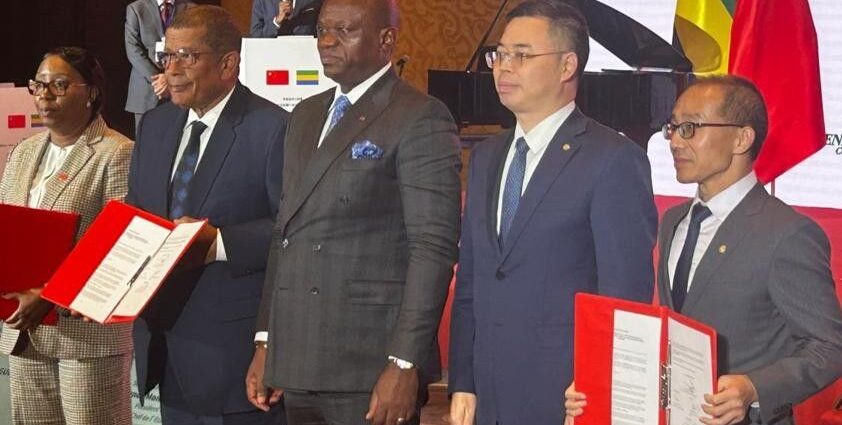
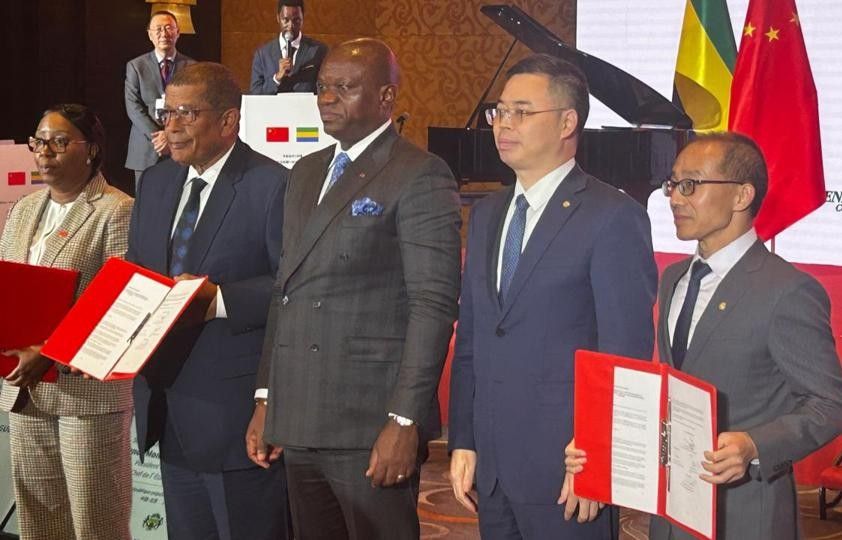
Libreville, November 6, 2026 — A landmark agreement signed in Beijing on November 5 between Gabon’s government, Eramet-Comilog, and Sinohydro signals a decisive shift in the nation’s manganese sector. The collaboration aims to power a future high-value alloy production facility using hydroelectric energy, marking a bold step toward industrial self-sufficiency and economic transformation.
The move underscores Gabon’s strategic pivot from raw material exporter to integrated industrial player. While the country has long been a top global supplier of manganese ore, its potential for higher-value processing has remained largely untapped—until now. The challenge was clear: without abundant, affordable, and reliable electricity, large-scale metallurgical operations could not sustain profitability. This tripartite agreement directly tackles that bottleneck.
Hydroelectric energy: the backbone of Gabon’s industrial ambition
Manganese alloy production is energy-intensive, requiring vast and stable power supplies to operate competitively. The proposed facility would demand continuous, low-cost electricity—conditions currently unattainable with Gabon’s existing energy mix. The solution under study involves leveraging the country’s untapped hydroelectric potential, particularly through the development of new dams, including the proposed Ngoulmendjim Hydroelectric Project.
This is not merely about building a plant—it’s about building an entire industrial ecosystem. The November 5 agreement outlines a feasibility study phase to assess capacity requirements, investment needs, financial models, and long-term supply contracts. It is a critical step forward, though not yet a final investment decision.
From ore to alloys: rewriting Gabon’s industrial future
This initiative builds on a broader industrial roadmap announced in July 2026 in Paris, where Gabon, Eramet, and Comilog outlined three transformative scenarios. By the end of 2031, the country aims to process up to 700,000 tons of manganese annually onshore—shifting the nation from raw export to domestic value addition. Key projects include:
- A new manganese oxide production unit near Libreville;
- Modernization of the Moanda Metallurgical Complex;
- Development of a new alloy production capacity along the coastal region.
The goal is transformative: a vertically integrated manganese value chain that captures more of the resource’s economic value within Gabon’s borders.
Economic ripple effects beyond mining
According to 2027 budget projections, Gabon’s manganese output could reach 10.35 million tons—a nearly 9% increase from 2026 forecasts—with average selling prices expected to rise by 45%. But production volume alone is not the measure of success. The real win lies in creating downstream industries, fostering local expertise, and generating spin-off economic activities.
The partnership model reflects this vision. Gabon contributes mineral resources and political will; Eramet-Comilog brings deep mining and metallurgical expertise; and Sinohydro, a subsidiary of PowerChina, offers critical infrastructure capabilities in energy development. This convergence addresses two core dependencies: industrial investment and reliable power.
Potential benefits extend far beyond the three partners. Local subcontracting, job creation, technical training, infrastructure upgrades, and the emergence of Gabonese suppliers are all on the table—provided investments materialize and value-sharing mechanisms prioritize national interests.
A coordinated path to industrial sovereignty
The next phase will be crucial. A joint steering committee involving Gabon’s government, Eramet, and Comilog will oversee feasibility studies, assess profitability, and define investment timelines. The first oxide production unit is slated to come online by late 2028, with additional capacities aligned to the 2031 roadmap.
For Gabon’s leadership, the test will be aligning energy policy, mining strategy, and industrial development into a coherent whole. An industrial plant without competitive energy is fragile; a power plant without sufficient industrial demand risks underutilization. The true challenge is balance.
At its core, this initiative is about economic sovereignty: ensuring that Gabon—not foreign buyers or downstream processors—captures the greatest share of value from its natural wealth. It is not about isolation, but about building partnerships that bring technology, skills, and production onto national soil.
The measure of success will not be the number of agreements signed in Beijing or Paris, but whether Gabon can turn its subsoil into industrial might, its rivers into competitive advantage, and its mineral wealth into shared prosperity.
Comments are closed, but trackbacks and pingbacks are open.