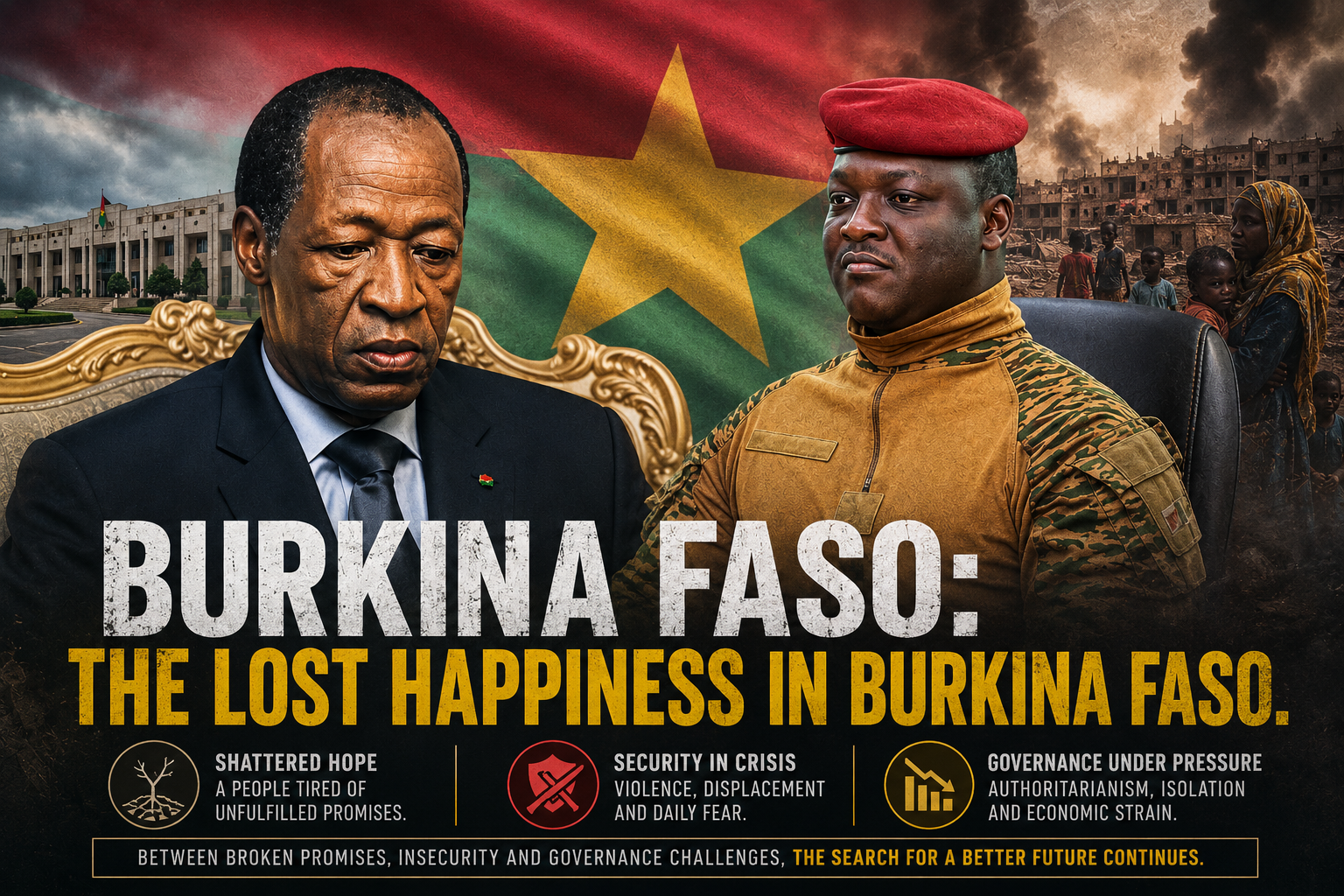
For decades, Burkina Faso was recognized not for its crises but for a relative stability under Blaise Compaoré’s leadership. Though his rule faced persistent criticism—particularly regarding democratic stagnation and political repression—it was undeniably a period when daily life functioned with far fewer disruptions. Citizens traveled freely, farmers cultivated their land, and markets operated without the shadow of armed violence. That era, flawed as it was, still allowed for a semblance of normalcy that many now reflect upon with nostalgia.
From stability to insecurity: a nation’s unmet expectations
Today, the country finds itself in a drastically different reality. Since the 2022 military takeover led by Captain Ibrahim Traoré, Burkina Faso has been grappling with an escalating security crisis. Despite bold promises of territorial reconquest and enhanced national sovereignty, the situation on the ground remains dire. Official statements frequently highlight military operations and claimed victories against armed groups, yet these announcements rarely translate into tangible improvements for ordinary citizens.
In many regions, the threat of attack persists unabated. Isolated communities cut off from essential services and dangerous roadways have become grim realities. For some, the disconnect between government proclamations and lived experience is glaring. The discrepancy fuels growing skepticism about the effectiveness of current security strategies.
The silent exodus: a nation in retreat
The most poignant indicator of failure may not be the continuation of violence itself, but the mass displacement it has triggered. Thousands of Burkinabè are fleeing their homes—not by choice, but by necessity. Villages are abandoned, farmlands left fallow, and businesses shuttered as families seek refuge in safer zones or cross borders into neighboring countries. This exodus is not an act of preference; it is a desperate response to the absence of security.
When citizens choose exile over staying in their own land, it speaks volumes about their loss of faith in the state’s ability to protect them. This silent hemorrhage of human capital and social cohesion represents a profound indictment of governance that prioritizes rhetoric over results.
Sovereignty versus security: the unspoken contradiction
Under Captain Traoré’s leadership, the discourse has pivoted sharply toward national sovereignty, anti-colonial rhetoric, and patriotic mobilization. These themes resonate with a significant portion of the population, particularly among those disillusioned by past dependencies. Yet sovereignty, in its purest sense, cannot be reduced to slogans or symbolic gestures. It must be demonstrated through the tangible ability to safeguard every citizen, regardless of location.
The contrast with the previous era is striking. Once-vocal critics of Compaoré’s authoritarian rule—those who condemned his governance with vehemence—now appear far more restrained when assessing the outcomes of the current administration. This selective scrutiny has given rise to perceptions of a double standard, where some leaders are held to drastically different benchmarks of accountability.
Beyond discourse: what does security look like in practice?
The true measure of governance is not found in speeches or international posturing, but in the daily lives of citizens. Do families feel safe sending their children to school? Are farmers able to tend their fields without fear? Can traders transport goods without risking ambush? These are the questions that define national stability, not the frequency of official communiqués.
Until these conditions are met, the debate over Ibrahim Traoré’s performance will remain unresolved. History seldom judges leaders by their words, but by their actions—and by the lives they were meant to protect.