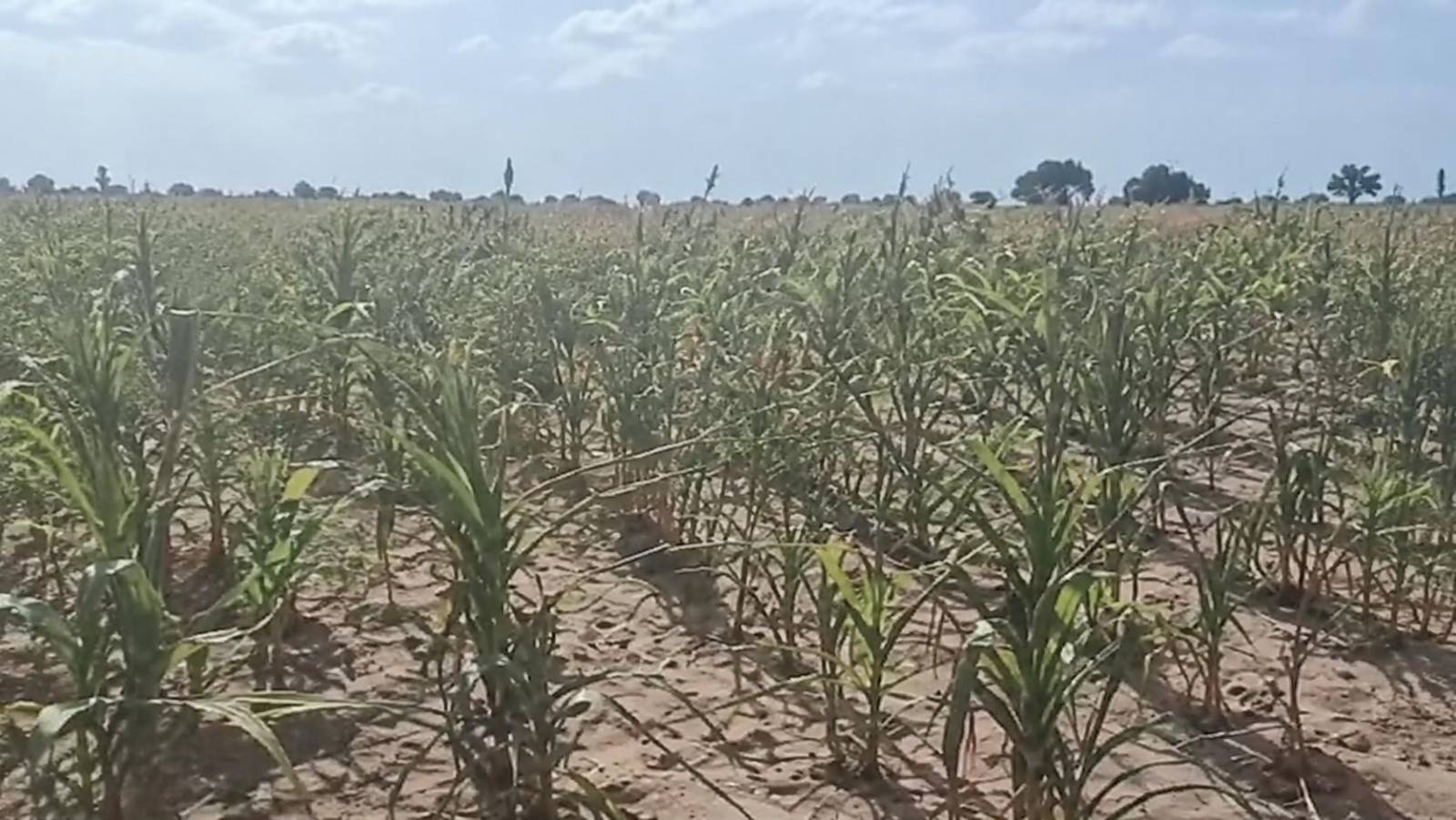
In Tougan, the reality is stark and sobering. Beyond the official narratives of sovereignty, industrialisation and domestic output, agricultural producers report that they continue to face a far less flattering reality alone: selling their harvests at a loss, repaying their loans and, in some cases, contemplating crossing the border to survive.
“Last year, the maize yield was good. They capped the price, and the producers made no profit. This year, others will cross the border because of the credits,” recounts a testimony from Tougan. The situation is captured in a particularly telling phrase: “The producer weeps when the harvest is good, and weeps when the harvest is bad.”
This contradiction raises a fundamental question: what has become of the priority supposedly granted to those who feed the nation?
The visible symbols and the unseen struggles
Since coming to power, Ibrahim Traoré has consistently highlighted local production, economic sovereignty and Burkina Faso’s capacity to manufacture certain equipment itself. Announcements regarding industrial units, particularly those intended for the army’s needs, occupy a prominent place in this communication.
Yet an economy cannot be reduced to its factories or its military hardware.
While new industrial capacities are presented as symbols of sovereignty, farmers remain confronted with far more immediate problems: insufficient purchase prices, indebtedness, uncertain markets and low profitability of their crops.
Producing more only makes sense if the producer can also make a living from their work.
The broader implications for agricultural investment
The problem in Tougan therefore goes beyond the simple case of maize. It raises the question of agricultural investment. What entrepreneur would sustainably agree to invest in a sector where a good harvest can drive prices down to the point of ruining the producer, while a poor harvest exposes them directly to debt?
This is precisely where one of the major blind spots of the sovereignty narrative lies: a nation does not become economically independent solely because it manufactures its own weapons. It must also be capable of securing the incomes of those who produce its food.
The paradox is brutal. Burkina Faso wants to produce its equipment locally, but some agricultural producers still seem to be searching for ways to market their own output without losing their investment.
The risk of neglecting rural realities
By consistently highlighting images of factories, machines and military equipment, the authorities risk leaving another reality in the shadows: that of the fields, the granaries, the credits and the rural families awaiting concrete solutions.
Sovereignty is not measured solely by what a state can manufacture for its army. It is also measured by its capacity to protect those who, every morning, put a seed in the ground to feed the nation.
In Tougan, the question is therefore not how many factories Burkina Faso can inaugurate. The question is simpler, and probably more urgent: how much longer can the producer work without earning a living?
Comments are closed, but trackbacks and pingbacks are open.