Burkina Faso’s mobile clinics revolutionize cervical cancer screening
In the heart of West Africa, Burkina Faso is leading a transformative movement to combat one of the most deadly cancers affecting women. By bringing screening and prevention services directly to communities, the country is making significant strides in eliminating cervical cancer, a disease that has long posed severe health risks in rural areas.
Breaking barriers to healthcare access
For decades, women in Burkina Faso faced overwhelming challenges in accessing cervical cancer screening. With fewer than 8% of women receiving screenings in the past, rural populations were disproportionately affected. Long distances to health centers, financial constraints, and a lack of trained healthcare professionals created insurmountable barriers. Many women, like Awa, a 48-year-old mother of six living in Ipendo, struggled with the fear of diagnosis and treatment costs. « I was terrified of the possibility of a positive result, » she recalls. « But thinking of my children gave me the courage to get tested. »
Recognizing these obstacles, the Burkinabè government took bold action. A decree was implemented to make screening and treatment for precancerous lesions entirely free. Additionally, peripheral health centers were upgraded, and mobile clinics were deployed to reach women where they live and work.
Bringing healthcare to women’s doorsteps
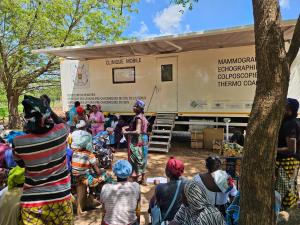
The introduction of mobile clinics has been a game-changer. These units travel to villages, farms, markets, and even family courtyards, ensuring that women no longer need to abandon their daily responsibilities to seek medical care. « Screening is now within arm’s reach of communities, » explains Professor Nayi Zongo, an oncologist and public health physician who coordinates the National Cancer Control Program (PNLC). « Women can continue their agricultural or domestic work while safeguarding their health. »
The strategy goes beyond just accessibility. Burkina Faso has integrated a multi-faceted approach that combines financial accessibility (free services), geographical reach (mobile clinics), and community mobilization. Nationwide awareness campaigns, including television and radio spots, as well as events like « Pink October, » have played a crucial role in educating the public. A national coalition against cancer, involving civil society, community leaders, and media, has further amplified the message, turning cervical cancer prevention into a national priority.
Collaboration with WHO drives success
The World Health Organization (WHO) has been instrumental in supporting Burkina Faso’s efforts. Through technical assistance, training for health professionals in detection and treatment, and community mobilization, WHO has helped turn this vision into reality. « WHO has stood by us, ensuring that every woman, regardless of location, has access to this life-saving service, » says Professor Zongo.
The results speak for themselves. Between October 2024 and September 2025, mobile clinics conducted 468 outreach sessions across the country. These efforts reached nearly 2 million women, conducted 106,446 screenings, treated 715 precancerous lesions, and performed 113 in-depth diagnostic exams. These numbers represent more than statistics—they symbolize lives saved and families protected.
A model for Africa
Dr. Seydou Coulibaly, WHO Representative in Burkina Faso, highlights the significance of this achievement. « Burkina Faso demonstrates that with strong political will and context-specific solutions, seemingly insurmountable barriers can be overcome, » he states. He emphasizes the initiative’s potential to inspire other African nations: « The elimination of financial and geographical obstacles through free services and mobile clinics sets a powerful example. »
For women like Awa, the impact is deeply personal. « We work in the fields, tend to our gardens, and sell vegetables at the market, » she explains. « When we heard about the screening, fear crept in. But hearing from other women who had gone through it reassured me. The day of my test, the health workers walked me through every step. When the result came back negative, I felt an enormous sense of relief. Now, I encourage every woman to get screened. Early detection makes treatment so much easier. »
For many women, these mobile clinics offer their first opportunity to learn about cervical cancer, understand its risks, and discover that it is preventable. This initial education is a critical step toward prevention and early intervention. Beyond health, this initiative embodies principles of dignity, social justice, and family well-being. Each mobile clinic that arrives in a village carries a powerful message: health is a right, not a privilege—and in Burkina Faso, this right is becoming a reality.