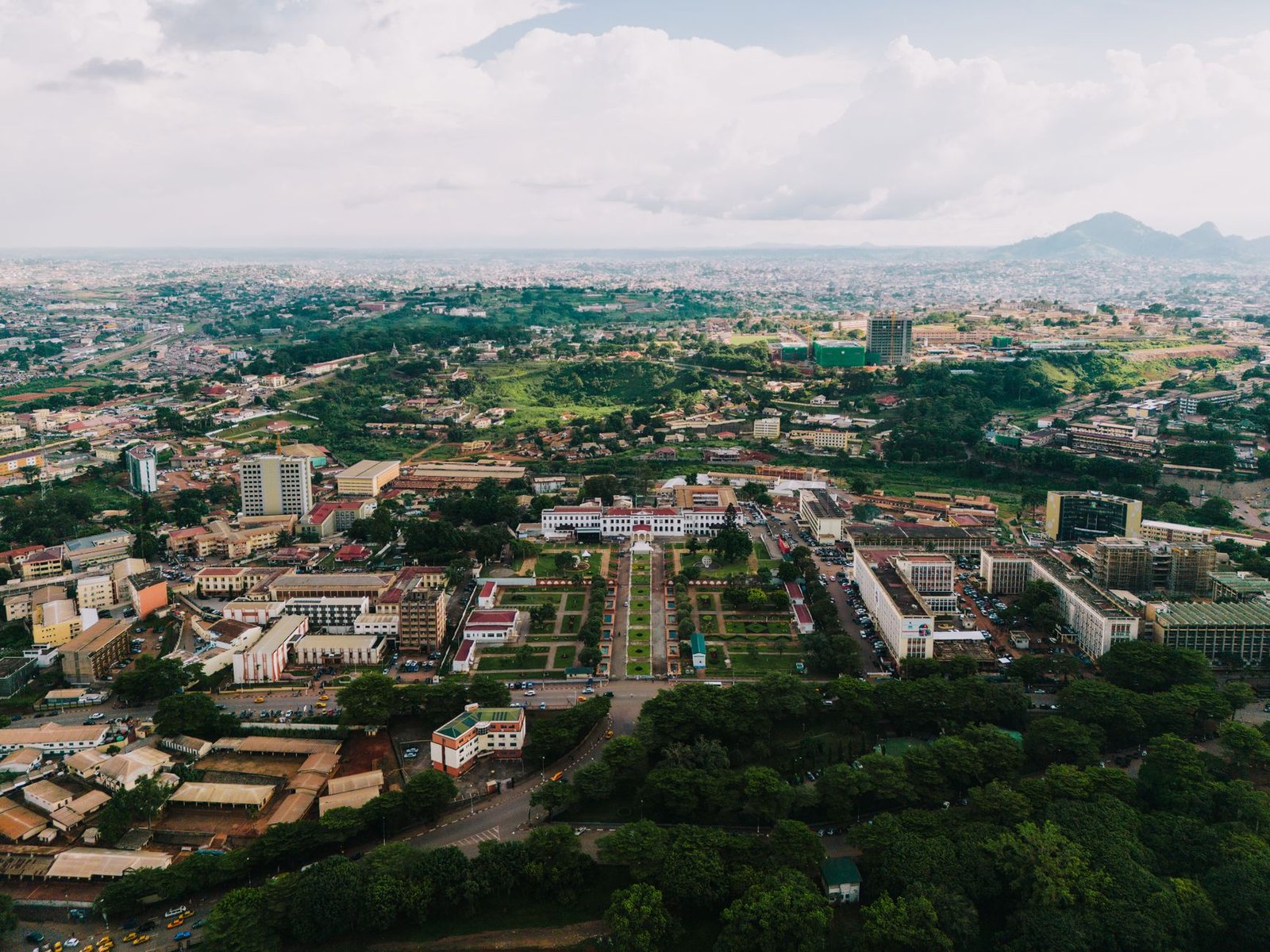
Standard & Poor’s has reaffirmed Cameroon’s sovereign credit rating at B-/B with a stable outlook, a decision that appears reassuring at first glance but places the spotlight squarely on the country’s looming political transition. Announced in mid-September, the ratings decision arrives at a pivotal moment when the succession to President Paul Biya, long a taboo subject, has become a critical variable in the country’s perceived investment risk. For investors and multilateral partners alike, the rating’s maintenance is less a seal of approval and more a cautionary signal.
Stability with a hidden cost: what S&P’s decision really means
The reaffirmed B-/B rating validates Yaoundé’s ongoing fiscal trajectory under its International Monetary Fund (IMF) program, yet underscores Cameroon’s deep structural economic vulnerabilities. Five notches below investment grade, the rating reflects a fragile repayment capacity highly exposed to external shocks. Analysts at the agency highlight persistently high public debt levels that continue to strain revenue flows, compounded by volatile oil prices that disrupt budget execution.
Beneath the surface of numerical stability, S&P warns that political uncertainty could derail this trajectory. The country stands on the cusp of a high-stakes electoral period, with presidential elections looming that may either extend the decades-long ruling regime or signal its eventual succession. This climate amplifies the risk premium demanded by international investors, particularly as regional instability in the Sahel and tightening global financing conditions hit African issuers hard.
Why political succession has become the decisive factor
The crux of S&P’s assessment now centers on the outcome of Cameroon’s leadership transition. The agency argues that the presidential vote and the broader management of the post-Biya era will shape the country’s macroeconomic stability for years to come. A smooth, institutional transition could preserve relations with key lenders, starting with the IMF, whose program underpins ongoing structural reforms. Conversely, any political impasse, post-election unrest, or poorly managed leadership vacuum could trigger sudden capital flight and prompt a swift ratings downgrade.
As the economic anchor of the Central African Economic and Monetary Community (CEMAC), Cameroon’s sovereign standing has spillover effects across the franc zone. A ratings downgrade would ripple through funding conditions for neighbors like Gabon and the Republic of the Congo, putting additional pressure on the Bank of Central African States (BEAC) and shared foreign exchange reserves—already stretched by rising external refinancing needs across member states.
Budget reforms shine, but structural weaknesses linger
S&P acknowledges progress on fiscal consolidation, including efforts to rationalize fuel subsidies, broaden the tax base, and curb wage bills—measures dictated by Cameroon’s IMF program that have helped stabilize the budget deficit at manageable levels. However, non-oil revenue mobilization remains stubbornly low, hovering around 12 to 13% of GDP, far below peers in comparable economies.
Hydrocarbon dependence continues to undermine external balances, as Cameroon’s oil production declines structurally, eroding export earnings just as import requirements—especially for food and energy—remain elevated. Annual external debt service, estimated in the hundreds of billions of CFA francs, is consuming an increasing share of public resources, leaving little room for long-term capital investments.
Development partners are also closely watching the implementation of IMF governance recommendations, particularly concerning state-owned enterprises in the oil and power sectors. The National Hydrocarbons Company (SNH) and Cameroon Airlines Corporation (Camair-Co) are key entities whose restructuring progress will determine the credibility of the fiscal path projected through 2027.
Investors and lenders weigh risk against opportunity
The S&P rating decision sends a dual message to portfolio managers exposed to African sovereign debt. The stable outlook keeps the door open for potential Eurobond issuances or private placements, assuming market conditions remain favorable. Yet, the explicit linkage to political transition serves as a clear warning for fund managers just weeks before an election that will redefine the regional power landscape. Western diplomats and Gulf investors—now major players in African infrastructure financing—are monitoring developments with equal intensity.
The agency has tied the stability of its outlook directly to whether authorities can ensure an orderly transition, a prerequisite for maintaining access to global capital markets.
Comments are closed, but trackbacks and pingbacks are open.