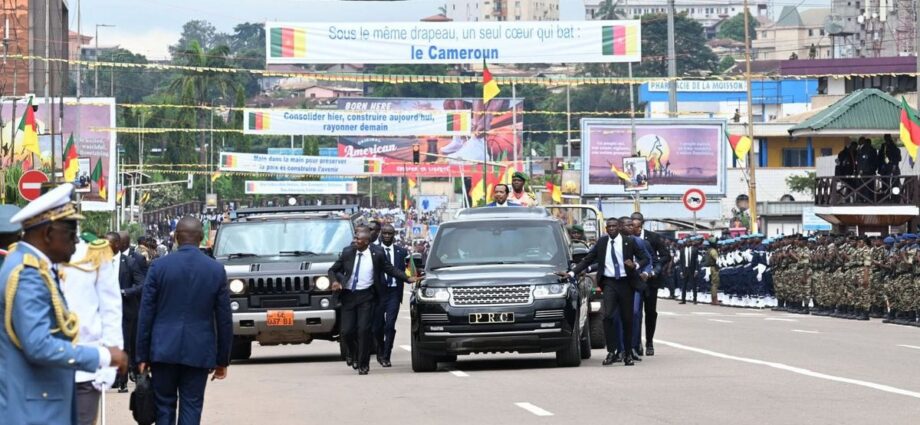
Cameroon’s leadership dilemma amid extended presidential absences
Cameroon stands at a pivotal moment as prolonged absences of President Paul Biya—now 93 and in power since 1982—cast shadows over the country’s political stability. Constitutional provisions allow delegation of executive authority to senior officials such as Ferdinand Ngoh Ngoh, Secretary General of the Presidency. However, the absence of a designated Vice President—despite its reinstatement through a constitutional amendment in April—fuels uncertainty about governance continuity and succession planning.
Recent military reshuffles and persistent security challenges, particularly in the Anglophone regions and against Boko Haram, amplify concerns among observers and opposition figures. While the administration continues to operate on paper, growing questions persist about potential institutional paralysis and the true locus of decision-making power during this transitional phase.
Security pressures intensify amid leadership uncertainty
The Cameroonian government faces mounting security threats that test its resilience. In the Anglophone regions, separatist conflicts continue to strain resources, while the persistent threat posed by Boko Haram in the Far North demands sustained vigilance. These challenges unfold against a backdrop of institutional ambiguity, raising concerns about the government’s ability to respond effectively.
Military restructuring efforts, aimed at strengthening operational readiness, reflect an attempt to adapt to evolving security dynamics. However, the lack of clear leadership continuity raises doubts about long-term strategic coherence and the efficacy of crisis response mechanisms.
Constitutional gaps and power delegation challenges
The absence of a Vice President—despite constitutional provisions—creates a leadership vacuum that complicates decision-making processes. While Ferdinand Ngoh Ngoh holds delegated signing authority as Secretary General of the Presidency, the broader question remains: who truly shapes national policy behind closed doors?
Legal experts argue that the current framework lacks robust mechanisms for transparent power transfer. This ambiguity not only undermines public confidence but also risks emboldening political maneuvering behind the scenes, potentially destabilizing the country’s fragile equilibrium during this critical period.
What lies ahead for Cameroon’s political trajectory?
Cameroon’s future hinges on decisive leadership and structural reforms. The reinstatement of the Vice Presidency in April signals an acknowledgment of the need for clearer succession pathways. Yet, its non-implementation leaves a critical void that demands urgent resolution.
Political analysts suggest that without transparent leadership transitions, the country risks prolonged uncertainty. For stakeholders invested in stability, the call for action is clear: Cameroon must bridge its constitutional gaps and reinforce its institutional frameworks to navigate this turning point with resilience and foresight.
Comments are closed, but trackbacks and pingbacks are open.