Staying visible despite prolonged absence
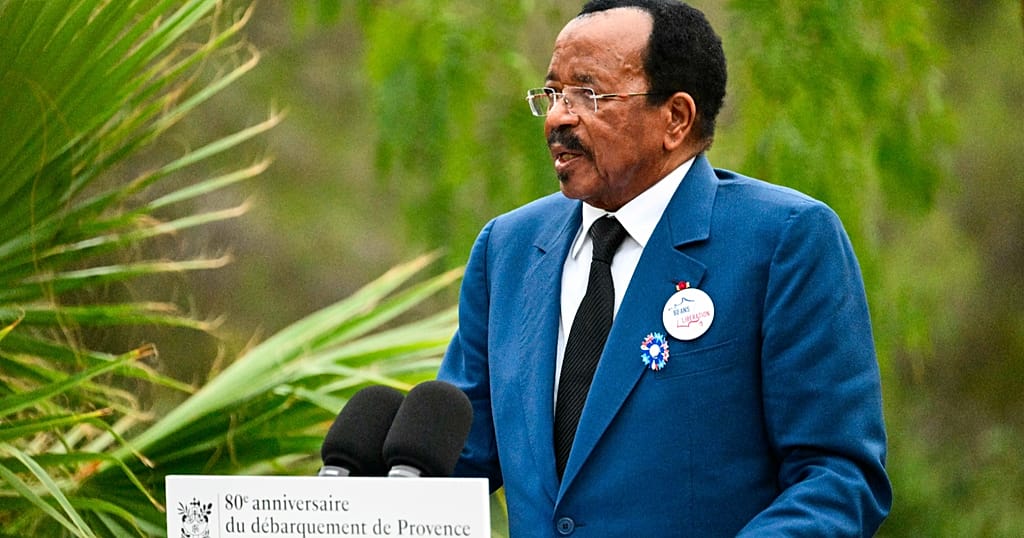
As concerns grow over a potential power vacuum, Cameroon’s president Paul Biya, aged 93, has ramped up decree signing to assert his ongoing authority and maintain control over the state apparatus.
Departing Cameroon with his wife on June 7 for what was described as a “brief private stay in Europe”, the head of state has not been seen in public for nearly two months. Speculation about his health has intensified, fueling debates about continuity in governance.
Strategic moves to reinforce leadership
In response to mounting uncertainty, Biya’s administration has adopted a more visible approach through a series of presidential decrees. Earlier this week, the president approved a decree granting the Minister of Economy the authority to finalize agreements with the Islamic Development Bank, securing nearly 28 billion CFA francs in funding for key national projects.
On August 3, Biya further reshaped the military leadership by promoting five colonels to brigadier general rank. He also appointed General of Division Ebaka Hypolite as the new Chief of Staff of the armed forces. These changes not only reinforce Biya’s presence in state affairs but also tighten control over the security apparatus.
Government denies health concerns as opposition raises alarms
Officials have dismissed reports questioning the president’s health, reassuring the public of his imminent return. However, the prolonged absence has drawn sharp criticism from opposition figures, who warn of a “dangerous institutional void” and describe the country as operating on “autopilot”.
Calls for the appointment of a vice president and a new government have gone unanswered for months, adding to the perception of political stagnation. As debates intensify, Biya’s decrees serve as a clear signal—he remains in command, even from afar.
Comments are closed, but trackbacks and pingbacks are open.