French lawmakers from the Democratic Republic of the Congo (DRC) are set to launch a high-impact diplomatic offensive in Paris this autumn to push for official recognition of the GENOCOST—a term used to describe atrocities linked to resource exploitation in the DRC since 1996.
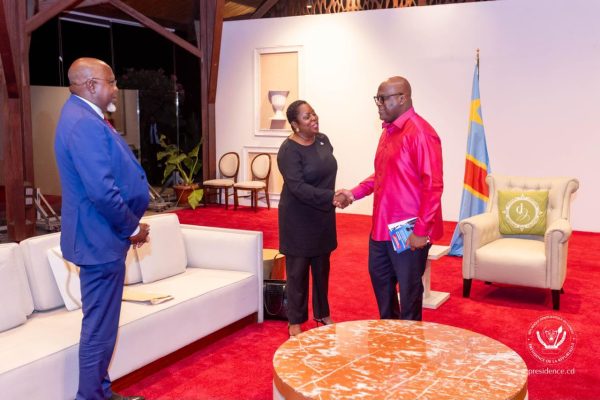
The initiative, spearheaded by the Collective of French Elected Officials of Congolese Origin (CEFOCK), follows a strategic meeting with President Félix Tshisekedi at the Cité de l’Union Africaine in Kinshasa. Their goal? To elevate the GENOCTOST from a humanitarian concern to a central pillar of French and international policy debates.
The campaign will unfold through a series of awareness-raising events, expert-led conferences, and targeted advocacy efforts directed at French territorial authorities, national institutions, and the Congolese diaspora across France.
Uniting memory and justice
At the heart of this push lies a dual mission: preserving the historical narrative of victims and securing formal recognition of their suffering. To achieve this, CEFOCK has forged a partnership with the Inter-institutional Commission for Victim Support and Reform Assistance (CIA-VAR), a Congolese government body tasked with documenting atrocities, overseeing reparations, and safeguarding memory.
The collaboration will focus on two fronts. First, it will reinforce efforts to document and memorialize the victims, ensuring their stories remain etched in public consciousness. Second, it aims to catalyze official acknowledgment of the GENOCTOST, paving the way for reparative justice mechanisms and accountability.
President Tshisekedi has publicly endorsed the initiative, framing it as a vital contribution to the DRC’s broader “diplomacy of remembrance” on the world stage.
Diaspora emerges as a political force
The timing of this campaign is no coincidence. The DRC has intensified its global advocacy to have the international community classify the documented crimes as genocide. Within this struggle, the Congolese diaspora—now represented in French municipal, departmental, and regional councils—has transformed from passive witnesses into active political actors.
Through CEFOCK, they are shifting from testimonial narratives to strategic political mobilization. By engaging directly with French lawmakers at every level, the campaign seeks to mirror precedents set for other recognized genocides, potentially securing a parliamentary vote on the GENOCTOST in France.
This groundswell of activism mirrors parallel efforts at home. Just days before the Paris offensive was announced, Kinshasa marked the National Day for the GENOCTOST with a solemn ceremony led by President Tshisekedi. During the event, he unveiled plans for the construction of the National Museum of the GENOCTOST and a dedicated memorial—symbolic gestures to institutionalize remembrance nationwide.
Together, these domestic and international moves signal a coordinated strategy: leveraging diplomacy, legal recognition, and public memory to address one of Africa’s most devastating humanitarian crises.
Comments are closed, but trackbacks and pingbacks are open.