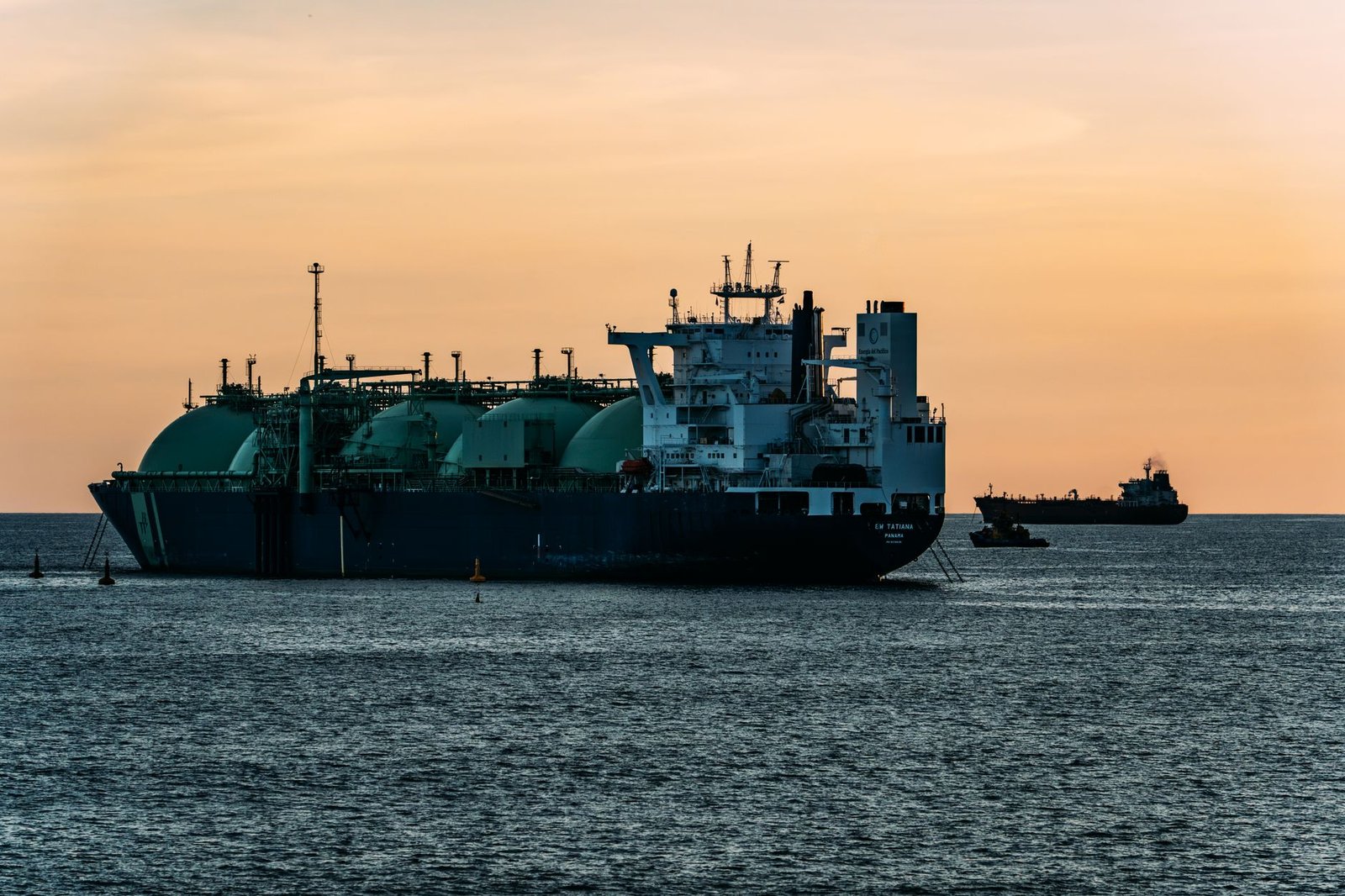
Cameroon’s economic landscape faces a pivotal moment as the countdown begins for the departure of the Hilli Episeyo, a floating liquefaction vessel anchored off Kribi since 2018. Under the terms of its contract with the National Hydrocarbons Company (SNH), the vessel will leave Cameroonian waters by July 2026. This transition is now a focal point in the country’s growth projections, as highlighted in the latest economic outlook report by the National Economic and Financial Committee (CNEF), alongside broader geopolitical strains and weakening export sectors.
The CNEF’s forecasts paint a cautious picture for Cameroon’s economic trajectory. Gross domestic product (GDP) growth is projected at 3.2% in 2026, down from 3.5% in the previous year, with a further dip to 3.1% expected in 2027. An alternative scenario in the same report estimates slightly higher growth at 3.3% in 2026 and 3.2% in 2027. Yet, in both cases, the extractive sector—particularly oil and gas—emerges as the key drag on performance, subtracting 0.4 percentage points from growth in each of the two years. The oil and gas GDP, which encompasses hydrocarbon-related activities, is forecast to contract by 16.1% in 2026 and 18% in 2027.
The LNG sector’s decline precedes the floating plant’s exit
The departure of the Hilli Episeyo coincides with a period of strain in the liquefied natural gas (LNG) market. Export earnings from LNG totaled 350.2 billion Central African CFA francs in 2025, a decline from 381 billion in 2024, 421 billion in 2023, and a peak of 622 billion in 2022—a year-on-year drop of 8.1%. This downward trend persisted into early 2026: during the first quarter, total exports fell by 23.6% to 606.9 billion CFA francs, with LNG exports plummeting by 28.4% and crude oil exports by 14.4%.
Despite these setbacks, LNG still accounted for 11.4% of Cameroon’s export revenues in 2025. The loss of the floating plant will further strain the economy, especially as other key sectors also falter. Over the same period, cocoa and derivative sales plunged by 37.7%, timber by 11.5%, aluminum by 53.7%, and raw rubber by 16.7%. The cumulative impact of these declines amplifies the weight of the impending gas sector shock.
Current account and fiscal balances under strain
Macroeconomic stability will bear the brunt of these changes. The CNEF projects the current account deficit to widen to 5.4% of GDP in 2026 and 6.1% in 2027, up from an estimated 3.2% in 2025. The budget deficit is expected to follow a similar pattern, rising to 1.7% and then 2.1% of GDP. These projections also account for slower global trade, higher freight costs, and modest growth in public revenues.
The volatility in global oil prices presents a critical policy dilemma for the government. Keeping pump prices stable would require increased fuel subsidies, placing an immediate strain on the budget. Alternatively, adjusting retail prices could reignite inflation and erode household purchasing power. While the CNEF does not take a definitive stance, it underscores the limited room for maneuver in addressing these challenges.
Yoyo-Yolanda and new blocks: potential but no quick fixes
The SNH is banking on upstream diversification to offset the loss of the Hilli Episeyo. The most promising initiative is the cross-border Yoyo-Yolanda field, shared with Equatorial Guinea, which holds an estimated 2.5 trillion cubic feet of gas and requires an investment of nearly $4 billion. However, the timeline remains uncertain, hinging on finalizing technical and commercial agreements, securing financing, and building dedicated infrastructure.
In parallel, the SNH continues to award new exploration blocks in the Rio del Rey and Douala-Kribi-Campo basins. While negotiations for production-sharing contracts are underway, there is no guarantee of commercially viable discoveries or swift production ramp-ups. The primary risk lies in the length of the transition period: the longer the gap between the Hilli Episeyo’s exit and the arrival of new capacities, the more prolonged the negative impact on Cameroon’s growth will be. Industry insiders note that none of the proposed alternatives are positioned to immediately offset the projected decline in LNG exports.