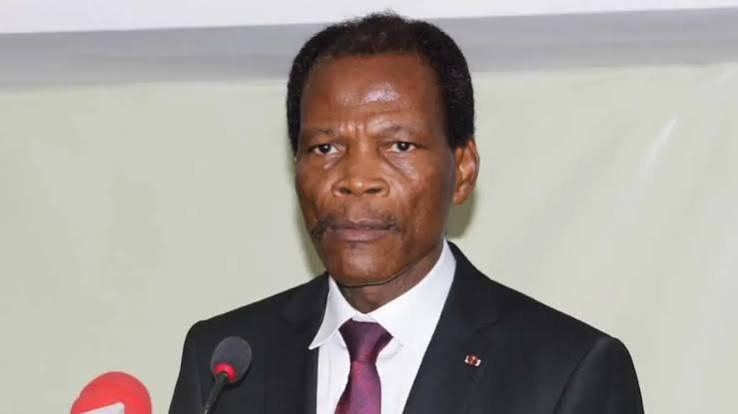
The Cotonou ruling that reignited a national conversation
When Benin’s appeal chamber announced it would keep Candide Azannaï, president of the Restaurer l’Espoir party and a well-known political figure, in pretrial detention, the decision landed like a stone in still water. The ripple effects have been felt far beyond the courtroom in Cotonou — in political circles, among civil society groups, and on the streets where ordinary citizens are debating what the ruling says about the state of justice in their country.
The case stems from the foiled coup attempt of December 7, 2025, a date that has become shorthand for one of the most serious challenges to Benin’s institutional stability in recent memory. Azannaï was arrested in December 2025 and has since been held on charges brought by the public prosecutor’s office and the Court for the Repression of Economic Offences and Terrorism (CRIET).
What the charges actually involve
The accusations against the former minister are grave: conspiracy against state security and incitement to rebellion. Under Benin’s constitutional framework, such allegations cannot be treated as ordinary matters. They strike at the heart of the nation’s democratic order, and the judicial system has an obligation to investigate every dimension thoroughly.
This is the context in which the appeal chamber weighed — and ultimately refused — the request for provisional release. The court’s reasoning rested on two procedural pillars: the existence of suspects still at large and the need to continue investigations without risking the loss or contamination of evidence. In the judges’ view, releasing the accused at this stage could compromise the search for truth.
The defence’s own words: a procedure conducted by the book
Perhaps the most striking element of this episode is not what the prosecution argued, but what the defence acknowledged. Speaking to journalists after the hearing, Azannaï’s lawyer, Me Aboubacar Baparapé, confirmed that the substantive questioning of his client had been completed. “His interrogation on the merits is finished, there are no other elements left,” he stated, effectively validating that the investigative phase on his client’s individual role had run its full course.
The lawyer also emphasised that his client had been given full freedom to speak throughout the proceedings. Azannaï told the court he was not involved in the alleged plot and rejected what he described as fabricated accusations. The defence team indicated it would file a fresh request for release “when the time comes, until we are heard,” signalling that the legal battle is far from over.
Reactions beyond the courtroom
Public reaction to the ruling has been mixed. Supporters of the government see it as proof that no one is above the law and that the investigation into the coup attempt is being taken with the seriousness it deserves. For them, the decision reinforces the principle that threats to state security must be met with rigorous judicial process, not political expediency.
Critics, on the other hand, question whether the detention is strictly necessary at this point, given that the defence says the interrogation is complete. Some argue that keeping a prominent opposition figure behind bars while the investigation continues could cast a shadow over the fairness of the eventual trial. Others worry about the broader signal it sends about political pluralism in Benin.
Civil society organisations have called for calm and for all parties to respect the judicial process. Several voices have urged the authorities to ensure that the case moves forward without unnecessary delay, noting that prolonged pretrial detention remains a sensitive issue across the region.
What comes next for Benin’s judiciary and political landscape
The appeal chamber’s decision does not close the door on future developments. Benin’s legal framework provides mechanisms for periodic review of detention, and the defence has made clear it intends to use them. The outcome of those future requests will depend on how the investigation evolves, particularly whether the remaining suspects are located and what additional evidence emerges.
Politically, the case has become a barometer for how Benin balances security imperatives with civil liberties. The government has consistently framed the matter as a judicial one, insisting that the executive branch does not interfere. Whether that position holds under continued public scrutiny will shape perceptions of the country’s democratic health.
Economically, prolonged instability linked to the coup aftermath could affect investor confidence, though no major disruptions have been reported so far. The coming months will be crucial in determining whether the Azannaï affair remains a legal matter handled with procedural rigour or escalates into a broader political crisis.
The road ahead: procedural rigour versus public expectations
For now, the judiciary appears determined to let the law take its course. The court’s insistence on preserving the integrity of the investigation, even at the cost of keeping a high-profile defendant in custody, reflects a deliberate choice to prioritise procedure over speed. Whether that choice strengthens or weakens public trust in Benin’s institutions is a question that only time — and the eventual trial — will answer.
Comments are closed, but trackbacks and pingbacks are open.