As dusk settled over Zemio on May 26, 2024, the air in the courtyard of a local bar-restaurant in the restless Haut-Mbomou region thickened with anticipation. Two visitors—Joseph Figueira, a Belgian-Portuguese researcher, and his Ivorian colleague based in neighboring Democratic Republic of the Congo—were preparing to share refreshments with their local contacts. Their presence was tied to a critical conflict-prevention project, funded by USAID and implemented through FHI 360, an American NGO. Yet, within hours, their mission took a violent and unlawful turn.
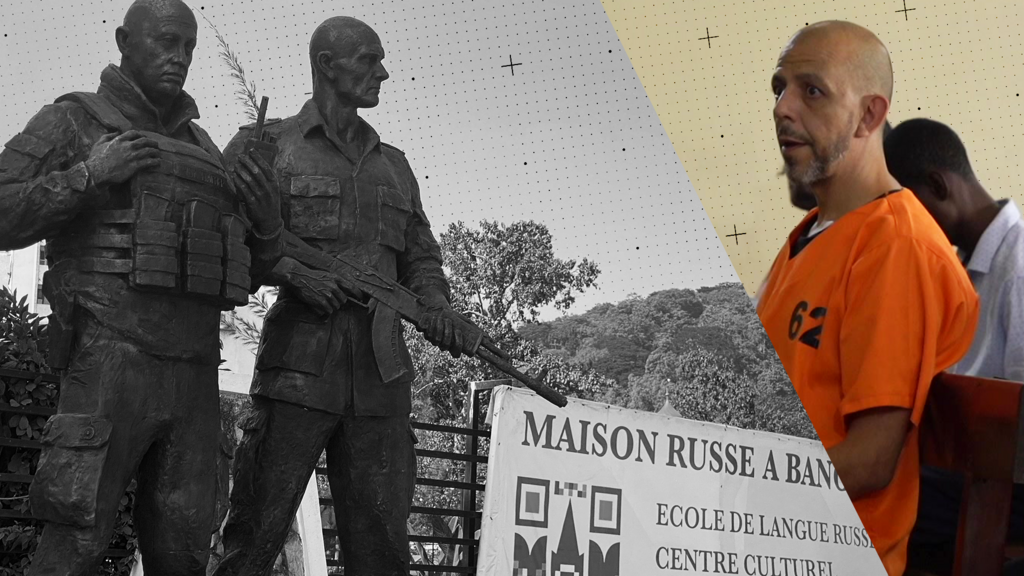
The gathering, attended by around fifty individuals, was interrupted by three operatives from the Wagner Group, a Russian-backed paramilitary force operating in the Central African Republic since 2018. Accompanied by a Central African gendarme assigned to translate, the men forcibly removed Figueira, denying him even the chance to retrieve his documents from the NGO’s local office. Bound and hooded, the humanitarian was dragged to a nearby airstrip, where he was thrown into a waiting aircraft—his face bloodied from the assault.
Figueira, a well-respected expert on Peul communities, had spent nine days in the country, engaging with officials in Bangui and provincial hubs to finalize a project aimed at easing local tensions. His credentials were impeccable, his itinerary transparent. Yet none of this mattered. The Wagner operatives acted with impunity, disregarding all legal procedures in a clear act of intimidation. The incident underscores a troubling pattern of targeted harassment against humanitarian workers in regions where Wagner’s influence looms large.
Wagner’s expanding shadow in the Central African Republic
The Wagner Group’s presence in the Central African Republic has evolved from a mercenary force into a de facto security apparatus, operating under the guise of state collaboration. Internal documents from what was once described as Africa politology—a Kremlin-linked influence network—reveal a sophisticated campaign to manipulate local narratives, often at the expense of humanitarian actors. These files, numbering over 1,400 pages, detail strategies to undermine international NGOs and skew public perception in favor of Russian-backed agendas.
In a region plagued by recurring communal violence, Wagner’s tactics extend beyond military operations. The group has increasingly targeted civil society figures, journalists, and researchers whose work challenges its narrative or exposes its activities. Figueira’s abduction is not an isolated incident but part of a broader strategy to silence voices that could disrupt Wagner’s control over key sectors, including resource extraction and local governance.
Legal immunity and the erosion of humanitarian safety
The circumstances of Figueira’s detention highlight the precarious position of humanitarian workers in conflict zones. With no formal charges presented, his abduction violated both Central African and international law. The involvement of a state security officer in the operation further complicates accountability, raising questions about the complicity of local authorities in Wagner’s actions.
For NGOs operating in the Central African Republic, the risks have never been higher. The Wagner Group’s ability to operate with near-total impunity—backed by a state that benefits from their presence—creates a climate of fear. Humanitarian missions, once seen as neutral and protected, now face systematic obstruction, from arbitrary detentions to smear campaigns designed to discredit their work.
What’s next for humanitarian operations in the Central African Republic?
The international community has yet to respond decisively to Wagner’s escalating aggression. While aid organizations continue their critical work, the lack of a unified stance against such violations emboldens further abuses. The Central African Republic remains a flashpoint where geopolitical interests clash with humanitarian imperatives, leaving civilians and those who assist them in the crossfire.
As the sun rises over Zemio once again, the questions linger: How many more humanitarian workers will face similar fates? And what will it take for the world to recognize the Central African Republic not just as a battleground for proxy wars, but as a place where lives hang in the balance—every day.