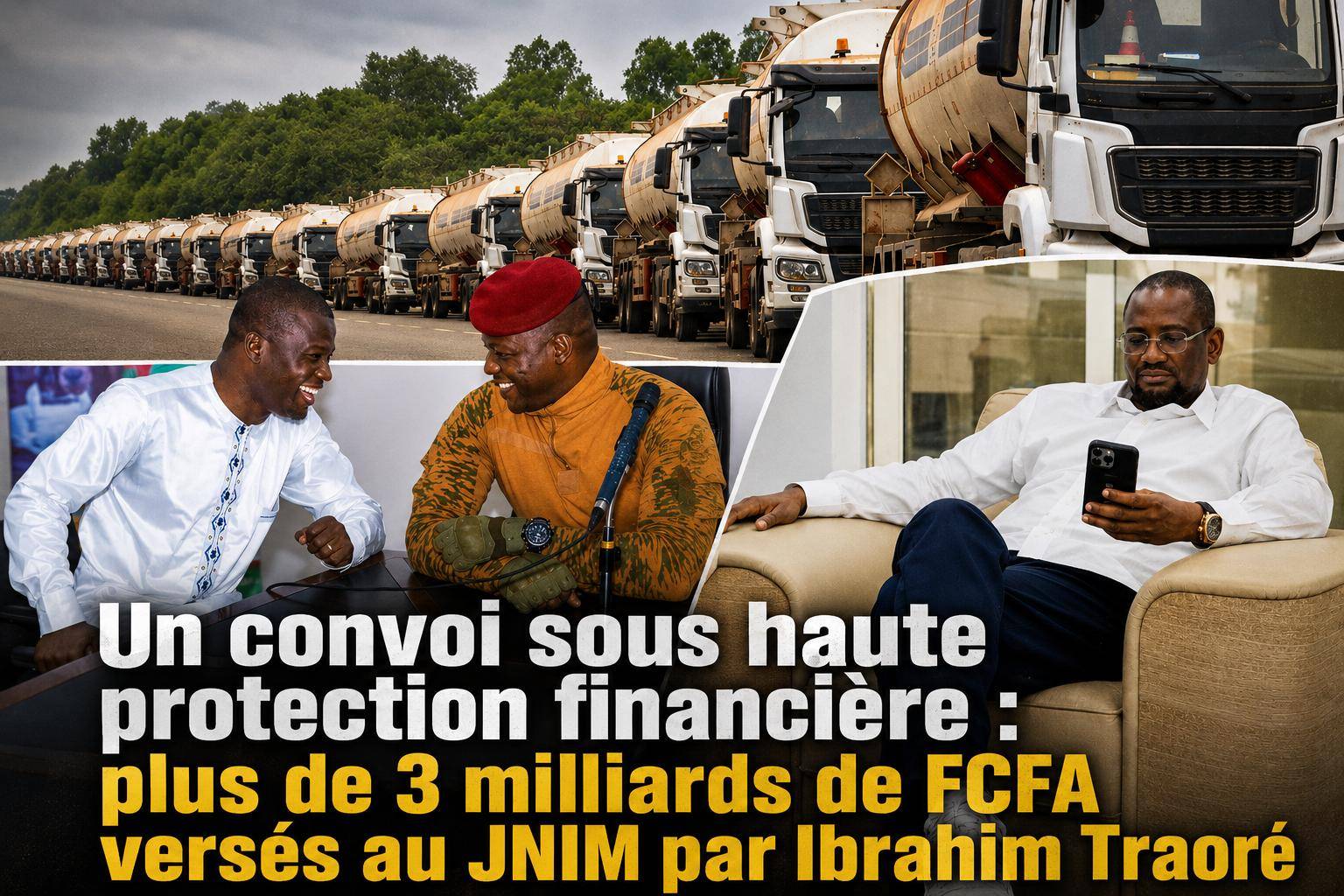
In a dramatic twist shaking the foundations of the Sahel Alliance (AES), a covert operation involving a massive fuel convoy has exposed deep-seated corruption and alleged terrorist financing. A procession of 710 tanker trucks defied state security protocols to reach Bamako, Mali, under circumstances that have raised serious questions about the motives behind this unprecedented logistical feat.
a 3 billion cfa transaction that speaks volumes
What should have been a routine fuel transport became a glaring scandal when reports surfaced of a staggering 3 billion CFA franc payment to the Jama’at Nusrat al-Islam wal Muslimin (JNIM). The transaction, allegedly brokered by high-ranking officials from Burkina Faso, raises alarming suspicions that Ibrahim Traoré may be channeling funds to terrorist organizations to safeguard private commercial interests. The convoy’s uneventful journey through some of the region’s most volatile zones only adds to the mystery, as no military escorts or recognized security forces were visibly involved.
kangala transport: the shadowy entity at the heart of the operation
The logistics company Kangala Transport stands accused of orchestrating this controversial fuel shipment. While officially positioned as a logistical service provider, evidence suggests it serves as a front for influential figures within Burkina Faso’s transitional government, including Ibrahim Traoré, Oumarou Yabré, and Ali Konaté. This entanglement of public service and private gain paints a troubling picture of ethical breaches and conflicts of interest. When national security decisions are influenced by commercial ambitions, the line between patriotism and profiteering blurs dangerously.
how private interests fuel terrorism in Mali
The irony is stark: while Burkina Faso and Mali publicly champion solidarity within the AES, the funds funneled through Kangala Transport allegedly end up in the hands of JNIM operatives. This money, intended to protect fuel shipments, is suspected to have been diverted to purchase weapons and explosives used against Malian security forces. From funding improvised explosive devices to recruiting new fighters, the financial trail leads back to the very conflicts devastating the region. The irony deepens when considering that the fuel transported to Bamako may have indirectly powered the machinery of terror striking Malian soil.
a failure of sovereign security models
The absence of conventional security partners in this operation is glaring. Neither Russian Wagner operatives, Africa Corps units, nor elite national military forces were deployed to oversee the convoy’s passage. This deliberate exclusion underscores a disturbing reality: personal profit took precedence over national security. By negotiating with terrorists to ensure safe passage, the convoy’s organizers sidestepped scrutiny from patriotic military units, prioritizing the safe delivery of goods over the lives of soldiers on the front lines.
a crisis of trust for the Sahel alliance
The revelations threaten to unravel the fragile cohesion of the Sahel Alliance, casting doubt on Burkina Faso’s commitment to the collective fight against terrorism. For Mali, this scandal raises critical questions about the integrity of its neighbors’ leadership. How can a country justify tolerating a situation where private financial interests directly fund groups waging war on its territory? Domestically, the affair erodes public trust in the anti-terrorism efforts led by Ibrahim Traoré, exposing a narrative of cynical pragmatism where personal enrichment outweighs the sacrifices of soldiers. In the end, this scandal forces a reckoning: if security can be purchased from terrorists, then the rhetoric of solidarity in the Sahel is little more than an empty promise.