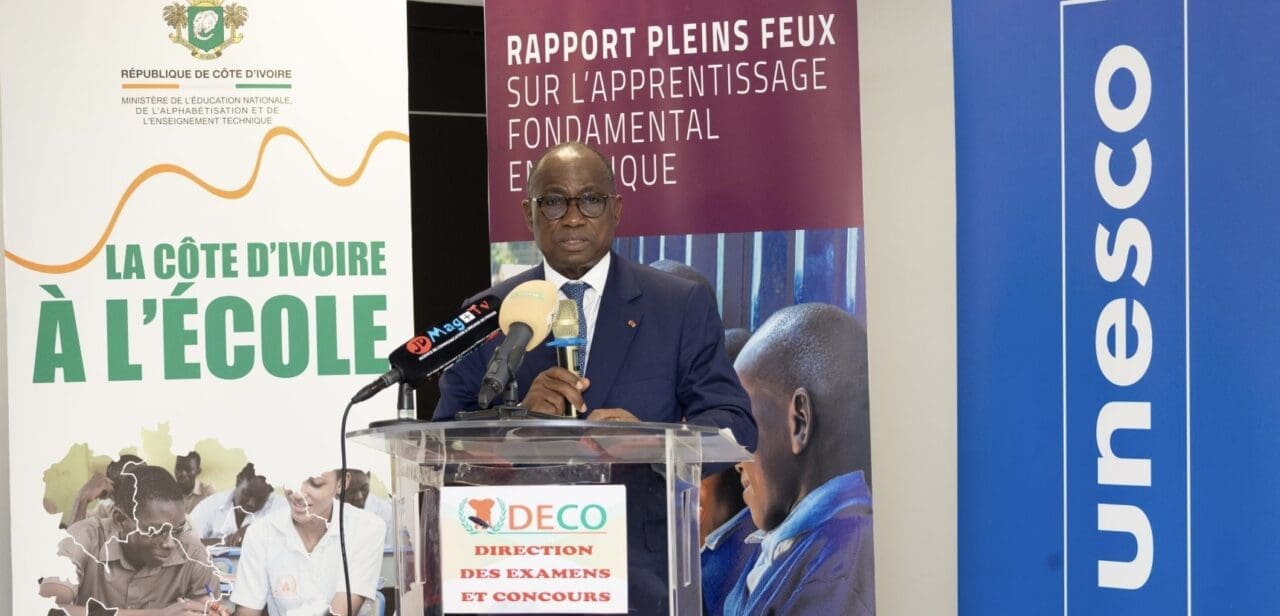
Unveiled in Abidjan in April 2026, the Pleins Feux project represents a major leap in the Ivorian government’s ongoing efforts to overhaul the national education system. Spearheaded by President Alassane Ouattara and supported by international partners, this initiative aims to optimize educational governance and boost the impact of public policies to sustainably elevate learning outcomes across the country.
The Ivorian education system faces mounting pressure as the population exceeds 30 million, with a significant youth demographic driving demand for quality schooling—especially in rural areas. Education has become a cornerstone of President Ouattara’s agenda, aligning with the United Nations’ Sustainable Development Goal 4 (SDG 4) and the broader Agenda 2030. Over the past decade, the government has implemented sweeping reforms to expand access and enhance the quality of education nationwide.

Scaling up education: recruitment, infrastructure, and accessibility
Since 2011, Côte d’Ivoire has significantly expanded its teaching workforce, recruiting over 69,000 primary school teachers and 30,000 secondary school educators. Recent efforts have prioritized STEM disciplines, with 1,800 additional teachers deployed in mathematics and physics to address labor market needs and support the country’s economic transformation goals.
Parallel investments in school infrastructure, particularly in rural regions, are bringing education closer to students, reducing travel distances, and lowering dropout rates. New school facilities across the country have improved educational coverage, while the opening of the Boundiali CAFOP in northern Côte d’Ivoire reflects a structured approach to teacher training and renewal. In 2026, nearly 68,000 candidates competed for approximately 7,000 teaching positions, underscoring the growing demand for quality education and professional development in the sector.
Creating inclusive learning environments: teacher welfare and student support
Enhancing teaching conditions has emerged as a pivotal strategy in the national education agenda. Between 2011 and 2025, starting salaries for primary school teachers rose by over 30%, while secondary school teacher salaries increased by up to 15%. These adjustments aim to boost job appeal and stabilize teaching teams across the country.
The Ivorian government has also prioritized inclusive education, introducing adapted learning materials for students with disabilities. In addition, targeted prevention campaigns—such as those addressing teenage pregnancy in schools—are helping to reduce disruptions in students’ educational journeys and encouraging them to remain in the system.
Pleins Feux: advancing educational governance
Launched in Abidjan on April 12, 2026, the Pleins Feux initiative complements existing reforms by focusing on the governance and operational efficiency of the education system. Unlike infrastructure or staffing projects, this program targets the backbone of policy implementation: the decision-making and monitoring capacities of education leaders.
Developed in collaboration with UNESCO, the African Union, and the Global Education Monitoring Report (GEM), the program stems from two years of research and pilot testing in Côte d’Ivoire, Ghana, and Ethiopia. Its goal is to empower policymakers and educational supervisors with the tools and skills needed to drive measurable improvements in classroom outcomes.
International partners have acknowledged Côte d’Ivoire’s progress in foundational learning, reinforcing the country’s commitment to leveraging diverse partnerships—with global, regional, and private sector stakeholders—to sustain its education transformation journey.