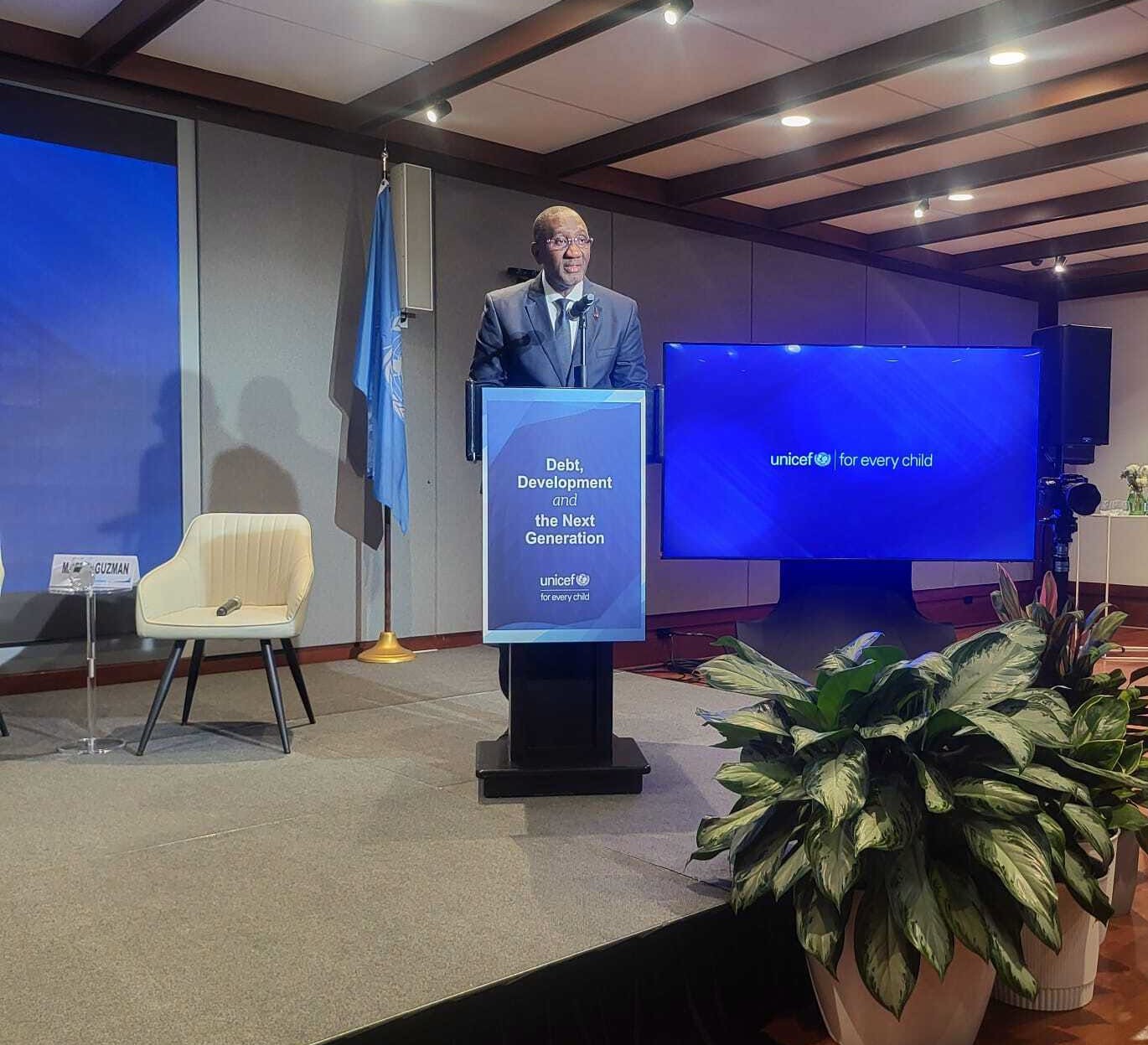
In a striking shift in global finance discussions, Côte d’Ivoire’s Minister of Planning and Development, Dr. Souleymane DiarraSSouba, took center stage at two high-level UNICEF events in New York on September 21–22, 2026. The meetings — one on AI in education and the other on debt and future generations — sparked urgent debate over whether sovereign debt can truly serve as a tool for human development. The Ivorian experience has now taken center stage in the global conversation.
On September 21, the minister spoke at the Learn AI Global Compact, a UNICEF-led initiative focused on ethical AI in education. There, he presented Côte d’Ivoire’s recent sustainability-linked loan — a world first in West Africa — where repayment terms are tied to measurable outcomes in renewable energy and forest restoration. Now, the country is eyeing a bold extension: a human capital-linked sustainability bond, where debt payments would depend on verified learning outcomes across the education system.
This approach demands rigorous, verifiable learning indicators, strong risk management, and data privacy safeguards. It also requires aligning loan terms with the lifespan of education investments. Côte d’Ivoire insists that such ‘human-centric debt’ must prioritize measurable benefits for children’s learning, health, and protection — not just financial returns.
Under the National Development Plan (PND) 2026–2030, Côte d’Ivoire is accelerating the integration of digital tools and AI in schools. The government is now collaborating with UNICEF and partners to refine verifiable learning metrics and develop a credible guarantee mechanism for such innovative financing.
How global debt trends are threatening children’s futures
The second day of the UNICEF summit focused on debt, development, and the wellbeing of future generations. UNICEF estimates that nearly 400 million children live in countries where debt burdens are rising faster than investments in education, health, and nutrition. While debt alone isn’t the enemy, its misuse — high costs, poor allocation, or unsustainable structures — can cripple social progress for decades.
Côte d’Ivoire’s position is clear: debt’s impact isn’t predetermined. It depends on how capital is raised, structured, and ultimately used. The government has placed the development of human capital — education, skills, and health — at the heart of its strategy. The PND 2026–2030 sets ambitious goals: expanding universal health coverage, improving maternal and child health, strengthening social protection, and raising the Human Capital Index.
Debt management is not just about avoiding default — it’s about directing resources to where they matter most. In 2024, with support from the World Bank Group, Côte d’Ivoire carried out a groundbreaking debt-for-development swap. Nearly €400 million in commercial debt was restructured, freeing up about €330 million over five years. A significant portion is now channeled into education through national budget mechanisms.
The public debate: can debt be a force for good?
As the UNICEF discussions unfolded, a global debate sharpened: is sovereign debt compatible with child-centered development? Dr. DiarraSSouba’s response is unequivocal: “Human-faced debt isn’t erased debt. It’s debt reimagined — one where allocation, structure, and cost serve the health, education, and protection of children.”
Critics argue that linking debt to social outcomes is risky and hard to monitor. Supporters, including development economists and child advocates, see it as a vital innovation that could shift financing toward long-term human development.
Côte d’Ivoire’s experience offers a vital test case. The country’s debt strategy now combines sustainability-linked loans, debt swaps, and prudent fiscal management. These choices reflect a broader pivot: from pure financial discipline to a vision where debt becomes a lever for transformation.
The real question now is not whether debt can serve education, but whether the world is ready to redefine ‘responsible finance’ — and whether Côte d’Ivoire’s model can be scaled across the continent.
What comes next: accountability, innovation, and regional spillovers
The fallout from New York has only just begun. The Ivorian government has committed to deepening collaboration with UNICEF and partners to finalize verifiable learning indicators and a robust guarantee framework. These steps are critical to securing investor trust and ensuring the model’s integrity.
Meanwhile, the broader implications are unfolding. If Côte d’Ivoire succeeds, it could inspire similar initiatives across Africa, where dozens of countries still face unsustainable debt burdens and underfunded education systems. But success hinges on transparency, strong institutions, and a commitment to prioritizing children over short-term fiscal gains.
The journey ahead is complex. It demands smart financing, bold leadership, and unwavering public scrutiny. But one thing is certain: the conversation sparked in New York has shifted the debate forever. The question now is not whether debt and education can coexist, but whether the world will act to make them work together.
Key principles guiding Côte d’Ivoire’s debt-for-education approach
- Outcome-driven finance: Loan terms linked to measurable social outcomes in education and sustainability.
- Risk management: Aligning debt maturity with the lifecycle of education investments.
- Data protection: Safeguarding children’s personal and learning data.
- National ownership: Ensuring state and teacher accountability in curriculum and pedagogy.
- Transparency: Regular, verifiable reporting on fund usage and learning gains.
Comments are closed, but trackbacks and pingbacks are open.