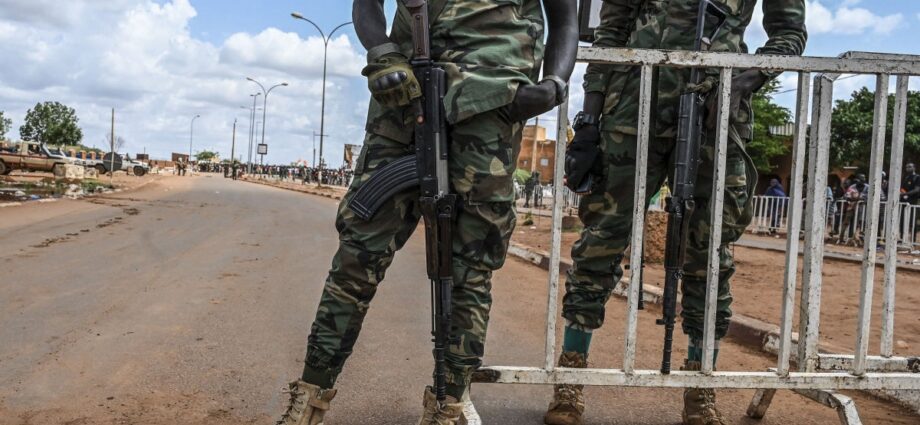
Islamist militants strike villages in Tillabéri, leaving 35 dead
Nairobi — Armed extremists linked to the Islamic State in the Sahel (EIS) have carried out two brutal attacks in western Niger, killing 30 civilians—including four children—and five captured fighters since January 18, 2026. The extremist group has been accused of war crimes for these unprovoked assaults, which targeted communities refusing to pay Islamic taxes or resisting their rule.
Tillabéri: A hotspot of violence and retaliation
The attacks unfolded in the Tillabéri region, a long-standing battleground where EIS militants and government forces have clashed for over a decade. On January 18, fighters stormed the village of Bossieye, executing 31 men and boys in apparent retaliation after residents refused to pay the zakat (Islamic tax) and joined pro-government militias. Survivors reported that assailants, arriving on over 100 motorcycles, rounded up males—including those at the mosque for afternoon prayers—and executed them at close range.
Witnesses described the attackers as wearing distinctive red-striped turbans, a hallmark of previous EIS operations in the area. A local elder, aged 45, recounted how the village chief had defied the militants’ demands, urging residents instead to join government-backed defense groups. “The chief refused to surrender our cattle and millet to a few men on six motorcycles,” he recalled. “He chose resistance over submission. And the elephant came.”
By January 19, soldiers from Operation Borkono—a military campaign launched in January 2026 to counter Islamist insurgents—secured the area, allowing families to bury their dead. A 42-year-old survivor from the nearby village of Yatakala described seeing 31 bodies near the mosque, many with gunshot wounds to the head, limbs, and torso. Four mass graves were dug to inter the victims.
Second attack targets accused collaborator in Alfaga Daweyzé Koira
On January 26, militants struck again in Alfaga Daweyzé Koira, searching for a man accused of aiding the army. When he wasn’t found, they opened fire on a crowd gathered at his home, killing four men and injuring five others. A 35-year-old survivor, who narrowly escaped, shared his account: “They fired indiscriminately. Four died instantly; others were left bleeding.”
Local reports indicated that military reinforcements arrived two days later but failed to address the wounded or investigate the attack. Residents buried the victims in individual graves, while soldiers reportedly urged the village chief to flee—leaving the broader community without protection.
Human Rights Watch condemns civilian targeting
Ilaria Allegrozzi, a senior Sahel researcher at Human Rights Watch, condemned the EIS’s deliberate attacks on civilians. “These horrific massacres follow a disturbing pattern of violence,” she stated. “The group shows utter disregard for human life, systematically targeting those who resist or are perceived as threats.”
Between January 21 and February 4, Human Rights Watch conducted remote interviews with 13 individuals, including six witnesses, local activists, journalists, and community leaders. On February 6, the organization sent a letter to Niger’s military junta outlining its findings and demanding a government response—yet received no reply.
Niger’s military junta faces scrutiny amid rising extremist violence
Niger, under military rule since a July 2023 coup that ousted President Mohamed Bazoum, has vowed to combat Islamist insurgencies. However, ACLED data reveals that 2025 saw Tillabéri record the highest number of civilian casualties in the central Sahel—primarily due to attacks by the EIS, followed by government forces and the Jama’at Nusrat al-Islam wal Muslimin (JNIM), an Al-Qaeda affiliate.
The conflict has drawn global attention to violations of international humanitarian law, which prohibits attacks on civilians, mistreatment of detainees, and destruction of civilian property. The Geneva Conventions and customary international law require Niger’s authorities to investigate alleged war crimes, prosecute perpetrators, and ensure victims receive justice and support.
Allegrozzi urged immediate action: “The relentless brutality against civilians by the EIS is alarming. Niger’s military leaders must prioritize civilian protection, hold abusers accountable, and provide urgent assistance to victims and their families.”
Comments are closed, but trackbacks and pingbacks are open.