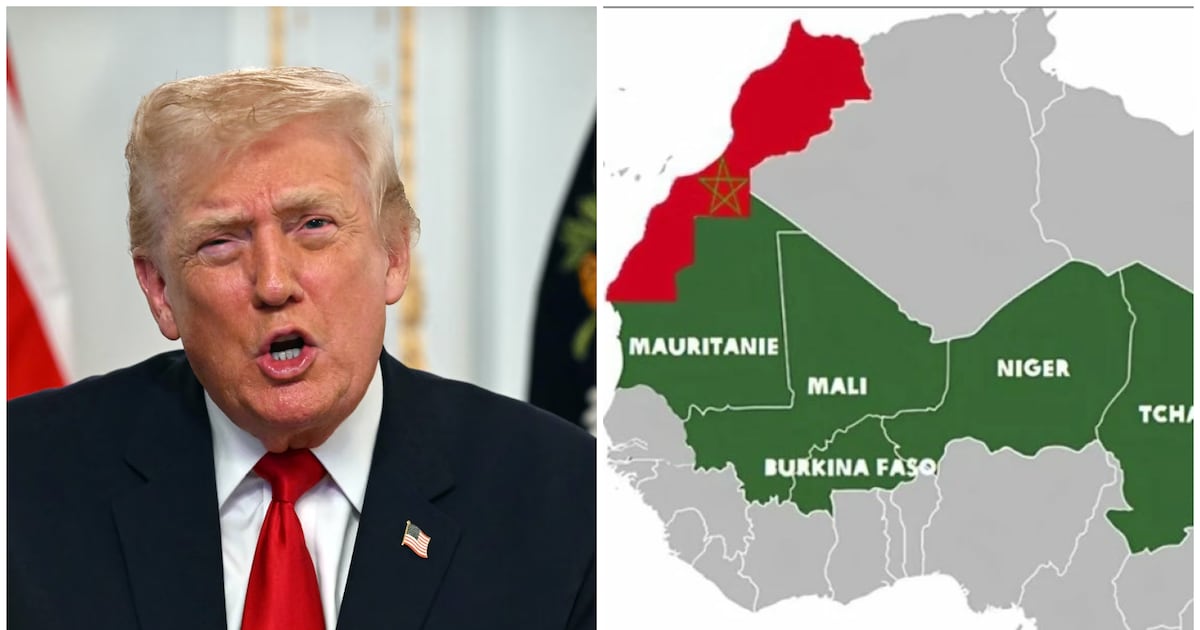
The Sahel is witnessing a subtle yet decisive geopolitical shift. As European forces gradually withdraw from Mali, Burkina Faso, and Niger, and Russia consolidates its presence through proxy structures, the United States appears to be reviving its strategic role in the region. According to Emmanuel Dupuy, president of the Institute for Prospective and Security in Europe (IPSE), this evolution reflects less a return to dominance than a calculated repositioning. «It’s not a comeback, but confirmation that Washington never fully left and chose to wait for the erosion of other influences before stepping up,» he explains.
Dupuy emphasizes that the U.S. has not abandoned the Sahel but has instead adopted a more discreet approach, allowing internal balances to realign and European influence to wane. This strategy aligns with a long-standing American tradition of pragmatic engagement. «Americans prioritize deals over ideology. They engage with partners whose positions they don’t necessarily share,» he notes. In this transactional framework, security and economic interests take precedence over ideological alignment.
Strategic coexistence with Russia
Dupuy dismisses the notion of direct confrontation between Washington and Moscow in the Sahel. «There’s no direct clash. Instead, private military firms and para-state entities—like Wagner and Africa Corps—operate in parallel, often with tacit understandings,» he argues. This indirect model has been tested in Libya, where U.S.-backed private contractors reportedly supported Khalifa Haftar, working alongside Russian-affiliated groups. The Sudanese crisis serves as another example, where Washington may push for mediation involving American contractors to bridge divides between rival factions.
The U.S. approach hinges on structured dialogue with current authorities, regardless of how they came to power. «Washington negotiates with whoever holds power, as seen in Mali and Afghanistan, where engagement with the Taliban followed a similar path,» Dupuy observes. This pragmatic acceptance of political realities contrasts sharply with Europe’s stance, which has often refused to engage with military-led governments in the Sahel.
Morocco’s growing role in the U.S. strategy
Within this shifting landscape, Morocco emerges as a key partner for the United States. Bilateral cooperation between Rabat and Washington has deepened across military, economic, and diplomatic spheres. Dupuy highlights Morocco’s unique position: «Rabat serves as an ideal partner—one Washington can rely on to navigate the Sahel’s complex political terrain.
In a region where Algeria’s influence has waned—particularly in Mali, where Algiers’ support for certain religious actors has strained relations with Bamako—Morocco’s capital of trust with Sahelian regimes grows. «The Malian authorities welcome Morocco’s privileged status, even as they denounce external interference,» Dupuy notes. This dynamic positions Rabat as a bridge between Washington and Sahelian governments, enabling indirect U.S. engagement without direct confrontation.
Economic and religious levers of influence
Beyond geopolitics, Morocco leverages soft power tools to solidify its role. Since 2015, the Mohammed VI Institute for the Training of Imams has exported a moderate, Maliki-Sufi Islamic framework to the Sahel, fostering stability and influence. «This religious diplomacy is a highly effective tool,» Dupuy states. Additionally, Morocco offers economic prospects, including logistical corridors linking the Sahel to Atlantic ports via Mauritania and investments in southern Morocco.
The kingdom’s broader African strategy—visible in banking, telecom, and industrial investments—reinforces its credibility as a stable interlocutor. Dupuy underscores the depth of U.S.-Morocco ties: «The U.S. granted Morocco a major non-NATO ally status in 2016, reflecting its role in a triangular partnership uniting Africa, the Atlantic, and the Mediterranean.» This alignment ensures Rabat’s relevance in Washington’s broader regional vision.
The Algeria factor and Sahara dossier
Algeria’s strategic options in the Sahel appear increasingly limited. Dupuy dismisses Algiers’ leverage, particularly on the Sahara issue, where «the U.S. has reaffirmed that the autonomy plan remains the only basis for discussion.» Algeria’s attempts to maintain diplomatic status quo or provoke tensions have yielded little success, constrained by shifting alliances and great-power priorities.
Madrid’s 2023 talks marked a turning point, shifting the Sahara debate from ideology to practical implementation. Discussions now focus on local governance, economic development, maritime zones, agriculture, and exclusive economic zones—areas where Morocco’s proposals are gaining traction.
In this evolving chessboard, the Sahel is no longer just a battleground for security rivalries but a space for strategic realignment. Here, U.S. interests in extractive resources, private military contracting, religious diplomacy, and logistical corridors intersect with Morocco’s pivot role—bridging the Atlantic, Mediterranean, and African depth.