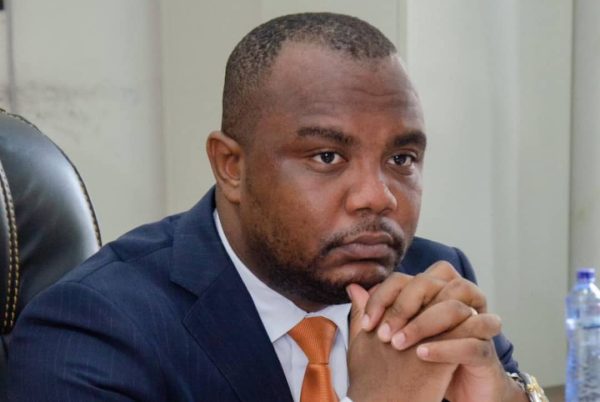
Christian Bosembe, head of the Democratic Republic of Congo’s Higher Council for Audiovisual and Communication (CSAC), has declared that TikTok will soon be blocked in the country. His decision follows accusations that the platform has become a hub for propaganda by the AFC-M23 rebellion, which has been accused of attacking civilians in eastern DRC.
The regulator argues that allowing rebel leaders like Corneille Nangaa to maintain active accounts on TikTok undermines national security. He questions why platforms that would never tolerate extremist accounts in Western nations are permitted to host such content in the DRC.
Why is TikTok being targeted in the DRC?
Bosembe points to TikTok’s alleged role in amplifying messages from armed groups accused of atrocities. He highlights that unlike in countries such as the United States or France, where extremist content is swiftly removed, DRC authorities claim TikTok has failed to act decisively against rebel propaganda.
The CSAC’s stance is clear: platforms operating in the DRC must comply with local laws or face consequences. Bosembe has already initiated discussions with TikTok’s leadership to enforce the ban, positioning the move as a necessary step to protect public order and national unity.
« Would a Hezbollah account be allowed in France? Would an Al-Qaïda profile exist in the U.S.? » Bosembe questioned, emphasizing the double standards he sees in global digital governance.
Rebel violence and digital warfare in the DRC
The AFC-M23 rebellion has been accused of systematic attacks on civilian populations, displacing thousands and destabilizing the eastern regions of the DRC. Kinshasa alleges that these operations are orchestrated with external support, particularly from Rwanda, to exploit the country’s mineral wealth.
Bosembe argues that cutting off digital channels used by rebels is critical to weakening their influence. He insists that the Congolese state must assert its authority by regulating online spaces where propaganda thrives.
Sovereignty vs. digital freedom: a growing debate
This decision raises broader questions about digital sovereignty in the DRC. As conflicts increasingly play out online, Kinshasa is determined to regain control over social media platforms seen as amplifying enemy narratives. The CSAC’s move could set a precedent for how African nations manage digital spaces during periods of unrest.
Bosembe’s firm stance reflects a growing trend in Africa, where governments are pushing back against platforms perceived as enabling instability. The DRC’s TikTok ban underscores the tension between global tech giants and national security imperatives.
Comments are closed, but trackbacks and pingbacks are open.