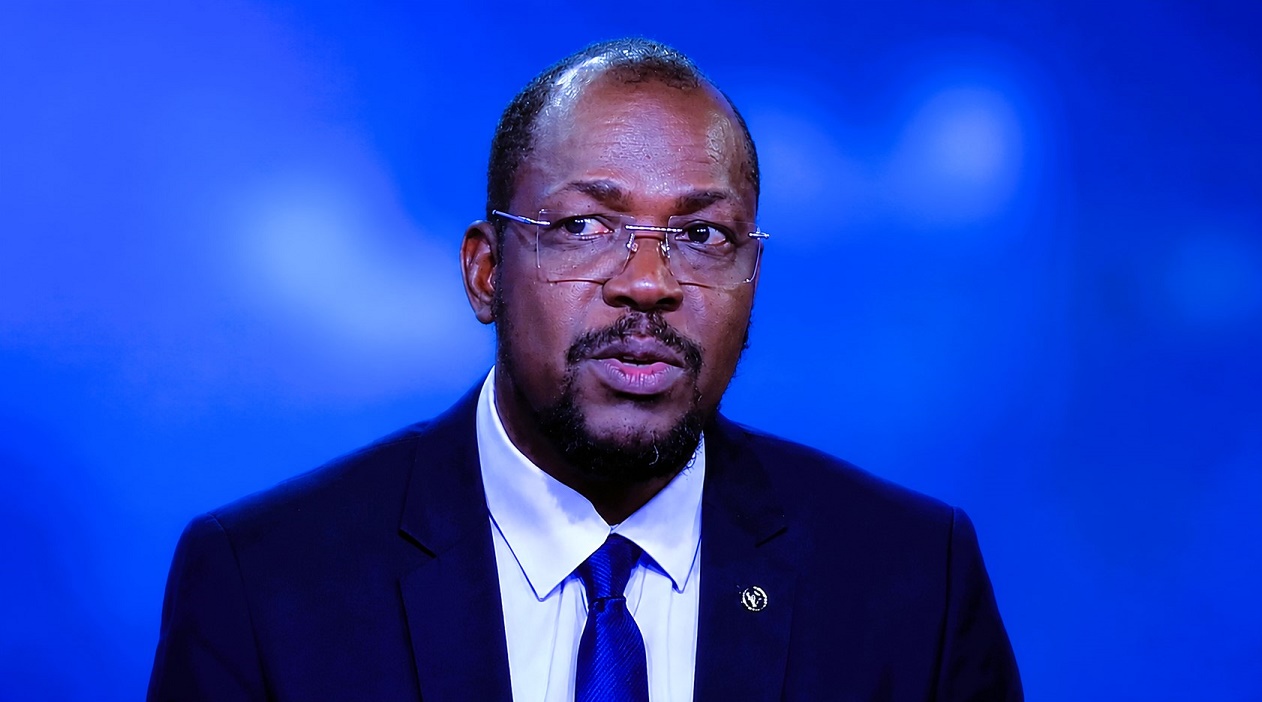
In a tense political climate, the Coalition of Forces for the Republic (CFR) in Mali is emerging as a voice advocating for a peaceful resolution to the crisis. Through a recent in-depth interview, Étienne Fabaka Sissoko, the coalition’s spokesperson, outlined a vision centered on dialogue without alliance, territorial reform, and a rejection of military solutions as the sole path to stability. His remarks come at a critical juncture, as Mali grapples with deepening insecurity and mounting public frustration.
Mali’s security crisis: a failed military approach?
The blocus—a strategy of economic strangulation—has left Bamako’s residents struggling with soaring prices and disrupted supply chains. Étienne Fabaka Sissoko does not mince words: «To describe this as a ‘working strategy’ would imply that starving civilians is a valid tactic. The reality is far more tragic. This approach only deepens suffering and undermines the sovereignty of a landlocked nation like Mali. The CFR rejects such measures because they inflict harm on the very people they claim to protect.»
The spokesperson emphasizes that while security threats persist, a purely military response has reached its limits. «A sustainable solution demands political will—one that secures corridors, protects populations, and paves the way for lasting peace. War alone cannot rebuild a nation.»
CFR’s mission: a platform for national salvation
Founded in late 2025, the CFR positions itself as more than a traditional political party. Sissoko describes it as a ‘national safeguard platform’, responding to widespread demand for an alternative to both military rule and prolonged instability. «The Malian people yearn for peace. They seek a responsible, structured voice that transcends partisan divides. Our goal is to offer a third way: neither the perpetuation of authoritarian rule nor the chaos of unchecked rebellion.»
The coalition’s appeal has resonated beyond Bamako, gaining traction among citizens, civil society, and international observers. Its message hinges on inclusivity, rejecting the notion of a single leader or faction as the solution. Instead, it champions a ‘strong national pact’ to guide Mali through transition.
Dialogue vs. alliance: clarifying the CFR’s position
Rumors have circulated about potential ties between the CFR and armed groups like the Front de Libération de l’Azawad (FLA). Sissoko dismisses these claims outright. «Dialogue does not mean alignment. The CFR is a civilian movement that engages with all stakeholders, but it does not coordinate military actions or form alliances. We stand firm on one principle: Mali’s unity is non-negotiable.»
The coalition advocates for political solutions to territorial and governance disputes, emphasizing transparency and strict adherence to republican values. «We refuse partition. However, we recognize that decentralization must address real governance gaps—where local leaders, rather than the state, fill the void left by absent administration. Our vision is a Republic that integrates customary mediation without compromising constitutional principles.»
The JNIM offensive: no automatic legitimacy for armed groups
The Group for the Support of Islam and Muslims (JNIM) launched a major offensive in April 2026, sparking fears of state collapse. While Sissoko acknowledges the gravity of the situation, he rejects the idea that armed groups should automatically inherit political power. «No faction earns legitimacy merely by waging war. A transition must restore public freedoms, secure civilians, and rebuild trust through inclusive dialogue—not through the barrel of a gun.»
The CFR has drafted a civilian transition plan centered on restoring democratic freedoms, drafting a new constitution, and organizing elections—not as starting points, but as culminating achievements. «Without security and national consensus, history will repeat itself. Elections held under duress yield no legitimacy.»
Mahmoud Dicko: moral authority, not political leadership
Speculation has mounted about the role of Imam Mahmoud Dicko in any potential transition. Sissoko clarifies the CFR’s stance: «Dicko’s role is one of moral guidance—facilitating dialogue and healing divisions. But executive power must rest with legitimate civilian institutions. Political legitimacy flows from the ballot box, not from religious figures or military decrees.»
This distinction underscores the CFR’s commitment to separating religious influence from state governance, ensuring that Mali remains a secular republic.
Red lines in dialogue with the JNIM
The CFR’s proposal for dialogue with the JNIM is not a surrender or a reward—it is a pragmatic tool to end violence. However, Sissoko draws clear ‘red lines’: «Mali’s unity, republican governance, protection of fundamental rights, and the rejection of transnational jihadist agendas are non-negotiable. We will not negotiate the existence of the Malian state.»
Regarding rumors about Iyad Ag Ghali’s willingness to abandon transnational jihad, the CFR refuses to base its strategy on unproven intentions. «Words are meaningless without deeds. If factions within the JNIM wish to engage in a Malian-led peace process, they must prove it: halt attacks, protect civilians, ensure humanitarian access, and sever ties with Al-Qaïda.»
The CFR’s position is unwavering: peace cannot be built on the foundation of external agendas or unchecked violence.
Decentralization: governance, not caricature
Critics often reduce the debate around decentralization to the specter of Sharia law. Sissoko rejects this oversimplification. «The real issue is the collapse of the state at the local level. In many regions, public services are nonexistent, justice is a luxury, and education is a distant dream. Communities turn to customary leaders, not out of ideology, but out of necessity.»
The CFR’s proposal is not about imposing Sharia but about rebuilding a functional Republic. «We advocate for a unitary state that empowers local authorities with resources and responsibilities, while preserving core national functions. Decentralization is about efficiency, not division.»
Transition plan: restoring the ‘useful state’
The coalition has developed a structured transition program focused on restoring essential state functions. Priorities include reopening schools, strengthening the judiciary, protecting civilians, and reviving the economy. «The first step is to restore access to education, justice, security, energy, and food. Without these, reconstruction is impossible.»
Sissoko highlights the need for an independent judiciary, support for teachers, and the professionalization of security forces. The plan also addresses the humanitarian crisis, acknowledging that peace begins with meeting basic needs.
The Alliance of Democrats of the Sahel: regional solidarity, not military coordination
The Alliance of Democrats of the Sahel (ADS), formed shortly after the CFR, represents a civic convergence between Malian, Burkinabè, and Nigerien democrats. Sissoko clarifies its purpose: «It is not a military structure or a regional command. It is a platform for advocacy, defending public freedoms and solidarity among Sahelian democrats facing shrinking political spaces.»
The CFR remains a Malian initiative, while the ADS seeks to coordinate efforts across borders. Both share a commitment to civilian-led transitions, democratic governance, and the rejection of authoritarian or theocratic models.
The CFR’s vision is rooted in a simple truth: Mali’s salvation will not come from strongmen or military victories, but from a strong national pact—one that prioritizes dialogue, inclusivity, and the restoration of a functional Republic.