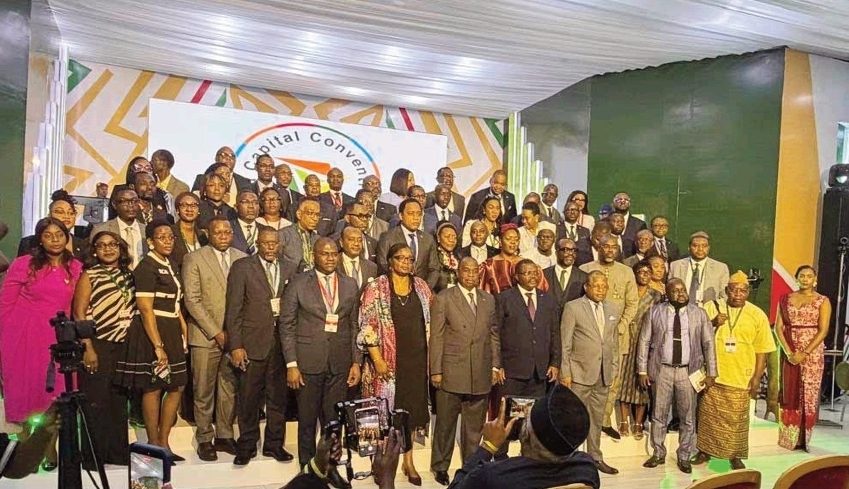
At the helm of the Diamond Capital Convention’s opening ceremony in Douala on September 24, 2026, Cameroon’s Finance Minister Louis Paul Motazé delivered a stark warning: central Africa’s capital markets must evolve rapidly—or risk falling even further behind in fueling growth for Cameroon and the wider CEMAC region.
The landmark event, bringing together policymakers, investors, financial institutions, regulators, and private sector leaders, has ignited intense discussions about the future of financial mobilization across the subregion. As reactions pour in, the question on every stakeholder’s mind is clear: Can these capital markets finally deliver the transformative funding needed to unlock Cameroon’s economic potential and drive broader CEMAC development?
Why Cameroon and CEMAC can’t afford to delay a capital market revolution
The finance minister did not mince words. In a stirring address at the Diamond Capital Convention in Douala, he emphasized that Cameroon and the six-member CEMAC bloc stand at a critical inflection point. The current state of their financial markets—characterized by shallow depth, limited investor participation, and weak infrastructure—is failing to meet the demands of an economy hungry for investment.
Motazé called for a paradigm shift toward deeper, more dynamic capital markets. Such markets, he argued, would not only unlock trillions of Central African francs in untapped savings but also channel them into strategic sectors poised for growth.
But time is of the essence. Lagging behind peers like Nigeria, Ghana, and Kenya in financial market development, Cameroon—and by extension, CEMAC—risks missing a once-in‑a‑generation opportunity to accelerate industrialization, reduce unemployment, and foster sustainable wealth creation.
Redirecting capital: from speculation to productive investment
The minister’s rallying cry focused on one central challenge: capital misallocation. Too many financial resources are siphoned into short-term, low-impact ventures or parked in traditional savings products that offer little return and no growth multiplier effect.
- Industrialization and value addition: Funds must flow into agro‑processing, manufacturing, and light industry—not just commodities.
- Energy and infrastructure: Massive investment is needed to modernize power grids, expand digital connectivity, and build resilient transport networks.
- Local raw material transformation: Turning cocoa, coffee, timber, and minerals into finished goods can create jobs and boost exports.
- Technology and innovation: A modern capital market must finance startups and tech firms to compete in the digital economy.
“We are not merely raising capital—we are building the economy of tomorrow,” Motazé told delegates. “Every franc mobilized must serve a real economic purpose.”
A broken link in the chain: confidence, transparency, and regulation
Yet, the path forward is fraught with obstacles. Central to the debate is the trust deficit plaguing the region’s financial ecosystem. Investors, especially local savers, remain wary due to:
- Weak regulatory oversight and inconsistent enforcement.
- Limited transparency in corporate reporting and public funding use.
- Poor corporate governance and lack of investor protection.
- Slow adoption of modern financial instruments like green bonds, sovereign sukuk, and private equity funds.
Without addressing these issues, Motazé warned, even ambitious capital mobilization efforts will fail to translate into real economic transformation.
Public debate erupts: who benefits from a deeper capital market?
As news of the minister’s call spreads, a lively public discourse is unfolding across Cameroon and CEMAC. Citizens, business leaders, and civil society are weighing in on who should drive this transformation—and who stands to gain or lose.
Supporters argue: A stronger capital market will democratize access to finance, empower SMEs, and reduce dependence on foreign aid and resource rents.
Skeptics counter: Without robust governance and anti-corruption safeguards, deeper markets risk becoming vehicles for elite capture, benefiting a narrow cohort while leaving ordinary citizens behind.
Economists point to Rwanda’s capital market success as a model. By streamlining regulations, launching a regional bourse, and prioritizing transparency, Kigali has attracted foreign and domestic investment, fueling a decade of high growth. Could Douala follow the same blueprint?
What comes next? Six priorities for policymakers and investors
The fallout from the Diamond Capital Convention has set the stage for urgent action. Here are six steps industry leaders say must top the agenda:
- Expand the menu of investable assets: Introduce sovereign bonds, asset-backed securities, and Islamic finance instruments tailored to regional demand.
- Strengthen market infrastructure: Upgrade trading platforms, clearing and settlement systems, and digital payment rails to improve efficiency and access.
- Launch targeted investor education campaigns: Particularly among youth and women, who are underrepresented in capital market participation.
- Foster public-private partnerships: Leverage state guarantees and blended finance to de-risk investments in infrastructure and green energy.
- Enforce stricter corporate governance standards: Require listed companies to adopt international reporting frameworks and independent audits.
- Harmonize CEMAC-wide regulations: Reduce fragmentation and attract cross-border capital flows within the monetary union.
No more promises: time to deliver
The Diamond Capital Convention has shifted the national conversation. The focus now is on execution. Will Cameroon and CEMAC turn this moment into a lasting financial revolution? Or will the promise fade—another lofty declaration in a region all too familiar with missed opportunities?
One thing is certain: the cost of inaction is far greater than the challenge of change. With global investors eyeing Africa’s next growth frontier, the window to act is closing fast—and only those who build deep, trustworthy capital markets will seize it.
Comments are closed, but trackbacks and pingbacks are open.