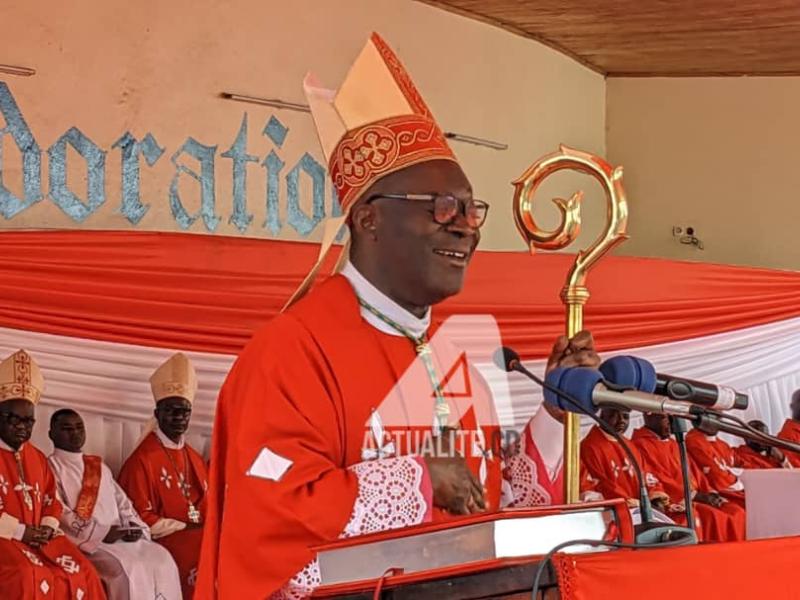
On the occasion of the 66th anniversary of the Democratic Republic of the Congo’s independence, the Metropolitan Archbishop of Lubumbashi and President of the National Episcopal Conference of Congo (CENCO), Mgr Fulgence Muteba Mugalu, delivered a powerful appeal for reconciliation, forgiveness, and national unity.
During his homily on Tuesday at the Saints Peter and Paul Cathedral in Lubumbashi, the prelate warned that the country risks jeopardising its future if it does not resolutely choose the path of lasting peace.
Addressing religious leaders, Catholic faithful, and several guests gathered to celebrate the national holiday, Mgr Fulgence Muteba urged Congolese people to turn the independence anniversary into a moment of deep reflection on the nation’s future.
“We must become a respectable and respected country. To get out of this situation, we need a consensus to build lasting peace. We must forgive one another, reconcile, and consolidate our national cohesion based on the philosophy of living together. If we do not take this path, the risk is great that we may end up losing this country. We have been warned,” declared the CENCO president.
Peace as the condition for Congo’s future
Against a backdrop of security challenges, political tensions, and social fractures, the head of the Congolese Catholic Church stressed the need for a collective awakening. In his view, the greatness of the DRC can only be guaranteed if its sons and daughters prioritise dialogue, mutual forgiveness, and the constant pursuit of the common good.
His message highlights the urgency of overcoming divisions in order to build a national consensus capable of consolidating a lasting peace and preserving the country’s unity.
Living together at the heart of the national project
Mgr Fulgence Muteba placed particular emphasis on the philosophy of living together, which he considers the essential foundation of national cohesion. According to him, no political, economic, or institutional reform can produce sustainable results without a commitment to living together.
Comments are closed, but trackbacks and pingbacks are open.