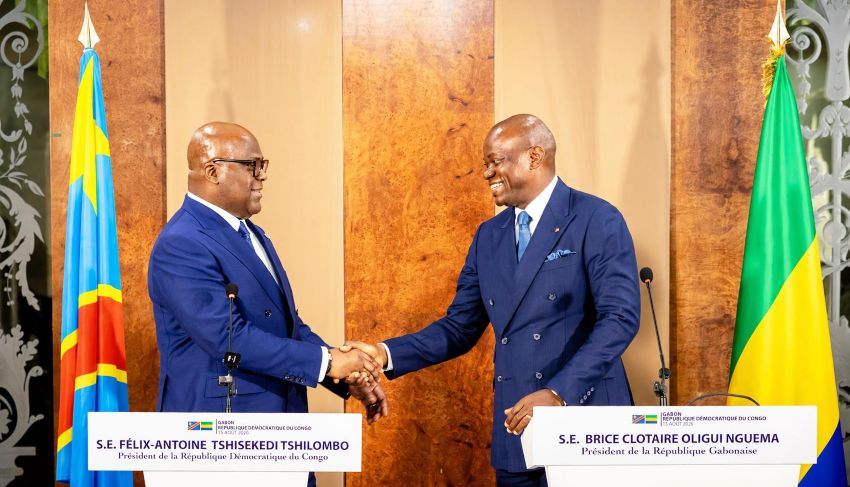
Gabon and DR Congo forge stronger partnership during Tshisekedi’s Libreville visit
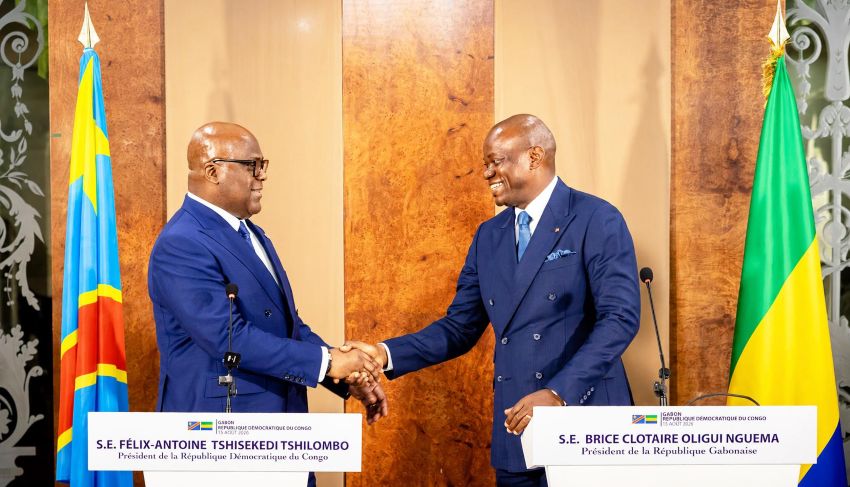
Libreville, August 15, 2026 — The official visit of DR Congo President Félix Tshisekedi to Libreville surpassed mere diplomatic courtesy, evolving into a strategic partnership aimed at reshaping economic, regional, and continental dynamics. The exchanges between President Brice Clotaire Oligui Nguema and his Congolese counterpart underscored a shared ambition: to transform bilateral relations into engines of sustainable development and African solidarity.
Three landmark agreements emerged from the talks, signaling a decisive shift from rhetoric to tangible cooperation. The timing—coinciding with Gabon’s 66th Independence Day—added symbolic weight to the visit, highlighting not just bilateral ties but a broader vision for African progress.
The discussions spanned critical sectors: agriculture, infrastructure, transportation, energy, mining, healthcare, education, vocational training, digital innovation, and cultural exchange. At their core lay a fundamental principle: while Gabon and the DR Congo boast vast resources, their future prosperity hinges on local value addition, job creation, and the free flow of African expertise and capital.
From historical ties to economic transformation
Both leaders emphasized accelerating the processing of natural resources—a strategic move to reduce reliance on raw material exports and build homegrown industries. President Oligui Nguema outlined Gabon’s ongoing reforms in digitalization, women’s empowerment, youth employment, living standards, and resource valorization, while President Tshisekedi praised these initiatives and reaffirmed Kinshasa’s commitment to deepening collaboration with Libreville.
The agenda extended beyond economics. transnational crime, regional integration, and the conditions for lasting peace and stability topped the discussions, particularly concerning the Congo Basin—a vital ecological zone requiring cross-border solutions. Climate financing, including potential collaboration on carbon taxation, emerged as another frontier, with both nations seeking stronger negotiating positions at international forums.
On the continental stage, Gabon sought DR Congo’s backing for its candidacy to the International Telecommunication Union’s Council in Doha (November 2026) and its bid to host the 2027 African Union Summit. For Libreville, this represents a pivotal moment—a chance to reclaim a leadership role in Pan-African affairs, nearly five decades after hosting the OAU summit in 1977.
Three agreements to turn promises into progress
The visit’s tangible outcomes were codified in three agreements:
- Sectoral cooperation framework: Covers justice, environment, health, and mining, with a focus on local resource processing.
- Diplomatic mobility: Visa exemptions for holders of diplomatic and service passports.
- Institutionalized dialogue: Establishes regular high-level consultations between the two governments.
A joint commission will oversee implementation, a critical step given Africa’s history of unfulfilled agreements. The true test now lies in transforming signed documents into operational projects, declarations into investments, and intentions into tangible benefits for both nations’ citizens.
A moment of reflection amid historical echoes
The visit concluded at the Sainte-Marie Cathedral in Libreville, where Presidents Oligui Nguema and Tshisekedi paid their respects. The venue held particular significance for Congolese history, evoking memories of a 2018 mass honoring Étienne Tshisekedi, Félix’s late father.
The path forward demands more than symbolic gestures. Gabon and the DR Congo now have the framework; the challenge is to ensure it translates into action. As both presidents emphasized, Africa’s future relies not on declarations of solidarity but on structured, financed, and results-driven cooperation. The time for action is now.
Comments are closed, but trackbacks and pingbacks are open.