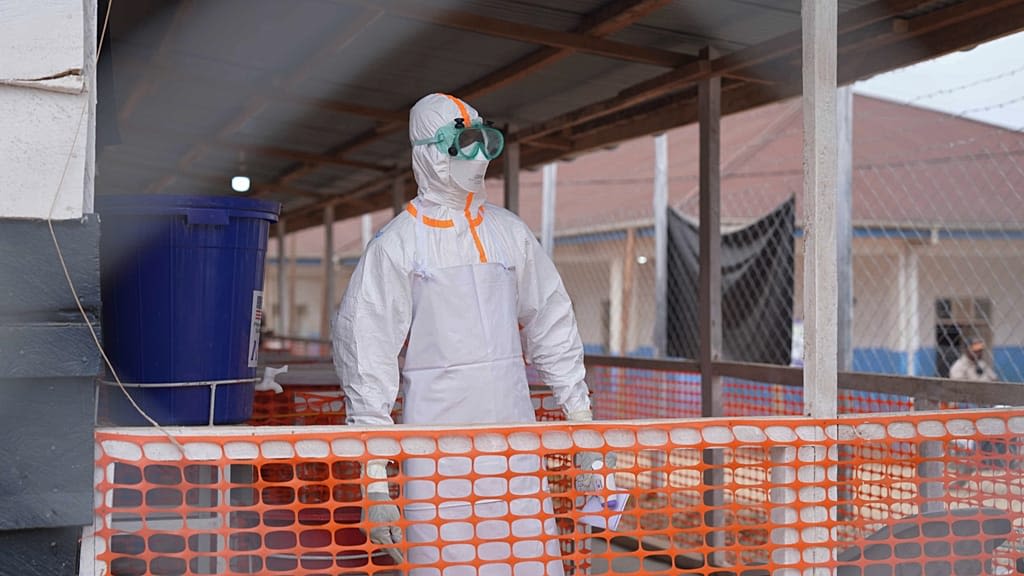
Democratic Republic of Congo battles deadliest Ebola outbreak in history
The Democratic Republic of Congo has crossed a grim milestone with Ebola claiming over 2,011 lives since the outbreak began this year, according to the latest official figures. Health authorities warn this could become the deadliest epidemic ever recorded in the country, with 4,381 confirmed cases reported to date.
The death toll surged from 1,000 to 2,000 in just three weeks—faster than the initial nine-week period it took to reach the first thousand fatalities. This acceleration highlights how rapidly the crisis is outpacing containment efforts amid ongoing challenges.
Key obstacles include rebel conflicts blocking access to remote areas, deteriorating road networks, and healthcare worker strikes over unpaid wages. These disruptions have severely hampered response teams’ ability to track and isolate cases effectively.
Local medical coordinator Dr. Jean-Marie Akandabo, who oversees patient care in Ituri province, described the situation as ‘alarmingly dire’ and called for urgent reinforcement of response measures in the hardest-hit communities.
This marks the 17th Ebola outbreak in the DRC, already the largest in the country’s history. Sania Nishtar, CEO of Gavi, the Vaccine Alliance, cautioned that ‘this epidemic could surpass all previous ones’, with a current case fatality rate of 45.9%. This exceeds the 39.6% recorded during the West African Ebola epidemic of 2014–2016—the deadliest in history, which infected over 28,000 people and killed 11,000.
State of emergency declared
Officially declared on May 15, genetic sequencing reveals the outbreak likely began months earlier, in February. The government has since declared a national health emergency to mobilize resources.
This outbreak differs from prior ones because it involves the Bundibugyo strain—a rare Ebola variant for which no approved vaccines or treatments exist. Clinical trials for experimental vaccines have begun in Ituri province, the epicenter of the crisis in eastern DRC.
Humanitarian teams report the outbreak continues to outpace the response across five affected eastern provinces. Strikes by healthcare workers protesting unpaid wages have further crippled containment efforts. The World Health Organization noted that most new cases emerge outside monitored contacts, indicating the virus is spreading undetected.
Vaccine trials underway amid critical shortages
On Friday, WHO vaccine experts recommended launching large-scale human trials for Ervebo, the only Ebola vaccine currently licensed, to assess its potential cross-protection against the Bundibugyo strain ravaging the DRC. While Ervebo has proven effective against the more common Zaire strain, preliminary animal data suggests it may offer partial immunity against Bundibugyo.
Two additional Bundibugyo vaccine candidates are in early human trial phases, with a third in preclinical development. The WHO’s Africa regional director, Dr. Mohamed Yakub Janabi, acknowledged that ‘we are racing behind the virus, which has a head start’.
Ebola spreads through bodily fluids and triggers severe hemorrhagic fever. First identified in 1976 near the Ebola River in what is now the DRC, this outbreak underscores the urgent need for global support to curb the spread of this deadly pathogen.
Comments are closed, but trackbacks and pingbacks are open.