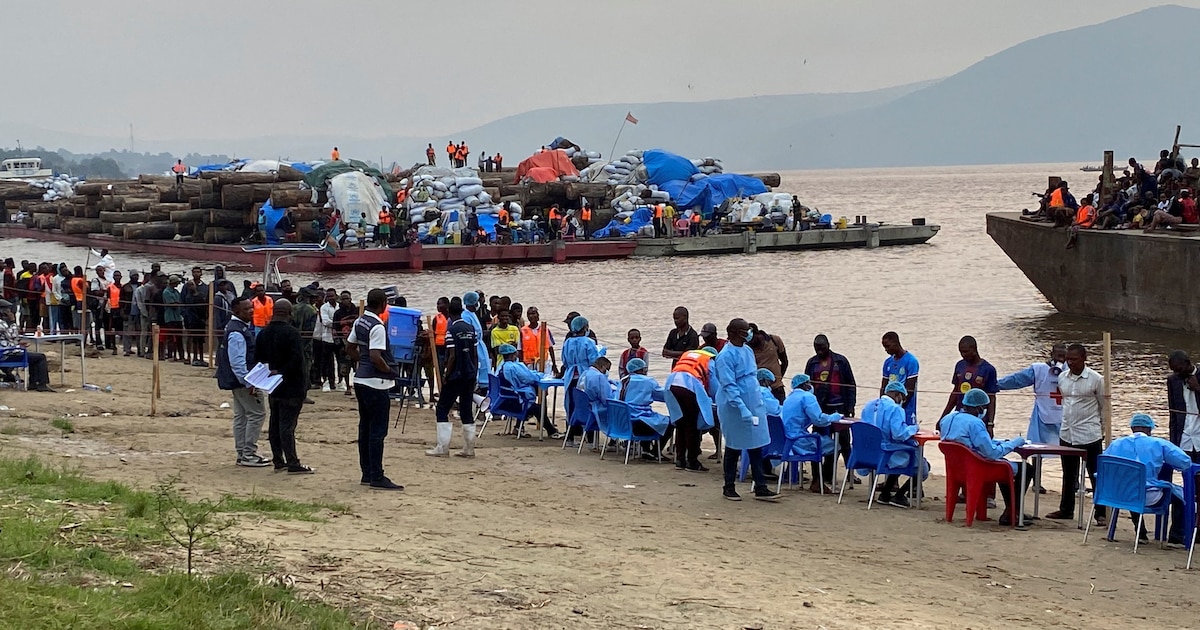
The Ebola crisis in the Democratic Republic of the Congo (DRC) shows no signs of slowing. On August 5, medical leaders confirmed that the outbreak, declared on May 15, has become the second deadliest in history, with 1,850 fatalities among nearly 4,000 cases—a fatality rate exceeding 40%. The Bundibugyo strain, responsible for this devastation, has already claimed more lives in months than in previous outbreaks spanning years.
Jean Kaseya, director-general of the Africa Centres for Disease Control and Prevention (Africa CDC), admitted in late July that authorities do not yet fully control the situation. The virus’s rampant spread contrasts sharply with past outbreaks, including the 2018-2020 epidemic in the DRC, which took over ten months to reach similar tolls.
Violence and displacement fuel the epidemic
The eastern DRC, particularly Ituri Province—the outbreak’s epicenter—is a warzone. Terrorist attacks by the Allied Democratic Forces (ADF), a militant group from neighboring Uganda, plague the region. Meanwhile, armed militias vie for control over land, minerals, and influence, further destabilizing communities. The North Kivu Province, also affected, remains largely beyond Kinshasa’s control after the M23 rebel group, backed by Rwanda, seized swathes of territory over a year ago.
Years of conflict have displaced millions, pushing families into Uganda, Burundi, and other parts of the DRC. These displaced populations face dire living conditions, poor hygiene, and limited access to healthcare, creating fertile ground for the virus to thrive. At the outbreak’s onset, inadequate surveillance and testing infrastructure delayed case detection, allowing the disease to spread unchecked.
Contact tracing and containment efforts fall short
Tracing contacts of infected individuals remains critically under-resourced. In Bunia, the outbreak’s hub, 90% of admitted patients had no recorded contact history. Across Ituri, only 59% of contacts were successfully tracked—a stark contrast to the Africa CDC’s recommendation of monitoring 40 contacts per confirmed urban case. With 134,400 contacts needing follow-up, fewer than 17,500 are currently being tracked, leaving communities vulnerable. Roughly one-fifth of identified cases receive no regular monitoring due to personnel shortages or violence. Tragically, 60% of fatalities occurred outside healthcare facilities, highlighting the system’s collapse.
Vaccines and treatments: a race against time
Efforts to curb the outbreak include experimental solutions. Oxford University launched a clinical trial this month for a vaccine targeting the Bundibugyo strain, with initial doses administered to volunteers. The Coalition for Epidemic Preparedness Innovations (CEPI) is also funding a vaccine developed by Hilleman Laboratories in Singapore, aiming for rapid production and deployment in the DRC.
In the absence of a Bundibugyo-specific vaccine, Africa CDC announced plans to administer the Ervebo vaccine—designed for the Zaire strain—to affected populations. While not a perfect match, early data suggests it reduces symptom severity and mortality. Additionally, over 40 patients are participating in a trial combining antiviral treatments, with remdesivir showing promise in neighboring Uganda, where officials credited the drug for limiting fatalities to 10%. Jean Kaseya has called for expanded remdesivir use in the DRC, citing Uganda’s success in containing cross-border spread.
International aid lags behind the crisis
The response has been hindered by delayed global support. Early in 2025, USAID’s suspension of decades-long health funding crippled the DRC’s response capacity. On August 5, the U.S. State Department announced a $242 million allocation, bringing total aid to $512 million. While this finally covers the WHO and CDC’s six-month emergency plan—costed at $518 million—it falls short of past humanitarian investments. The U.S. remains the top contributor, far outpacing the European Union.
Comments are closed, but trackbacks and pingbacks are open.