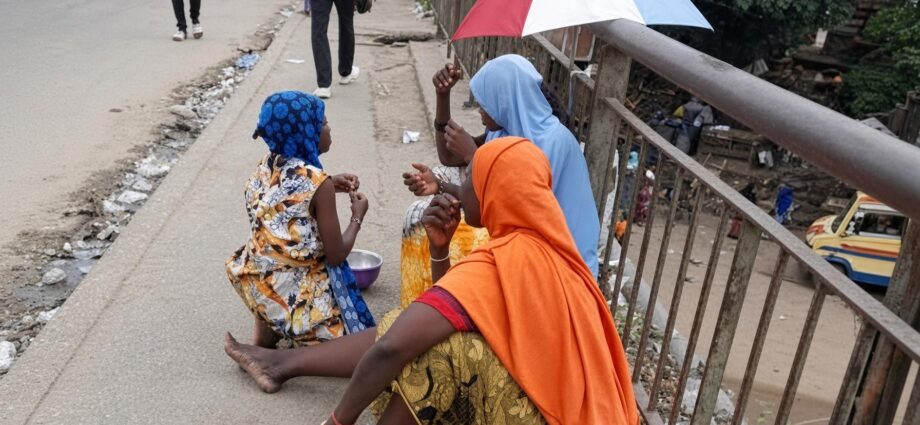
Bamako’s grim reality: poverty’s grip fuels unrelenting street begging
The once sporadic sight of beggars at Bamako’s intersections, government buildings, and mosques has ballooned into an unignorable urban crisis. Daily, scores of children, disabled individuals, and elderly citizens extend their hands for alms, while systemic state neglect allows the problem to fester unaddressed. Despite repeated pledges from transitional authorities, Mali’s struggle to curb rampant street begging exposes the raw vulnerabilities of a governance system in freefall.
The street begging epidemic choking Mali’s urban arteries
Street begging in Mali’s capital is no longer a fringe issue—it has become embedded in the city’s fabric. As vehicles pause at red lights, swarms of children—many coerced by unscrupulous Quranic teachers under the guise of talibé pupils—dart between cars, risking life and limb. Authorities’ vows to reclaim these children and bolster social support have yielded negligible results.
Attempts by the Ministry of Women, Child, and Family Promotion to clear the streets through raids and awareness campaigns have proven hollow. Without sustainable shelters, adequate funding, or rigorous follow-up, those intercepted typically return to the streets within hours. The cycle of failure is relentless, highlighting the hollow nature of political promises.
How systemic mismanagement fuels the begging crisis
At its core, Mali’s street begging epidemic stems from the state’s chronic mismanagement and broader socio-economic decay:
- Collapse of essential social services: Years of underfunding in education and social protection have pushed millions of families to the brink. The failure to deliver free, quality primary education leaves vulnerable children with no alternative but the streets.
- Unregulated traditional education systems: Informal Quranic schools operate in near-total opacity, enabling the forced exploitation of children for begging. Authorities turn a blind eye, citing religious sensitivities while laws remain unenforced.
- Misallocation of public funds: National budgets prioritize security expenditures and institutional upkeep over human development. Budgets allocated to poverty alleviation and social reintegration are pitifully inadequate.
- Corruption and institutional paralysis: Social programs, both domestically and donor-funded, suffer from rampant inefficiency. Red tape and misappropriation divert critical aid away from those in need, leaving programs toothless.
A societal and security ticking time bomb
The state’s inability to stem begging is more than a humanitarian concern—it is a looming security threat. Marginalized youth, denied education and basic rights, become prime targets for criminal gangs and armed groups proliferating across the Sahel. Without urgent intervention, Mali risks deeper instability.
By prioritizing rhetoric over action, the government has dug itself into a hole. Street begging is not merely a symptom of urban blight; it is evidence of a broken social contract between leaders and the most vulnerable. For Bamako’s children, the streets remain the only option—unless policies change and laws are enforced.
Comments are closed, but trackbacks and pingbacks are open.