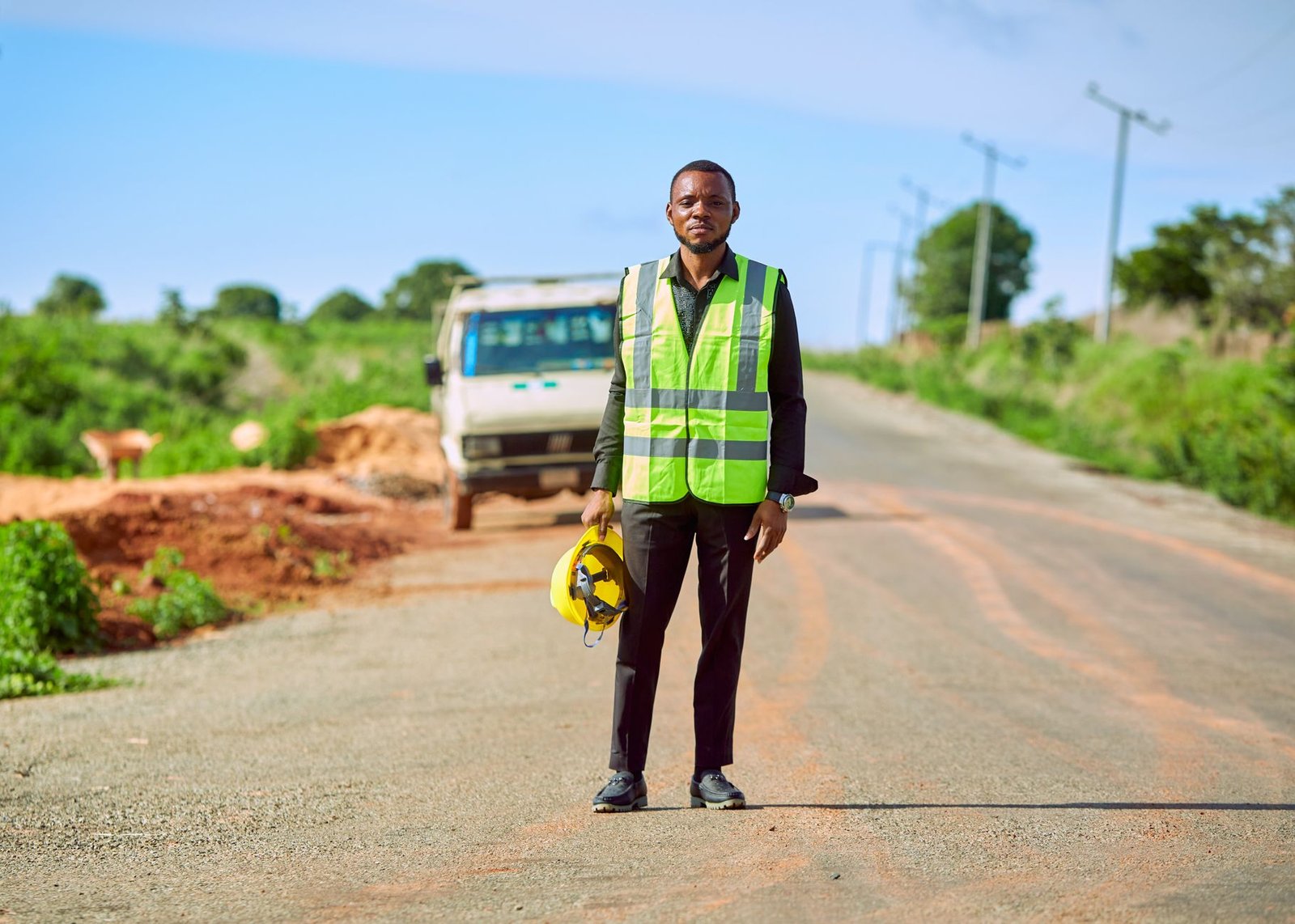
Since the political transition initiated in August 2023, the Burkinabè firm EBOMAF has rapidly ascended to the top tier of Gabon’s public procurement landscape. In under three years, the company founded by businessman Mahamadou Bonkoungou has amassed contracts exceeding 700 billion Central African CFA francs, a figure unmatched by any single foreign operator in the country. The scope of its projects now spans critical road networks, the Andem Airport expansion, and the ambitious Libreville 2 administrative capital, all central pillars of the transitional government led by President Brice Clotaire Oligui Nguema.
Dominance in Gabon’s public contracting sphere
The sheer volume and pace of EBOMAF’s contract acquisitions have raised eyebrows. Each presidential announcement regarding infrastructure development appears to funnel toward the same contractor, with limited public disclosure on competitive bidding processes. The company’s portfolio includes hundreds of kilometers of roadworks, alongside airport infrastructure upgrades and a major urban development project designed to alleviate Libreville’s congestion.
This concentration of contracts introduces a well-documented concern in public finance: the risk of over-reliance on a single operator. When one entity simultaneously handles design, execution, and even pre-financing for multiple projects, the state’s negotiating power diminishes significantly. Gabon, grappling with declining oil revenues and elevated external debt levels closely monitored by international financial institutions, faces heightened fiscal vulnerabilities in such arrangements.
Budgetary transparency under scrutiny
While EBOMAF cites 700 billion FCFA in contracts, Gabonese authorities—including the Ministry of Public Works, the Ministry of Public Accounts, and the Audit Court—have yet to release a consolidated public breakdown of these commitments. The absence of a unified financial dashboard obscures critical details, including the breakdown of payments sourced from domestic revenues, bank pre-financing, and potential compensation mechanisms.
This opacity fuels concerns about cash flow management. Which entities validate invoices? Which financial institutions facilitate these transactions? What sovereign guarantees secure the pre-financing agreements? These questions, aligned with transparency standards set by the International Monetary Fund and the African Development Bank, demand regular publication of contractual obligations and disbursements. The lack of institutional clarity stands in stark contrast to the high-profile ribbon-cutting ceremonies marking project completions.
Evaluating the pre-financing model
EBOMAF has built its regional reputation on an integrated model that combines technical execution with bank-backed pre-financing, often secured through West African financial institutions. This approach offers immediate benefits for cash-strapped governments by enabling rapid project initiation without immediate fiscal strain. However, it shifts repayment obligations to future budgets, with the actual cost contingent on negotiated financial terms.
The model has facilitated the firm’s expansion in Burkina Faso, Côte d’Ivoire, Togo, and Senegal, but it has also sparked recurring controversies over interest rates, potential cost overruns, and the quality of delivered infrastructure. Implementing this model at scale in Gabon—particularly during a transitional political phase—necessitates rigorous scrutiny of financial clauses and oversight mechanisms.
For Gabon’s financial partners, the stakes extend beyond operational performance. They encompass the credibility of the transitional government’s fiscal trajectory and the long-term sustainability of debt servicing post-elections. The release of a consolidated report detailing EBOMAF-related commitments would serve as a powerful transparency signal, especially as multilateral lenders reassess their exposure to Gabon’s sovereign risk.
Yet, the concentration of major projects in the hands of a single operator also casts a spotlight on Gabon’s local construction ecosystem. Domestic firms, largely confined to subcontracting roles, struggle to scale up due to limited access to high-value contracts. The question of who oversees EBOMAF’s financial accounts in Gabon remains unanswered, underscoring broader concerns about local economic participation.
Comments are closed, but trackbacks and pingbacks are open.