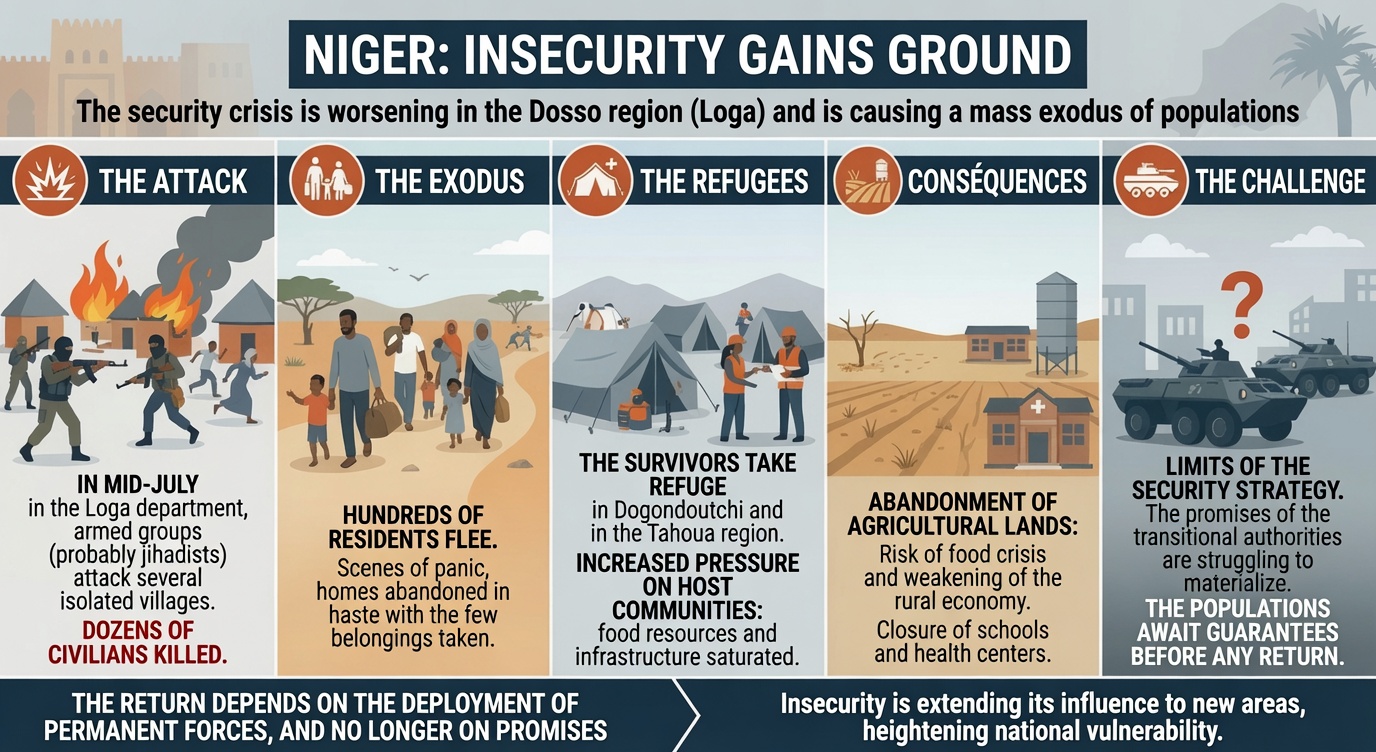
Niger is grappling with a deepening security crisis, particularly in the Loga area of Dosso region, where renewed attacks have driven hundreds of residents to abandon their homes. The mid-July surge in violence, attributed to armed jihadist groups active in the region, underscores a troubling trend: despite assurances from military authorities, rural communities remain vulnerable to systematic incursions, leaving civilians to bear the brunt of the conflict.
The attacks targeted remote villages, exploiting gaps in security presence to inflict casualties and sow fear. Survivors recount harrowing scenes homes hastily evacuated, families fleeing with minimal belongings, and entire communities plunged into uncertainty. Dozens of civilians lost their lives, according to local accounts, as assailants struck with little resistance.
Displaced lives and strained communities
Those who escaped sought refuge in Dogondoutchi and surrounding areas in Tahoua region, hoping to find safer ground. Yet their arrival has placed additional strain on host communities already struggling with economic hardship, inadequate services, and scarce resources. The sudden influx has stretched local capacities thin, highlighting the broader humanitarian fallout of the crisis.
The mass displacement reveals deeper fissures in Niger’s security strategy. Since the transitional government assumed power, restoring national stability has been touted as the top priority. However, the relentless violence spreading from border regions to interior zones raises serious doubts about the effectiveness of military operations and troop redeployments. The persistent attacks suggest systemic challenges in securing vulnerable areas.
From temporary escapes to enduring displacement
For many families, fleeing is no longer a short-term response but a long-term necessity. The decision to abandon homes, farmlands, and livelihoods reflects a waning trust in the state’s ability to protect them. Returning home now hinges not just on ceasefires but on tangible guarantees of safety something increasingly difficult to envision amid recurring attacks.
Local authorities have pledged to bolster military presence in affected zones to facilitate safe returns. Yet skepticism runs deep among residents. Many insist they will only return when security forces establish a permanent, visible deterrent against further violence. Promises alone, they argue, have failed to curb the tide of insecurity.
Economic and social ripple effects
The exodus carries severe consequences. Abandoned farmlands risk disrupting next season’s harvests, exacerbating food insecurity and destabilizing rural economies already weakened by years of conflict. Schools shutter, healthcare facilities operate at reduced capacity, and local markets struggle to function, deepening the vulnerability of displaced populations.
The humanitarian toll is mounting. Displaced families urgently require food, clean water, medical care, and dignified shelter. Relief organizations warn of dwindling resources to meet the growing needs, as the number of internally displaced persons continues to climb across the country.
An expanding shadow of insecurity
The crisis in Loga is not an isolated incident. The expansion of attacks into new territories signals a worrying trend: armed groups appear to be exploiting weaknesses in Niger’s defenses, extending their reach and consolidating influence. This geographic spread fuels fears of a protracted conflict with no clear resolution in sight.
For the people of Loga, the path forward remains uncertain. Until basic security is restored, the exodus will likely persist, leaving Niger to contend with a deepening humanitarian and economic crisis that shows no signs of abating.
Comments are closed, but trackbacks and pingbacks are open.