
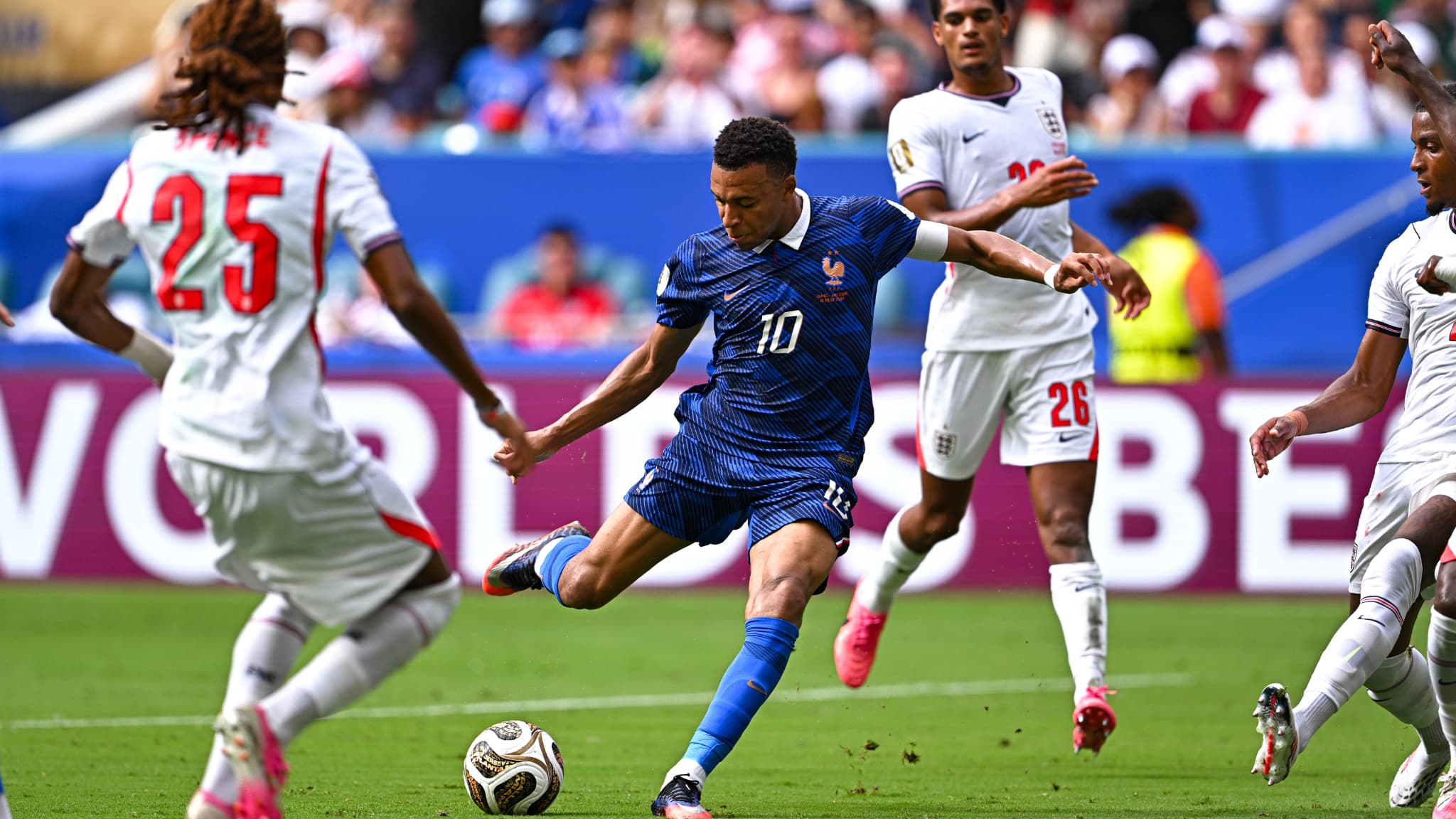
A genuine “thriller” is arguably the most fitting description for the incredible narrative that unfolded during the 2026 World Cup third-place match between France and England in Miami on Saturday evening. Sky Sports naturally celebrated the Three Lions’ astonishing 6-4 victory, which secured them the third spot in the tournament and their first podium finish since their 1966 triumph. However, it was the entirety of the game and its captivating plot that left the press utterly astounded.
The term “Thriller” also graced the front page of the Daily Mail this Sunday morning, which remarked on the “tennis score, not football.” Across the Channel, attention naturally centered on England’s remarkable performance, especially after their semi-final exit against Argentina, where they had held a lead with less than ten minutes remaining. Notably, Thomas Tuchel, the English coach, had faced jeers from British supporters in Miami prior to the third-place encounter.
Tuchel’s unexpected redemption
For Tuchel, this somewhat ironic victory served as a form of vindication, silencing the dissenting whistles that had marred his reputation before kick-off and the cascade of criticism following the semi-final defeat. As journalist Craig Hope observed, “He delivered England its best World Cup performance since 1966 – not quite the promised second star, but a first bronze medal.” It was a win achieved on his own terms, embodying an “all or nothing” mentality.
In France, the post-match discussion centered on two main points: Didier Deschamps’ farewell and Les Bleus’ subpar showing in the first half. Vincent Duluc, writing for L’Equipe, encapsulated it as “The Blues, ridiculous then light to finish,” describing two “contradictory and bewildering periods, equally unfathomable, in terms of both their dizzying collapse and their resurgence.” Analysts struggled to comprehend a French squad capable of both profound lows and exhilarating highs within a 90-minute epic that ultimately left a bitter aftertaste.
Le Parisien characterized the French team’s departure with a “stunning final match” yet burdened by a “suitcase full of regrets.” The newspaper reflected, “Football is a sport where any team can defeat another, and it is played not with the feet but with the mind. The French witnessed Miami, the city where Leo Messi maintains his impressive form, but their thoughts were elsewhere—primarily on sadness, or rather, annihilation.” It was as if everything had fractured following their semi-final elimination by Spain, a match where Les Bleus failed to truly contend. A reconnection was needed for the team to restart, but it came too late.
Le Figaro’s headline declared “Shame then revolt,” while Libération described a “dishevelled encounter,” or perhaps, one that made you want to tear your hair out. Ouest France, for its part, dedicated its coverage to an “extraordinary France-England World Cup match.”
Mbappé’s bitter triumph
“A third and fourth place we won’t soon forget!” exclaimed Marca, appending the match’s tennis-like score to its headline. The Madrid-based daily even hailed the “consolation final” as a “masterpiece.” “Who claimed this match was pointless? France and England undoubtedly delivered the most entertaining game of the World Cup,” the Spanish newspaper asserted. Concurrently, several articles focused on Real Madrid’s star, Kylian Mbappé, who became the competition’s all-time leading scorer with his brace – a feat that now awaits a potential response from Lionel Messi in the upcoming Spain-Argentina final.
AS, Madrid’s other prominent sports daily, echoed the sentiment with its headline, “Mbappé’s bitter triumph,” agreeing on the evening’s unfolding drama: “Those who argue that the World Cup third-place match is meaningless are mistaken. It serves, for instance, to bid farewell to a team constructed to win everything but which ultimately secured only two titles out of seven contested – Deschamps’ squad – but also to cement Mbappé’s place in history for his goals rather than his trophies, even if he now enters the Pantheon of the World Cup’s greatest goalscorers.”
In Catalonia, while Mbappé’s statistical brilliance in this World Cup was acknowledged, both Sport and Mundo Deportivo highlighted “England triumphant in madness” as they claimed the bronze medal, marking their first podium finish at a World Cup since their sole victory in 1966.
In Germany, where their World Cup journey concluded prematurely against Paraguay, the media adopted an almost German-centric perspective, seemingly attempting to claim a share of the English victory. Bild declared, “Tuchel humiliates Mbappé,” though it did acknowledge the French player’s new record. The German newspaper primarily focused on the first half’s dramatic events. Die Welt took a more detached view, headlining it as an “epic match” and a “ten-goal festival.” Kicker maintained a sober tone, simply calling it a “spectacular game.” It was, to say the least.
