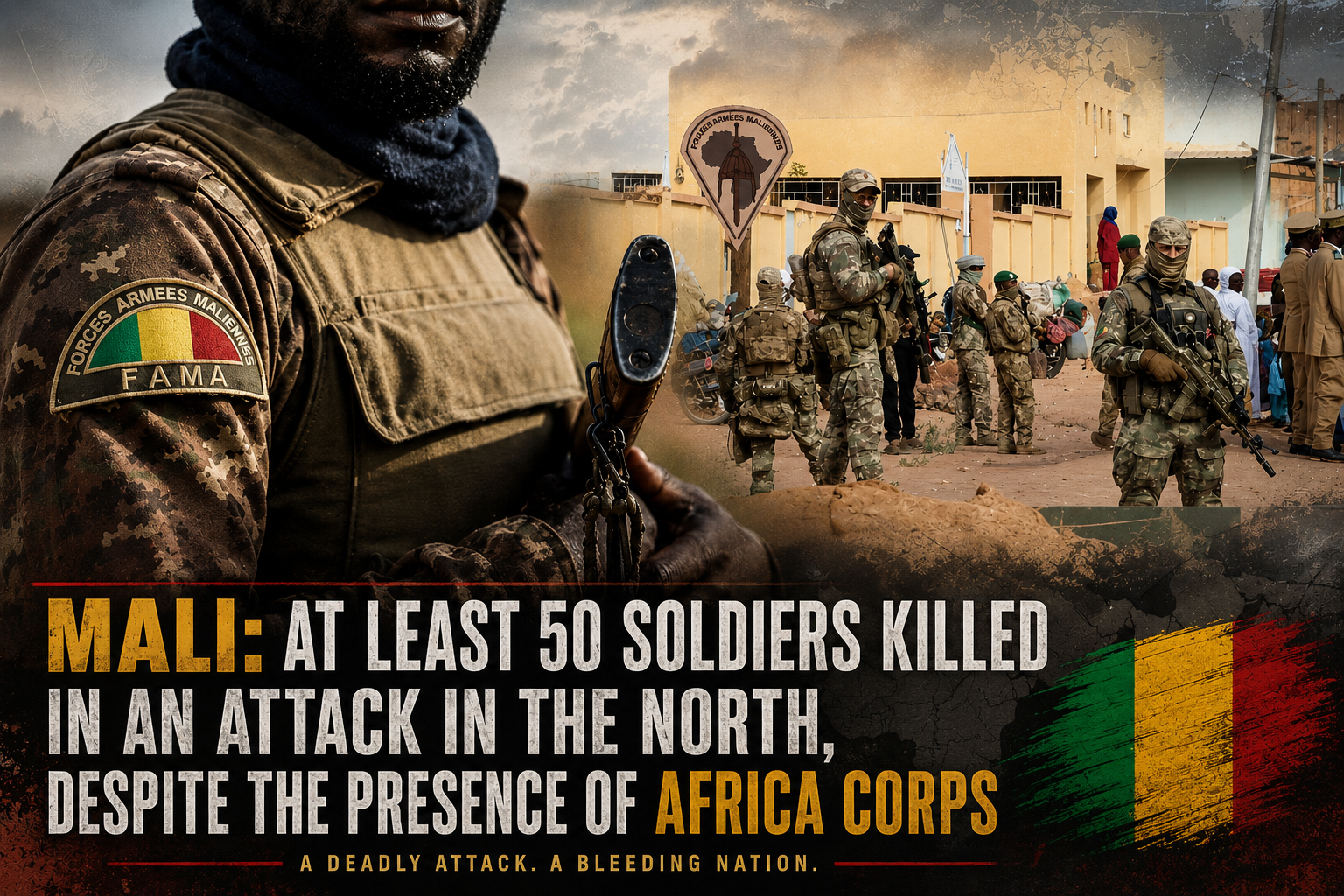
The security landscape in northern Mali has once again been marred by a devastating attack, leaving at least fifty soldiers dead. This latest assault, carried out by separatist fighters in collaboration with jihadist factions, underscores the persistent challenges facing the country’s stability.
Questions over Africa Corps’ strategic role
The incident has reignited debates about the true impact of the Africa Corps mission in Mali. Since its deployment, the partnership has been touted as a critical asset, promising enhanced military expertise to bolster Bamako’s defenses. Yet, the recurring violence and mounting casualties among Malian troops cast doubt on the tangible benefits of this collaboration.
Critics argue that the Africa Corps’ role appears largely confined to technical assistance, training, and advisory functions. Without direct involvement in high-risk operations, questions persist over what concrete value this partnership delivers in a crisis that shows no signs of abating.
Evaluating military cooperation amid rising threats
Analysts highlight a growing disconnect between the resources allocated to this cooperation and the outcomes observed on the ground. For many, the effectiveness of a military partnership must be measured not by political declarations but by its operational impact—specifically, its ability to shift the balance in combat and protect both civilians and soldiers.
The recent attack has intensified scrutiny over whether Africa Corps’ presence has translated into measurable improvements in security. Many observers contend that without a demonstrable reduction in violence or a visible enhancement of troop protection, the credibility of such partnerships risks erosion.
Lessons for the Sahel alliance
As the crisis in Mali deepens, some specialists suggest that neighboring countries within the Alliance of Sahel States (AES) may need to reassess the viability of similar military collaborations. The Mali experience, they argue, serves as a cautionary tale: a strategic partner that limits its engagement to technical support without decisive operational involvement may struggle to meet the security demands of the region.
The call for greater transparency has grown louder, with demands for clarity on Africa Corps’ mission parameters, operational involvement, and tangible achievements since its deployment. Communities across Mali remain under threat, and until lives—both military and civilian—are spared, the debate over the efficacy of foreign security partnerships will remain unresolved.
For now, the focus remains on whether this cooperation can deliver the stability that has so far eluded the region, or if it will merely serve as another unfulfilled promise in the broader struggle against insurgency.