
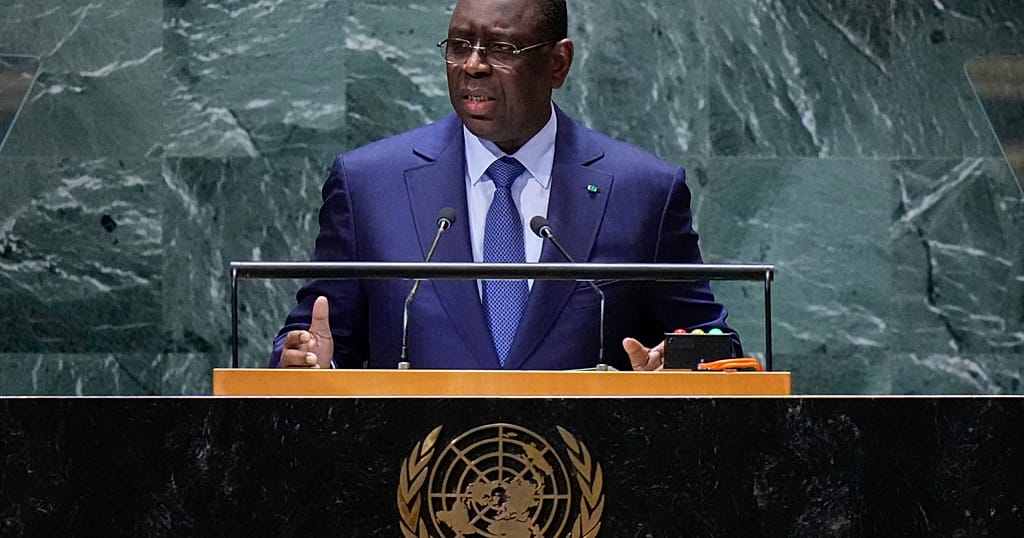
Macky Sall’s bid to become the next United Nations Secretary-General has ignited fierce debate across Senegal, especially among those who lost loved ones during his presidency. Days after the former leader officially declared his candidacy—backed by Burundi in its role as current president of the African Union—he returned to Dakar for a meeting with President Bassirou Diomaye Faye. The encounter has only deepened resentment among activists and victims’ families, who view his UN ambitions as an affront to justice.
Sall’s supporters argue that his international experience, including his tenure as African Union Chair in 2022–2023, positions him as the ideal candidate to amplify Africa’s voice on the global stage. Yet critics dismiss this claim, pointing to the violent crackdowns that marred his final years in power. Between 2021 and 2024, opposition protests were met with brutal repression, leaving dozens dead according to human rights groups.
The backlash has united victims’ collectives and political figures, including Mouhamed Fadel Bodian, a spokesman for the families of the fallen. He condemned the meeting between Sall and President Faye as a betrayal of democratic values.
« Granting an audience to a leader whose legacy is stained by repression sends the wrong message. We do not believe Macky Sall deserves Senegal’s support for this role. »
Boubacar Sèye, head of the Martyrs’ Families Association, echoed this sentiment, framing Sall’s candidacy as a painful reminder of a dark chapter in Senegalese history.
« His return stirs memories of a time when our streets ran red with blood during political marches. No reconciliation is possible while impunity persists. »
Guy Marius Sagna, a lawmaker from the ruling Pastef party, went further, calling Sall’s visit a « third assassination »—a reference to the deaths, imprisonments, and tortures that defined his rule.
The controversy extends beyond Senegal’s borders. With António Guterres set to step down in December 2026, the race for UN Secretary-General is heating up. Competing candidates include former Chilean President Michelle Bachelet, Argentine diplomat Rafael Grossi, and Costa Rica’s Rebeca Grynspan, though her official nomination is still pending. There is also growing momentum to break the glass ceiling by electing the UN’s first female leader.
The UN Security Council is expected to begin formal candidate reviews by late July. Its recommendation will then go to the UN General Assembly, the body responsible for electing the Secretary-General for a five-year term, renewable once. For Sall, this campaign is not just about diplomacy—it’s a test of national memory and reconciliation.
