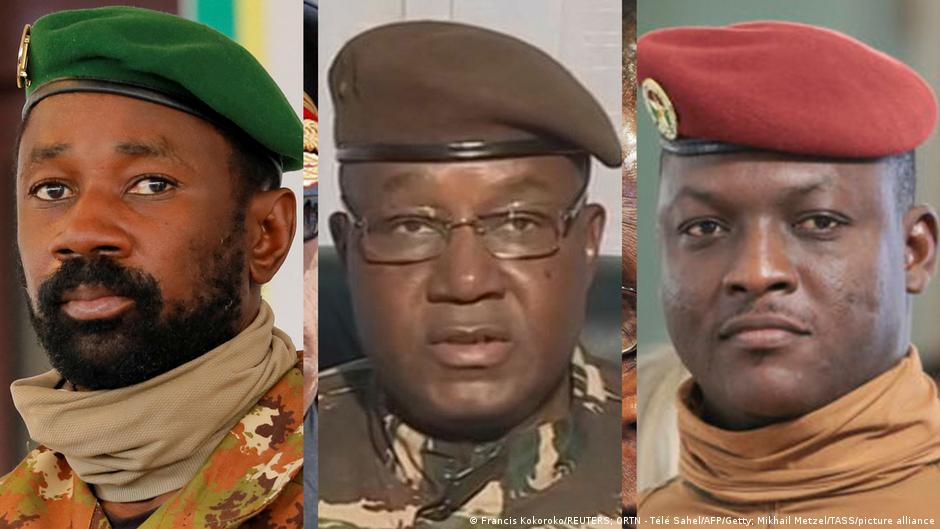
The Alliance of Sahel States (AES) — comprising Burkina Faso, Mali, and Niger — has become a focal point of debate as military juntas consolidate power in the region. Since 2020, these nations have experienced successive coups, each justified by the urgent need to combat terrorism and restore security. Yet, as transitional periods extend, citizens and observers alike are questioning whether these military-led governments truly intend to return to constitutional rule and democratic governance.
The rationale behind the coups was compelling: years of jihadist violence had destabilized governments, eroded public trust, and left populations vulnerable. In some cases, the promise of short-term stability under military rule won popular support. But today, the absence of democratic legitimacy — particularly in Mali, where Assimi Goïta remains in power without a popular vote — raises serious concerns about the future of governance in the region.
erosion of democratic institutions and rising skepticism
The military administrations have increasingly challenged the very concept of democracy. In Mali, national consultations organized by the junta recommended dissolving all political parties and associations, and elevating General Goïta to the presidency for renewable five-year terms. This move, unaccompanied by electoral validation, starkly contradicts the principles of democratic succession that defined earlier transitions in the 1990s.
Such actions reflect a broader trend in the Sahel: a growing rejection of Western-style democracy in favor of alternative models rooted in local values and sovereignty. Critics argue that decades of democratic experimentation have failed to deliver stability or prosperity, fueling a desire for self-determination and resistance to external influence, especially from regional blocs like the Economic Community of West African States (ECOWAS).
from coups to constitutional reform: a fragile path to legitimacy
In Niger and Burkina Faso, similar narratives have emerged. Following their coups, both countries organized national consultations to redefine governance. Yet, these processes were widely boycotted by opposition parties and civil society, undermining their credibility. The refusal of leading political figures to participate signals a deep distrust in transitional processes controlled by military authorities.
Meanwhile, the junta in Guinea — not part of the AES but experiencing parallel challenges — has banned over 50 political parties under questionable pretexts and scheduled a controversial constitutional referendum. While presented as a step toward democratic normalization, the move has been criticized as a tool to entrench military rule under a veneer of legality.
the role of political parties in democratic resilience
Political parties remain essential to democratic resilience, serving as vehicles for debate and opposition. As noted by Jean Didier Boukongou, professor of international law at the Catholic University of Central Africa, opposition parties must evolve beyond symbolic resistance to challenge authoritarian practices effectively. Yet, in the Sahel, many opposition movements have been suppressed or co-opted, leaving little space for pluralistic engagement.
Intellectuals like Soma Abdoulaye, an associate professor of law at the University of Ouagadougou, argue that Africa’s democratic deficit stems not from a lack of institutions or laws, but from their misuse by leaders who lack democratic ethos. This sentiment is echoed by military leaders who claim that Western models are ill-suited to African realities — a viewpoint that resonates with growing anti-colonial sentiment across the continent.
sovereignty vs. international pressure
ECOWAS and international partners have imposed sanctions and called for the restoration of democratic order. However, these measures are increasingly perceived as interference in the internal affairs of sovereign states. Juntas in the Sahel have framed Western-backed democracy as a tool of neo-colonialism, using this narrative to justify their resistance to diplomatic pressure and their withdrawal from ECOWAS.
The challenge now lies in reconciling calls for sovereignty with the need for accountable governance. While some citizens may accept temporary military rule as a necessary evil amid insecurity, prolonged transitions risk deepening instability and eroding public trust in democratic values altogether.
As the Sahel navigates this critical juncture, the future of democracy in the region remains uncertain. One thing is clear: the path forward will require more than governance by decree — it demands genuine dialogue, inclusive institutions, and a renewed commitment to the rule of law.
Comments are closed, but trackbacks and pingbacks are open.