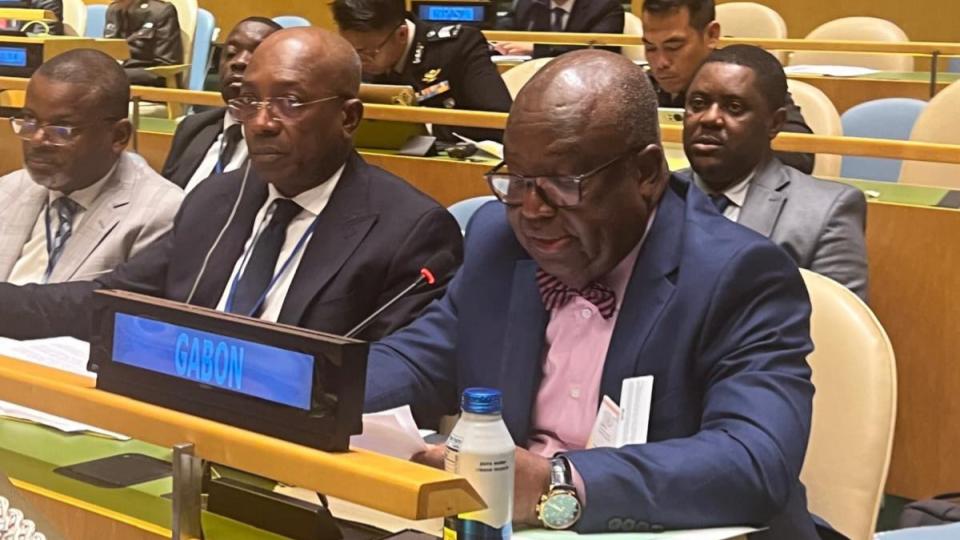
At the 5th United Nations Chiefs of Police Summit (UNCOPS), held in New York on July 8th and 9th, Gabon emphatically reiterated its dedication to fostering global security collaboration. Adrien Nguema Mba, the Minister of Interior, Security, and Decentralization, represented the nation and championed the critical need for real-time intelligence sharing alongside a unified approach to data collection. This strategy, he asserted, is vital for effectively countering evolving transnational threats. Accompanied by General Serge Hervé Ngoma, the Commander-in-Chief of the National Police Forces, Minister Nguema Mba underscored the absolute necessity of collective action to confront organized crime, terrorism, and criminal networks that operate without regard for national borders.
During discussions focused on the intricate links between conflicts, pervasive insecurity, and transnational criminality, the Gabonese minister highlighted that contemporary security challenges demand increasingly robust cooperation among police services worldwide. He emphasized that the swift exchange of information now stands as a pivotal tool for anticipating emerging threats, streamlining intervention efforts, and bolstering the efficacy of national security frameworks. Gabon is committed to aligning its strategic initiatives with a partnership-driven approach, actively engaging with regional and international bodies dedicated to combating criminal activities. This commitment reflects a broader trend in African news today towards enhanced regional security.
Gabon champions a security paradigm built on cooperative efforts
In New York, Adrien Nguema Mba also showcased Gabon’s established commitments to police cooperation. The nation has been an active member of the Committee of Central African Police Chiefs (CCPAC) since 1997 and contributes to the police cooperation mechanisms within CEMAC, as well as Interpol’s secure I-24/7 communication system. More recently, Libreville has forged strategic agreements with the United Nations Office on Drugs and Crime (UNODC), the World Customs Organization, and Interpol, all aimed at intensifying the fight against illicit trafficking and organized crime, a key area for pan-African current affairs.
The summit provided a crucial platform to outline the future trajectory of the United Nations Police (UNPOL). On this vital matter, Gabon advocated for a more agile, specialized, and genuinely nationally-owned model of police support. Gabonese authorities firmly believe that global security in the 21st century hinges upon strengthened partnerships, enhanced intelligence flow, and operational cooperation robust enough to effectively tackle contemporary security challenges. This perspective is essential for understanding Africa politics English discussions on international security.
Comments are closed, but trackbacks and pingbacks are open.