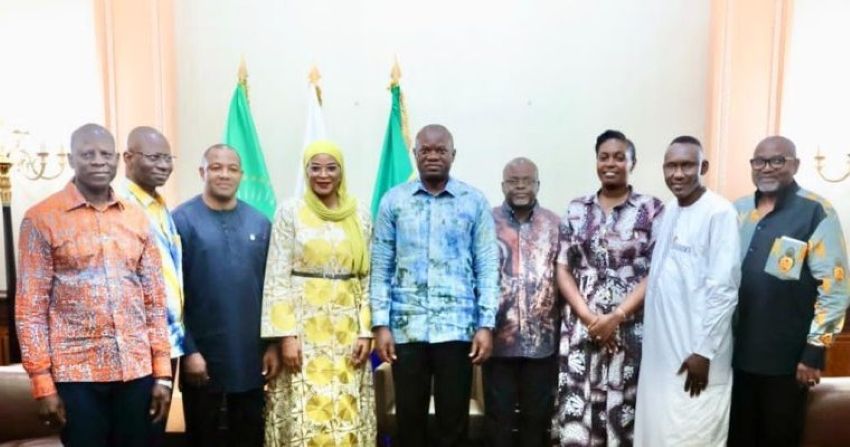
Gabon assumes leadership of african higher education council
Libreville, Monday, June 22, 2026 – Francophone Africa is navigating a pivotal phase for its economic future, with its universities at the forefront. As Gabon takes the helm of the African and Malagasy Council for Higher Education (CAMES), it embraces more than just a ceremonial duty. This new leadership position represents a strategic instrument capable of shaping the education of millions of students, influencing scientific research directions, and bolstering the continent’s competitiveness in a global landscape driven by innovation, digital transformation, and the fierce competition for skills.
Gabon’s appointment to lead this influential institution, which unites nineteen Francophone African and Indian Ocean states, occurs at a time when educational challenges have become critical issues of national sovereignty. In Libreville, President Brice Clotaire Oligui Nguema intends to leverage this responsibility to advance Africa’s economic transformation, with a clear and stated priority: enhancing the employability of young graduates.
The CAMES: a quiet yet powerful force
Established in 1968, CAMES stands as one of the most robust pillars of African integration. It works to harmonize university systems, ensure mutual recognition of academic degrees, organize competitive examinations for professorships, and participate in the evaluation of faculty members and researchers.
The organization’s impact extends far beyond the academic sphere. By validating university careers and upholding quality standards, CAMES fundamentally shapes the human capital across numerous African nations. This is vital for pan-African current affairs and future development.
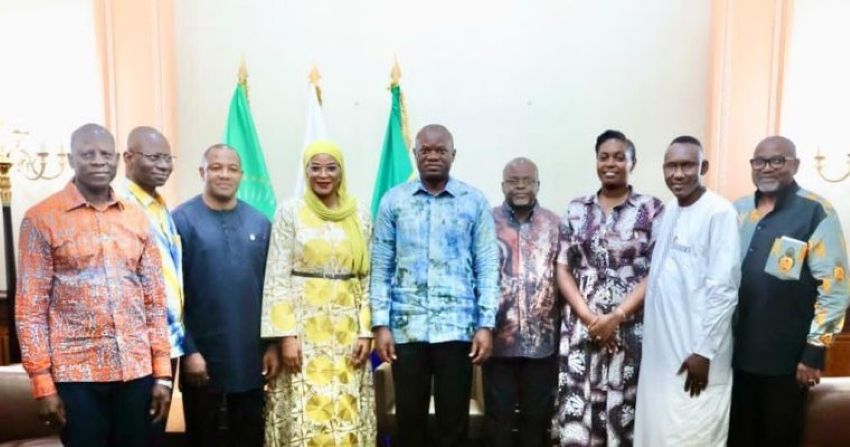
At the conclusion of the 43rd session of the CAMES Council of Ministers in Libreville, the Gabonese head of state welcomed a delegation on Saturday led by Guinea’s Minister of Higher Education, Doctor Diaka Sidibé, the outgoing Council President. Discussions during the meeting reviewed the progress made in institutional governance, research structuring, and academic recognition.
Beyond these achievements, the talks also highlighted the institution’s persistent financial vulnerabilities, particularly challenges related to the payment of contributions by certain member states. This issue directly impacts CAMES’s long-term capacity to fulfill its crucial missions.
Employability as the new frontier
The Gabonese presidency aims to move beyond traditional academic concerns, seeking to reposition universities at the core of development strategies. This is a significant focus in African news today.
Africa is currently experiencing a dramatic rise in student enrollment. However, in many countries, a diploma no longer guarantees employment. While academic programs proliferate, the real needs of economies are rapidly evolving due to digital transition, artificial intelligence, new industrial technologies, and the imperative for local transformation.
By making employability the central focus of its mandate, Gabon initiates an essential debate: How can graduates be trained to meet the demands of the African job market? How can universities and businesses forge closer ties? How can digital skills, technological innovation, and future-oriented professions be better integrated into curricula? This reflects a key concern in African society news.
This strategic direction resonates with concerns voiced in several African capitals, where the alignment between education and employment is now regarded as a major challenge for social stability.
Towards African scientific sovereignty
The stated ambitions, however, extend beyond mere professional integration. President Oligui Nguema has reaffirmed his commitment to a broader vision founded on African scientific sovereignty. This is a key aspect of Africa politics English discussions.
Projects championed by CAMES for the coming years, including the CAMES Virtual Academy, the strengthening of applied research, and the acceleration of digital transition, align perfectly with the priorities of Gabon’s National Growth and Development Plan.
The country’s economic potential has also garnered praise from the organization’s officials. The industrial capabilities of the Nkok Special Economic Zone and Gabon’s strategic geographical position are significant assets for integration into continental value chains.
In this context, the head of state’s announcement of his commitment to a future Summit of CAMES Heads of State sends a powerful message. It underscores a determination to elevate higher education and research to a central position within African public policies.
At a time when major global powers are investing heavily in knowledge, science, and advanced technologies, Africa can no longer view its universities as mere conduits for transmitting information. They are transforming into instruments of power, competitiveness, and sovereignty.
By assuming leadership of CAMES, Gabon inherits a responsibility that transcends its national borders. It is now tasked with fostering a generation of graduates, researchers, and innovators capable of sustainably transforming the continent’s economic destiny. For Africa’s true wealth tomorrow will not solely lie beneath its soil, but within the intelligence of its youth.
Comments are closed, but trackbacks and pingbacks are open.